
The Temple of the Condor
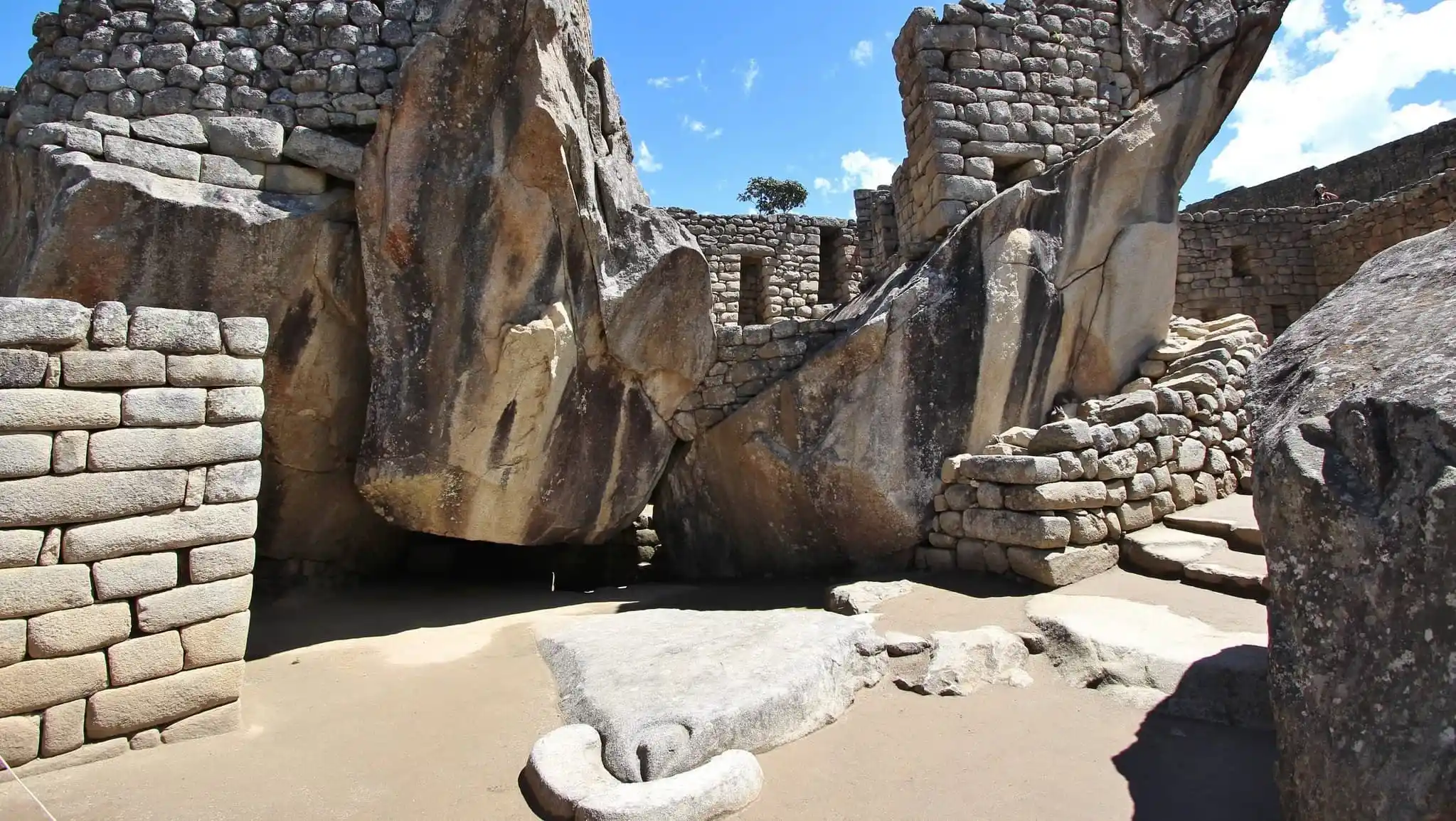 The Temple of the Condor is one of the most spectacular constructions in Machu Picchu. It represents a fusion of Andean art, architecture, and religious symbolism, as it adopts the three-dimensional form of the Andean condor, the most important bird in Inca worldview.
This article brings together key information to understand its function, location, structure, and how to include it in your visit to the archaeological site.
Its value lies both in its technical complexity and its symbolic meaning, and it is especially useful for travelers who want to deepen their understanding of Machu Picchu’s cultural significance and optimize their visit.
What is the Temple of the Condor?
The Temple of the Condor is a ceremonial structure carved directly into the bedrock, located in the lower urban sector of Machu Picchu. It represents an Andean condor with outstretched wings, using the natural formations of the mountain. The head of the bird is sculpted into a stone placed on the ground, creating a three-dimensional effect.
The way natural elements are integrated with the sculpture reveals the high level of planning and symbolism applied by the Incas.
Meaning of the condor in Inca culture
In the Andean worldview, the condor was one of the three sacred animals along with the puma and the snake. It served as an intermediary between the earthly world (Kay Pacha) and the upper world (Hanan Pacha). It also represented strength, power, and continuity of life.
The Incas considered it a being capable of transcending death, which explains its association with funerary and spiritual rituals.
Temple structure: three-dimensional design
The temple is made up of three main blocks:
- Two vertical blocks that represent the condor’s wings, carved from living rock.
- One horizontal stone on the ground, shaped like the bird’s head and crest.
From a frontal position and a few steps back, the figure of the condor can be clearly and fully perceived. Human remains and ritual objects have been found, indicating ceremonial use.
Ceremonial function and findings
Beneath the “wings” is a small cave where a mummy was found, suggesting the site had a funerary or ritual purpose during the Inca period. The “head” of the condor is also believed to have functioned as a ceremonial altar, where ceramics, textiles, and organic remains have been discovered.
These findings support the idea that the temple was used to worship the condor or as a site for sacrifices.
Location within Machu Picchu
The Temple of the Condor is located in the Hurin neighborhood, within the urban sector of Machu Picchu. It is near other residential structures, indicating it played an important role in the daily and religious life of those who inhabited the citadel.
It is accessible on foot via the main paths, although it is not directly on the route of the most visited spots such as the Temple of the Sun or the Main Square.
 The annexed cells or “prisons”
Behind the temple, small chambers carved into the rock can be seen, commonly referred to as “prisons.” It is assumed they may have been used as temporary holding spaces or as part of rituals. Some theories suggest prisoners were tied here or ceremonial acts linked to the site took place.
These cells have trapezoidal doors and wall niches, typical architectural features of the Incas.
Practical tips for visiting the temple
- Book your Machu Picchu entry ticket in advance, especially during high season.
- Arrive early to avoid crowds.
- Hire an official guide if you want deeper contextual information.
- Wear comfortable shoes: the terrain is uneven and sloped.
- Avoid touching or climbing the structures to help preserve them.
- Check which tourist circuit includes this temple, as not all routes cover it directly.
Frequently Asked Questions (FAQ)
📩 Get in Touch Now | 🌐 Visit Our Website