
Explore the Legendary Huaca Pucllana—A True Peruvian Treasure
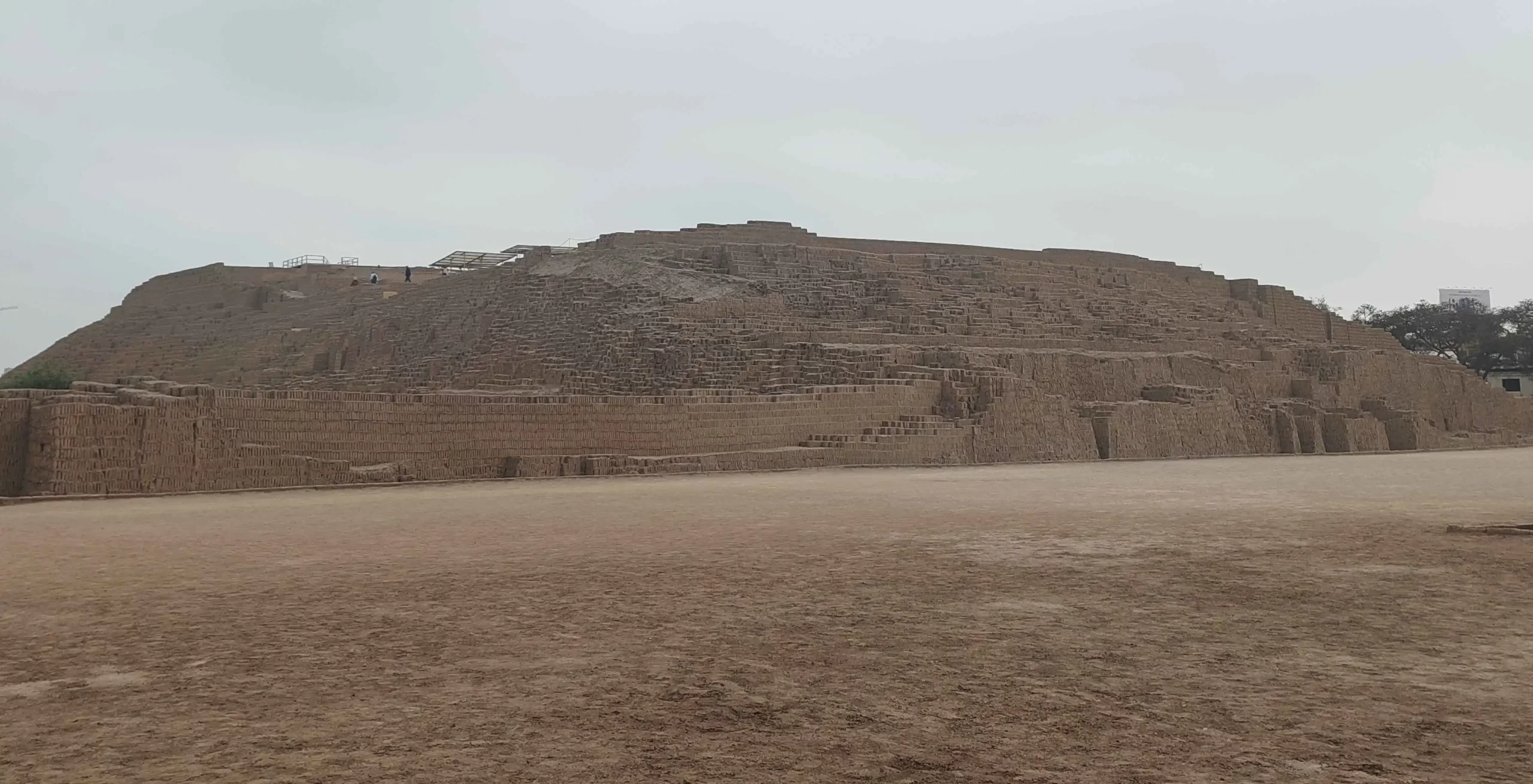 Lima’s historic adobe pyramid offers a glimpse into pre-Columbian ceremonial, administrative, and social life, with Huaca Pucllana standing as a central highlight.
This remarkable site showcases the Lima Culture’s advanced construction techniques, including the “bookcase” method of vertical adobe placement, and trapezoidal walls designed for seismic stability.
Rising 25 meters (82 feet) with seven platforms, extensive plazas, and interconnected ramps, Huaca Pucllana provides visitors with a full understanding of ancient urban planning and ceremonial practices.
It is an essential destination for day tours from Lima, Peru tours from Lima, and Lima city tours, offering both historical insights and a convenient urban location.
Location
Huaca Pucllana is located in the Miraflores district of Lima, Peru. Its strategic urban location makes it highly accessible for tourists.
- Address: Calle General Borgoño, Miraflores, Lima, Peru
- Distance from Plaza San Martín: Approximately 7 km
- Altitude: 78 meters (256 feet) above sea level
Its central position in Lima allows for easy visits during Lima city tours, or as part of day tours from Lima Peru.
The Historical Essence of Huaca Pucllana
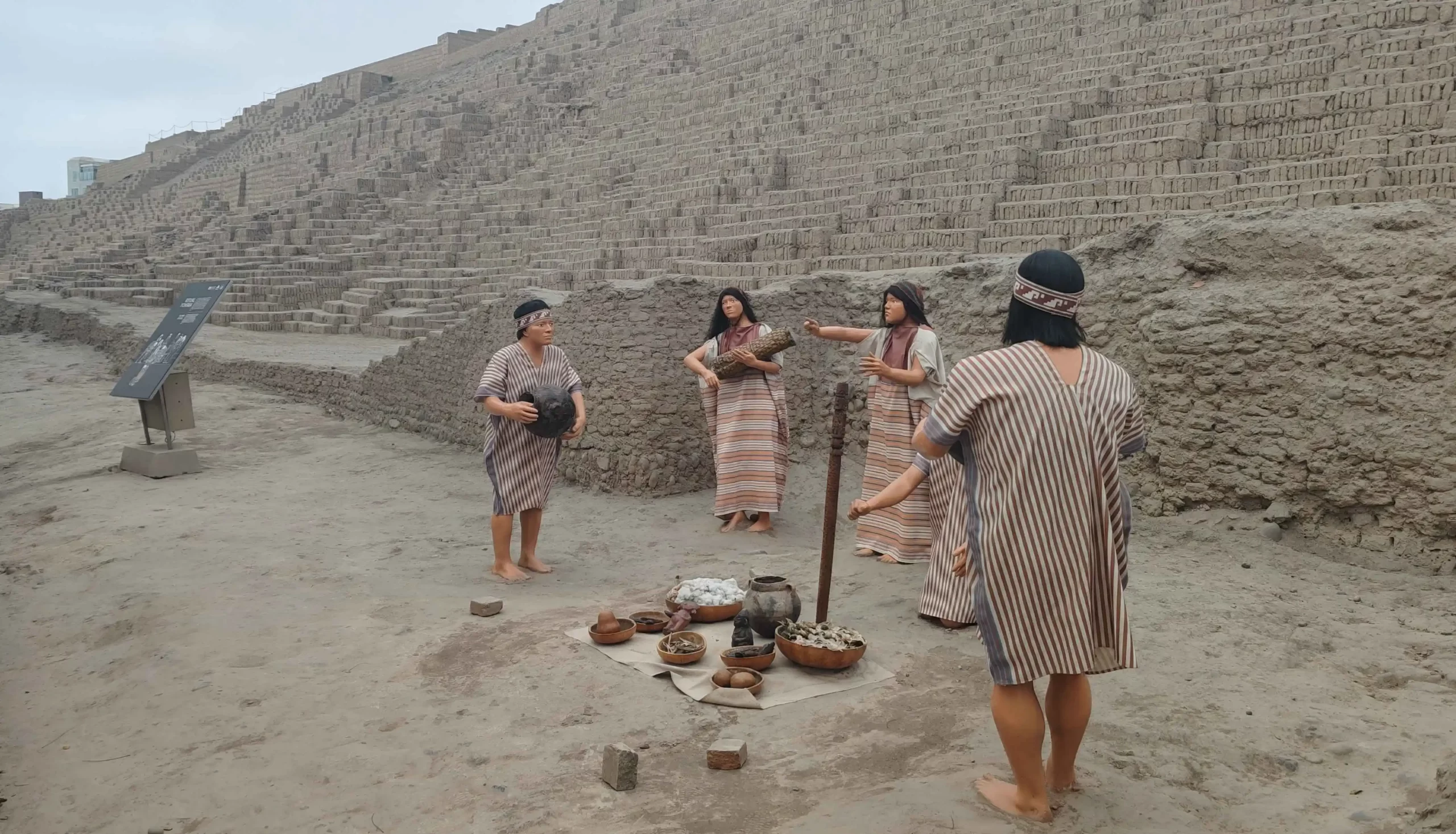 Huaca Pucllana was built between 200 and 700 AD by the Lima Culture, a coastal civilization known for its advanced engineering and urban planning.
The name comes from two Quechua words: huaca (“sacred place”) and pucllay (“game” or “celebration”). Together, “Huaca Pucllana” can be understood as the place of sacred games or the ceremonial playground.
The Lima Culture built the pyramid using millions of adobe bricks placed vertically in the famous “bookcase technique,” which allowed the walls to absorb seismic activity—essential in a region prone to earthquakes.
Its trapezoidal wall design, wider at the base and narrower at the top, resembles architectural concepts later seen in Machu Picchu.
The complex has two main sectors:
- The ceremonial sector, dominated by the main pyramid for rituals, offerings, and religious rites.
- The administrative sector, used for meetings, political organization, storage, and community activities.
From the Lima Culture to the Wari and Ychsma
Huaca Pucllana served as a central hub for ceremonial, administrative, and social activities, evolving through several cultures over the centuries.
The Lima Culture (200–700 AD)
The builders of Huaca Pucllana created a highly organized ceremonial center. Archaeologists have uncovered ceremonial plazas, storage rooms, and evidence of offerings such as fish bones, plants, textiles, and marine motifs—proof of the Lima people’s strong connection to the Pacific Ocean.
The Wari Empire (800–1000 AD)
When the Wari arrived centuries later, they found the huaca no longer used ceremonially. To honor its past importance, they intentionally buried parts of the structure to “seal” it spiritually. They then reused the upper platforms as elite burial chambers.
One of the most iconic discoveries is a Wari mummy wrapped in finely woven textiles and surrounded by ceramic vessels and personal belongings intended for the afterlife.
The Ychsma Culture (1000–1532 AD)
The Ychsma, a coastal people known for their pottery, used the huaca for offerings and religious ceremonies. Many of their vessels—often shaped like women or anthropomorphic figures—were found throughout the site.
Colonial Abandonment and 20th-Century Destruction
With the arrival of the Spanish, Huaca Pucllana lost its sacred value and became an anonymous mound. In the 1900s, it was partially destroyed due to rapid urban growth, even serving as a dump site and a motocross track.
Everything changed in 1981, when archaeologist Isabel Flores Espinoza began systematic excavations. Her team rescued, restored, and protected the complex, leading to the opening of the Huaca Pucllana Site Museum in 1984.
Today, Huaca Pucllana is officially recognized as Cultural Heritage of the Nation and is one of the most important archaeological attractions in Lima.
Architectural Features of Huaca Pucllana

1. The Adobe Pyramid
The highlight of the site is the stepped pyramid, reaching 25 meters (82 feet) and built with seven platforms. Its vertical adobe placement (Standing Book / Bookcase Technique) creates a flexible yet resistant structure capable of surviving centuries of seismic movement.
2. Ceremonial Squares and Patios
At the base of the pyramid are open plazas, wide enough to host large gatherings, rituals, and even sacrificial ceremonies. Excavations revealed food remnants, textiles, and ceramics that shed light on ancient celebrations.
3. Ceremonial Chambers and Tombs
Secondary structures around the pyramid were used for offerings, burials, and specific ritual activities. Several tombs contained human remains accompanied by valuable offerings, showing the high status of the individuals buried there.
Best Time to Visit Huaca Pucllana
Choosing the right time to visit Huaca Pucllana can make your experience far more enjoyable, whether you’re on a day tour from Lima, Peru tours from Lima, or a Lima city tour.
- April to November: Cooler temperatures between 15°C and 25°C (59°F–77°F) and mostly clear skies make walking through the pyramid, plazas, and ceremonial areas comfortable.
- December to March: Warmer days, sometimes exceeding 28°C (82°F), with sunny skies. While it is still possible to visit, sun protection and water are recommended for comfort.
Visiting during these months ensures the best conditions to explore Huaca Pucllana, enjoy its architecture, and fully appreciate its historical significance.
How to Get to Huaca Pucllana
Its privileged location makes it easy to reach:
- From the Miraflores boardwalk: 30–35 minutes on foot
- From Barranco: 10–15 minutes by taxi
- From Plaza San Martín: around 20–25 minutes by car
- By public transport: Metropolitano (Angamos Station) + 18-minute walk
- By tour: Most tours in Lima and day tours from Lima Peru include Huaca Pucllana in their programs
Operating Hours and Ticket Prices (2026)
| Day | Hours | Adults | Children/Students |
|---|---|---|---|
| Wednesday to Monday | 9:00 am – 5:00 pm | S/ 15 | S/ 7.50 |
| Night Visit (Wed–Sun) | 7:00 pm – 10:00 pm | S/ 17 | S/ 8.50 |
| Tuesday | Closed | – | – |
Closed on: January 1st, Good Friday, May 1st, July 28th, December 25th, and election days.
Guided Tours
All visits to Huaca Pucllana are guided by official museum staff to ensure accurate interpretation and site protection. The tour lasts 45–60 minutes and provides a deep understanding of architecture, culture, and archaeological discoveries.
This experience is commonly included in Lima City Tour, tours in Lima, and Peru tours from Lima, making it an ideal complement to historic sites like Plaza Mayor and Plaza San Martín.
FAQs About Huaca Pucllana
📩 Get in Touch Now | 🌐 Visit Our Website