
Macaw Clay Lick in Tambopata
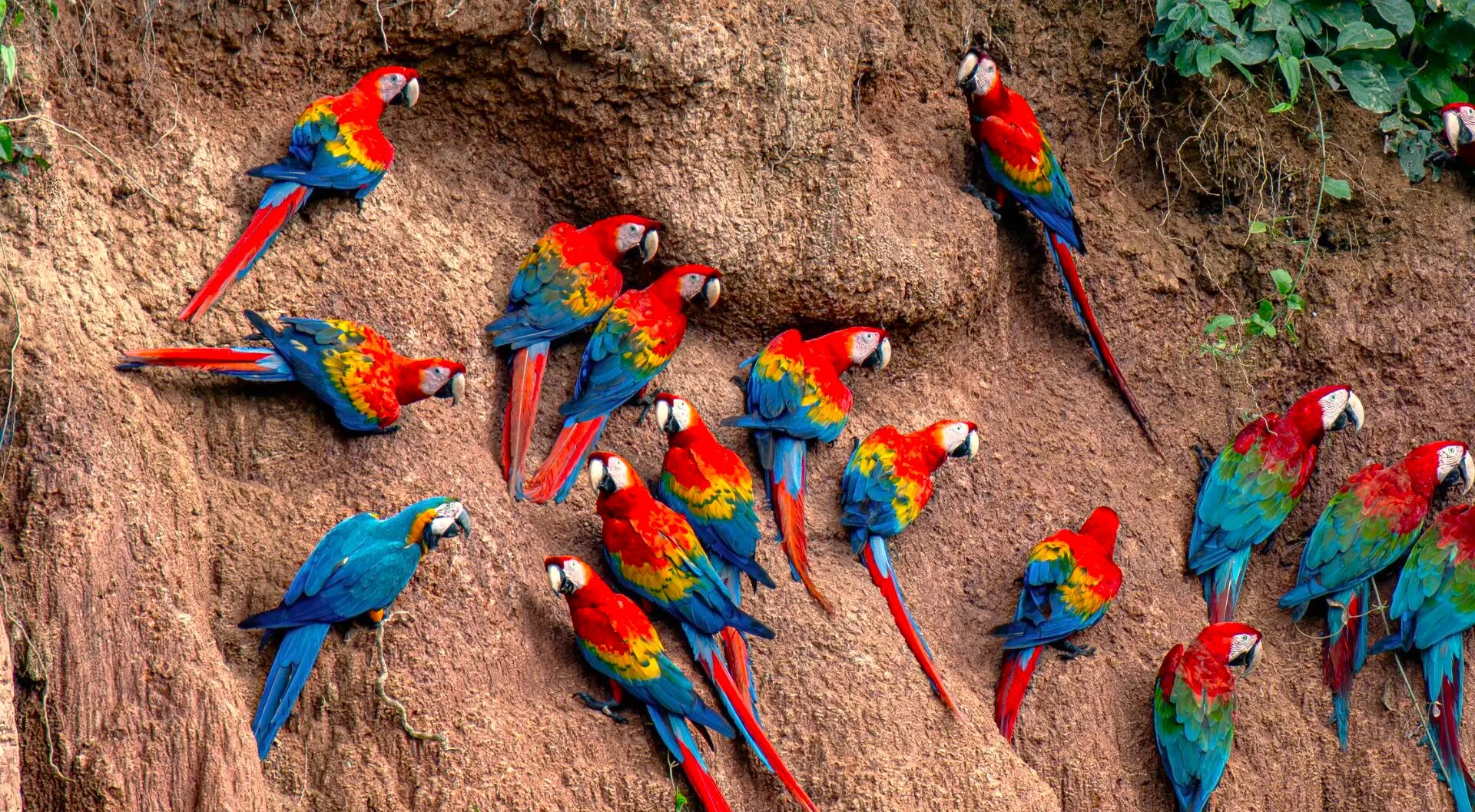 Within the lush expanse of the Peruvian Amazon, the Macaw Clay Lick in Tambopata stands out as one of nature’s most fascinating spectacles.
This unique site, located in the heart of the Tambopata National Reserve, attracts hundreds of brilliantly colored macaws each morning who gather on the clay-rich cliffs to feed, a behavior vital to their health and visually spectacular for observers.
The Macaw Clay Lick in Tambopata is more than just a meeting point for birds; it is a vivid expression of the Amazon’s incredible biodiversity and a must-see destination for birdwatchers, wildlife photographers, and ecotourists from around the world.
As the sun rises over the canopy and the macaws’ vibrant plumage illuminates the forest, visitors are treated to an unforgettable symphonic spectacle of color, sound, and life.
What is a Clay Lick and Why is it Important?
 Clay licks are fascinating natural sites where mineral-rich clay is exposed, attracting all kinds of wildlife, especially parrots and macaws. These sites are typically found along riverbanks or on cliffs, where erosion has exposed this nutrient-rich soil.
In places like the Tambopata National Reserve, clay licks play a vital role in the survival of many bird species. Macaws and parrots chew the clay to help neutralize toxins from their fruit-rich diet.
The minerals in the clay, especially sodium and calcium, aid digestion and detoxification, which is why these birds return to these sites day after day.
But the importance of clay licks goes far beyond simple nutrition. They also:
- Help maintain ecological balance by fostering healthier bird populations.
- They offer valuable research opportunities for scientists studying avian behavior and rainforest ecology.
- They promote sustainable ecotourism, which raises awareness and funds for conservation initiatives.
A clay lick is both a lifeline for wildlife and a window into the complex natural systems of the rainforest.
What species can be observed at the Macaw Clay Lick?
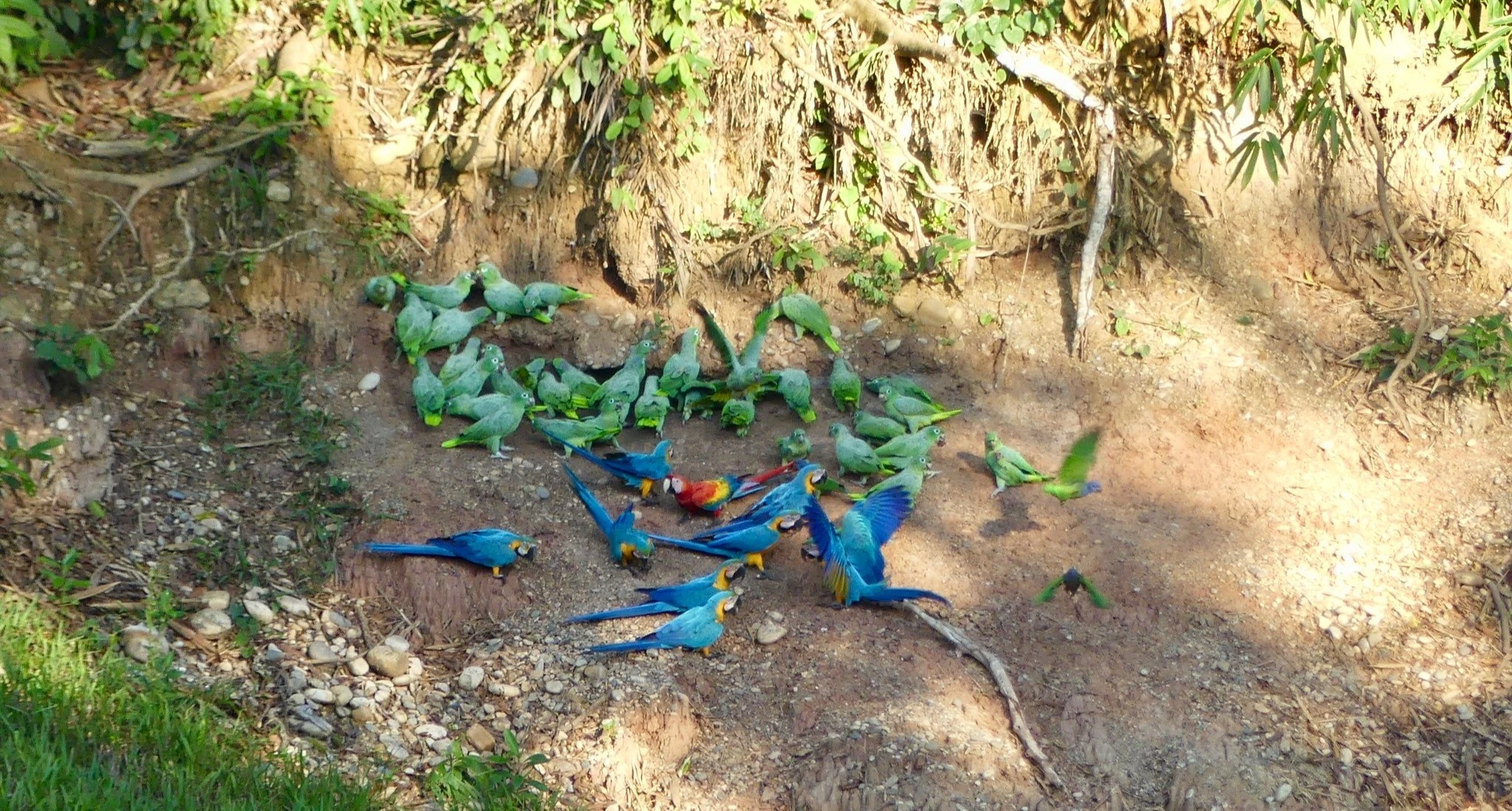 The Macaw Clay Lick in Tambopata is a paradise for bird lovers and wildlife photographers alike, offering a unique opportunity to observe an impressive variety of colorful Amazonian bird species up close. Among the most iconic birds we can frequently observe are:
Macaws
- Scarlet Macaw (Ara macao): Famous for its striking red, yellow, and blue plumage.
- Blue-and-Yellow Macaw (Ara ararauna): Easily identifiable by its bright blue wings and golden breast.
- Red-and-Green Macaw (Ara chloropterus): Often confused with the scarlet macaw, but slightly larger and with more green.
- Chestnut-fronted Macaw (Ara severus): A smaller species, often seen frolicking in pairs.
Parrots and Parakeets
- Mealy Amazon (Amazona farinosa)
- Cobalt-winged Parakeet (Brotogeris cyanoptera)
- Black-headed Parakeet (Aratinga weddellii)
Other Bird Species
- Occasionally, other rainforest birds, such as pigeons, doves, and orioles, can be observed joining the mix, taking advantage of the same mineral-rich clay.
- These birds gather in large groups at dawn, creating a vibrant and noisy environment as they compete for space on the mineral-rich clay walls.
Observers often enjoy a display of intricate social interactions, courtship rituals, and territorial behaviors, all while maintaining a respectful distance so the birds can act naturally.
Frequently Asked Questions About the Macaw Clay Lick in the Tambopata
📩 Get in Touch Now | 🌐 Visit Our Website