
South Valley Cusco Travel Guide 2026: Top Attractions, Tours & Hidden Gems
 The South Valley Cusco Travel Guide 2026 is your go-to resource for exploring one of the most authentic and less crowded in Cusco. This area combines history, culture, and natural beauty, from pre-Inca settlements and Inca terraces to colonial churches with Cusco School art.
Located just 25 to 60 minutes southeast of Cusco, the South Valley can be explored in a half-day tour or a full day for a deeper experience. Whether you are a first-time visitor seeking a relaxed introduction before Machu Picchu, this tour gives practical tips, recommended routes, and essential information.
For a hassle-free experience, book your South Valley Cusco tour with Cusco Journeys to enjoy expert guidance, comfortable transport, and insider knowledge.
What is the South Valley of Cusco?
The South Valley extends southeast of Cusco, covering areas within the provinces of Quispicanchis and Canchis. Unlike the more visited Sacred Valley, this route remains quieter and more cultural in focus.
Here, history unfolds chronologically:
- Wari civilization (pre-Inca urban centers)
- Inca Empire (agricultural terraces and hydraulic systems)
- Colonial period (Andean Baroque churches and Cusco School art)
Because the main attractions are located between 25 and 60 minutes from Cusco, it’s possible to explore the highlights in half a day — or take a full day to dive deeper.
Location and Altitude of the South Valley Cusco
The South Valley of Cusco is located southeast of the historic center, along the road that connects Cusco with Urcos and Puno. It includes districts such as Tipón, Lucre, Andahuaylillas, Huaro, and Raqchi.
- Average altitude: 3,150 – 3,400 meters above sea level
- Distance from Cusco: 25 – 60 km depending on the attraction
- Travel time: 40 minutes to 1 hour
Its altitude is very similar to Cusco city, making the South Valley Cusco tour an excellent option for gradual acclimatization before visiting Machu Picchu or doing high-altitude treks.
South Valley vs. Sacred Valley: which one should you choose?
Both valleys offer extraordinary experiences, but they differ in focus:
| South Valley | Sacred Valley |
|---|---|
| Archaeology + colonial art | Large Inca fortresses |
| Fewer crowds | Higher tourist flow |
| Ideal for acclimatization | More physically demanding |
| Half-day friendly | Usually full-day tours |
If you’ve just arrived in Cusco and want a lower-altitude, relaxed introduction before Machu Picchu, the South Valley is a smart choice. Many travelers include both valleys in their itinerary to gain a broader understanding of Andean history.
What to See in the South Valley Cusco
The South Valley Cusco attractions combine engineering, archaeology, religion, living culture, and natural landscapes. Below are the essential sites included in most South Valley Cusco tours.
Tipón – Inca Hydraulic Engineering Masterpiece
Tipón is considered one of the most impressive examples of Inca hydraulic engineering. Its water channels and terraces are still functioning perfectly after centuries.
During your visit, you will explore:
- 12 agricultural terraces
- Precisely carved stone canals
- Ceremonial fountains
- Royal garden sectors
Tipón demonstrates the Incas’ advanced understanding of water management and their spiritual relationship with natural elements.
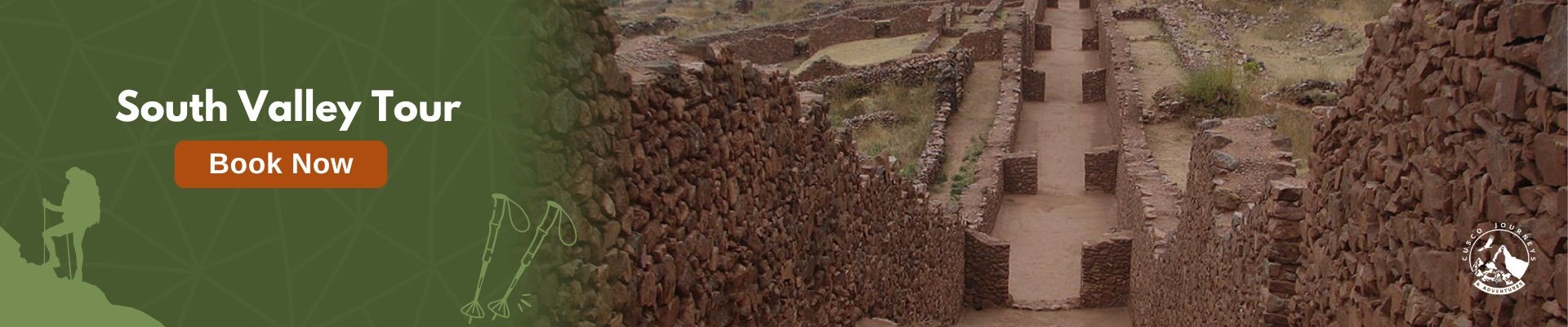
Pikillacta – The Wari Urban Center
Built between the 6th and 9th centuries, Pikillacta predates the Inca Empire and was constructed by the Wari civilization.
What makes this archaeological site unique:
- Over 700 architectural structures
- Orthogonal (grid-based) urban planning
- Defensive walls
- Administrative and residential sectors
It provides crucial insight into pre-Inca political organization and Andean urban development.
Andahuaylillas Church – The Sistine Chapel of the Americas
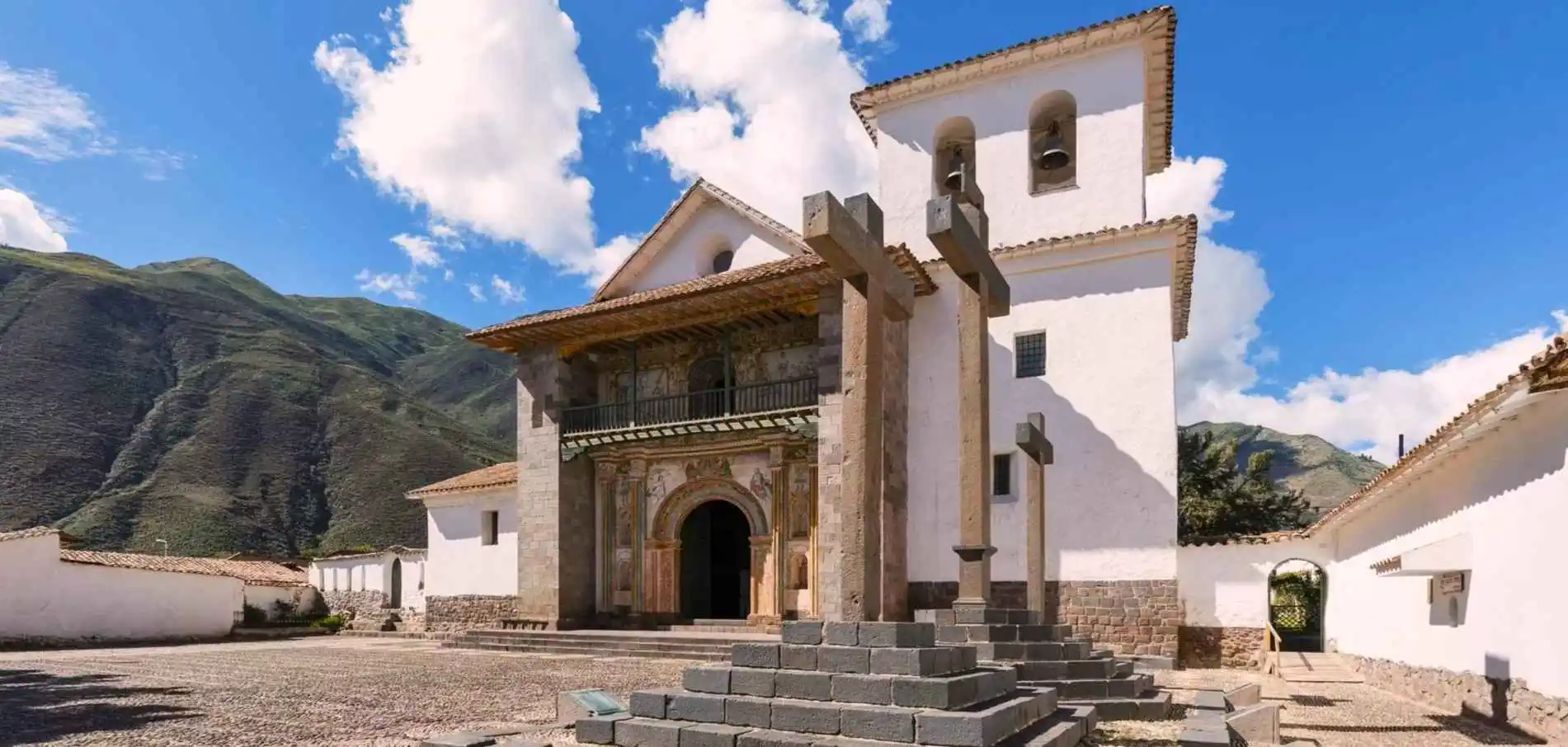 Located in the town of Andahuaylillas, this colonial church is one of the finest expressions of Andean Baroque art.
Inside you will find:
- Gold-leaf altars
- Frescoes covering ceilings and walls
- Paintings from the Cusco School
- Intricate wooden decorations
Although photography is not allowed inside, the artistic richness makes it one of the most impressive colonial temples in southern Peru.
Raqchi – Temple of Wiracocha
Further along the route lies Raqchi, home to the Temple of Wiracocha, one of the largest Inca religious structures.
Highlights include:
- Massive adobe-and-stone central wall
- Cylindrical columns
- Storage buildings (qolqas)
- Residential and ceremonial areas
Raqchi reflects the administrative and spiritual power of the Inca Empire beyond Cusco.
Huacarpay Lagoon – Nature and Biodiversity
Huacarpay Lagoon is a peaceful wetland ecosystem ideal for birdwatching and photography.
Visitors can:
- Observe native and migratory bird species
- Walk natural trails
- Capture panoramic Andean landscapes
- Combine archaeology and ecology in one visit
It adds a natural dimension to the South Valley Cusco itinerary.
Traditional Towns and Local Culture
 The South Valley is not only about archaeological sites — it is also about living traditions and authentic Andean communities.
Oropesa – Capital of Pan Chuta
Oropesa is famous for its traditional pan chuta, a large artisanal bread baked in clay ovens.
When visiting, you can:
- Explore traditional bakeries
- Taste freshly baked bread
- Experience a quiet Andean town atmosphere
The bread festival held annually highlights this important regional tradition.
Climate and Best Time to Visit
The South Valley Cusco has a temperate Andean climate with sunny days and cool nights. Temperature changes between morning and afternoon can be significant.
Key climate information:
- Altitude: 3,150 – 3,400 m.a.s.l.
- Dry season: May to October (best time to visit)
- Rainy season: November to April
- Average temperatures: 3°C to 23°C
Because the South Valley route is not physically demanding, it is ideal for your second day in Cusco while adjusting to the altitude.
How to Get to the South Valley from Cusco
There are three main transportation options for visiting the South Valley Cusco.
1.- Public Transport
Buses heading toward Urcos depart from Cusco and pass near major sites.
- Very economical (2–5 soles per segment)
- Requires schedule management
- Involves additional walking
This option is suitable for experienced independent travelers.
2.- Private Taxi
Hiring a taxi provides flexibility and comfort.
- Personalized itinerary
- Direct transfers
- Higher cost
- No professional guide included
It works well for small groups or families.3. Organized South Valley Cusco Tour (Recommended)
A guided tour is the most efficient and informative option.
- Half-day duration (5–6 hours)
- Professional bilingual guide
- Transportation included
- Optimized schedule
- Hotel pickup available
Most tours combine Tipón, Pikillacta, and Andahuaylillas in one seamless experience.