
The Ultimate Guide to the Huchuy Qosqo Trek
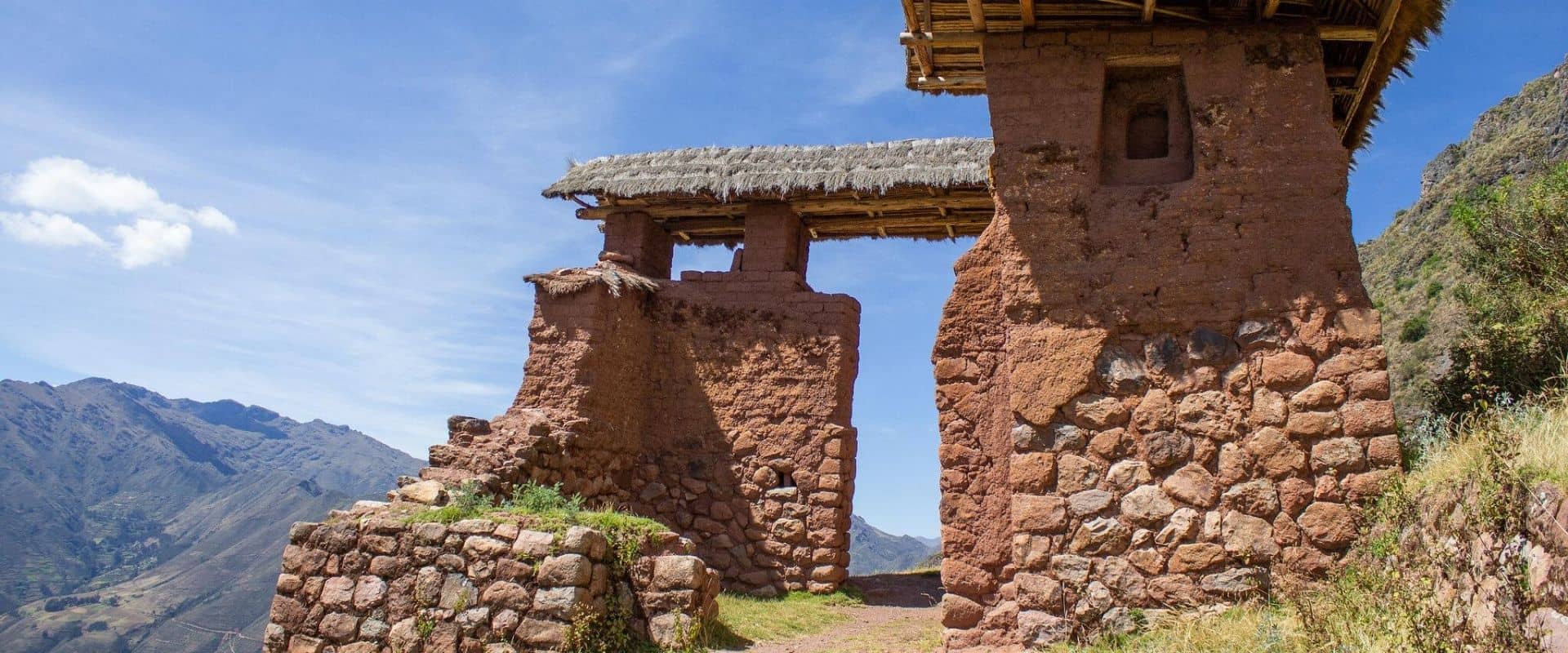 The Ultimate Guide to the Huchuy Qosqo Trek, this beautiful archaeological site known as Huchuy Qosqo and an ancient citadel ordered to be built by the Inca Viracocha at the beginning of the 15th century. Due to the passing of the years, and the destruction caused in the colony, the site is in a poor state of conservation.
Even so, it is still possible to observe its terraces, enclosures, rooms, water fountains and more. There is a section of the Inca trail that leads there. This route is part of the 2 and 3-days trek known as the ‘Huchuy Qosqo trek’, which ends in the Inca city of Machu Picchu.
History of Huchuy Qosqo
 Huchuy Qosqo is located 50 kilometers north of the city of Cusco (Peru), It was built in a place where small and ancient human groups settled before the Incas. In the late 14th century, the Incas annexed this part of the Sacred Valley to their expanding territory.
Then, the Inca Viracocha (also called Wiracocha) decided to build an urban area that would serve as a palace for himself and his family. It was then that he ordered the construction of Huchuy Qosqo, using materials such as stone and adobe.
At the beginning of the 15th century, Wiracocha chose Inca Urco as his successor. This one was incapable of making a good government. Faced with the threat of the invasion of the Chancas (rivals of the Incas) to Cusco; Wiracocha and Inca Urco escape to Huchuy Qosqo.
Then, the figure of Pachacutec, brother of Inca Urco, grows, who managed to defeat the Chancas and expand the empire. Due to this, Pachacutec is named Inca emperor, achieving a great expansion of the empire that came to include the current territories of Peru, Bolivia, Ecuador, Chile, Colombia and Argentina.
According to some chronicles, Wiracocha’s body was mummified in Huchuy Qosqo. After the invasion of the Spanish in Cusco, at the beginning of the 16th century, they decided to burn the body and loot the place. It is believed that the ashes of the Inca were kept by his descendants.
The walls and enclosures of the ancient city suffered severe damage over time. However, today it is possible to appreciate the foundations of the old palace of Wiracocha. Huchuy Qosqo is the name of the hiking route that leads to Machu Picchu, after 2 or 3 days.
The archaeological site of Huchuy Qosqo
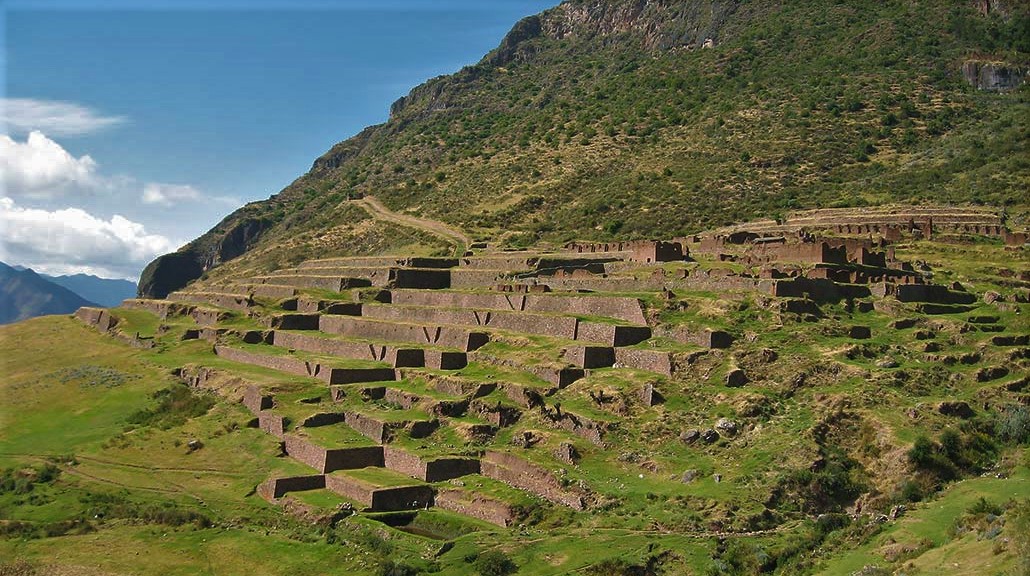 The archaeological site of Huchuy Qosqo is made up of the remains of walls, enclosures, squares, temples and water sources. The passage of time has damaged many of its structures. However, today you can still see the terraces for agricultural purposes arranged as walls.
It also highlights an enclosure with up to three floors (the first two made of stone and the last one made of adobe), whose function would have been to store food.
It also highlights a kind of rectangular square 40 to 50 meters long, which would have been called ‘Kallanka’and it would have served as a meeting place for important figures such as the Inca. The rest of the walls, aqueducts, platforms and enclosures are in poor condition. However, they provide an idea of the real importance of this place, ancient hacienda of the Inca Wiracocha.
Huchuy Qosqo Trek Options:
 The Huchuy Qosqo trek itinerary can be divided into two distinct route variations:
Huchuy Qosqo Trek to Machu Picchu 3 Days / 2 Nights
There are a few route itineraries available for the Huchuy Qosqo trek. The itinerary set out here is for a typical 3D/2N trek to Machu Picchu. It starts from the Tambomachay ruins which are just north of Cusco.
Detailed Itinerary
Day 1: Cusco – Patabamba – HuchuyQosqo.
We will begin the tour with an early morning pick up from your hotel, at 7:00 am, to drive right over to Patabamba (3800 m.). The day’s hike will start at this point, and will continue through Andean landscapes and over the Pukamarca Pass at 3,800m, we will hike along a path that leads to the Tauca town, where we encounter archaeological remains and wild crops, such as tarwi, and a large quantity of cactus.
We continue on to the Pukamarca pass at 4200, where we may enjoy views of the Surrounding area, immense mountains, Veronica, Pitusiray, Chicon and San Juan snow peaks.
Continuing the path, we will descend towards the beautiful, remote Andean pueblo, Pukamarca at 4010m, where we stop and have a short break. As get back on the move, we will walk downhill into a mystical ancient path which will lead us to the Leon Punku Ravine.
We will be led into a very narrow corridor, between some immense rock walls, where we will discover some Incan remains and various Inca bridges and sets of stairs (some of the best Inca Stairs anywhere).
This canyon is absolutely magical and boasts geological formations surrounded by majestic rocks and boulders that direct the river to Huchuy Qosqo at 3600m, where we will soon be arriving. Upon our arrival to the ruins in the evening, we will actually continue on past the ruins and to our accommodations for the night.
We will have dinner and sleep in the typical homestay of a native of the area, just to the side of the Huchuy Qosqo ruins.
- walking distance: 13km approx.
Day 2: Huchuy Qosqo – Ollantaytambo – Aguas calientes.
Huchuy Qosqo is an Inca archaeological complex which is perched precariously on the side of a mountain with imposing architecture that includes a large open ceremonial center, from which we enjoy an amazing panoramic view of the Sacred Valley, the Vilcanota River, and the snow capped mountain range of the same name.
While in the complex, we will receive a guided tour as we make our way around the ruins after which we continue our way down the mountain, to Lamay at 3000 m/ 9840 ft. Lamay is a town dedicated to agriculture and cattle raising.
Later in the afternoon, our private transport drives us to Ollantaytambo, where we will board an afternoon train to Aguas Calientes. The train ride to get there is an absolutely gorgeous route, renowned the world round for its’ beauty. Upon our arrival to Aguas Calientes all passengers will be shown their respective hotels.
- walking distance: 8km approx.
Day 3: MachuPicchu – Ollantaytambo – Cusco.
On the final day of your adventure, you’ll wake up early to visit one of the Seven Wonders of the World: Machu Picchu. At 5:30 am, we will head directly to the line to catch the first buses to the site.
We will arrive at the entrance as the sky begins to brighten, then ascend to the top of Machu Picchu, soaking in the breathtaking views of the ancient city. On a clear morning, the sunrise over Machu Picchu is truly magnificent, making for an unforgettable moment.
Your guide will take you on a 2-3 hour tour, where you’ll explore highlights such as the Temple of the Sun, the Royal Palace, the Main Temple, the Temple of the Three Windows, and the Sun Dial. This will be an unforgettable experience.
If you’ve booked a hike to Huayna Picchu or Machu Picchu Mountain, you’ll need to coordinate with your guide based on your scheduled mountain entry time. For those not hiking the mountains, there are other optional activities you can enjoy (not included in the price).
In the afternoon, you’ll head to the Aguas Calientes train station for your return journey to Ollantaytambo. Once there, you’ll be transferred by car back to your hotel in Cusco.
- Meals: Breakfast.
- Lowest Elevation: 2,040 m/ 6,691 ft.
- Highest Elevation: 2,440 m/ 8,052 ft.
What to Pack for Huchuy Qosqo Trek:
 After spending a lot of time travelling around Huchuy Qosqo Trek, we have come up with our definitive list of what to pack for a trek:
- Original passport.
- A light day pack with a change of clothes for the whole period of the trek – prepare for a vast range of changes in temperature.
- Rain gear (jacket and pants if available) or rain poncho.
- Strong footwear, waterproof trekking boots are recommended specially for the wet season.
- Sandals.
- Warm clothes.
- Headlamp or Flash light.
- Hat or cap to protect you from the sun, rain and cold
- Sun block and Insect repellent.
- After-sun cream or hydrating cream for face and body
- Toilet paper.
- Snacks.
- We recommend you getting your own medical kit with any special medications that you might require.
- Bathers/swimsuit.
- Cash – sufficient for tips and souvenirs, or any drinks or snacks you might want to buy along the way.
- Walking sticks or poles (you can hire these from us. Please note poles with metal tips cannot be carried into Machu Picchu and should be left at your hotel on the final day).
Huchuy Qosqo Trek Difficulty
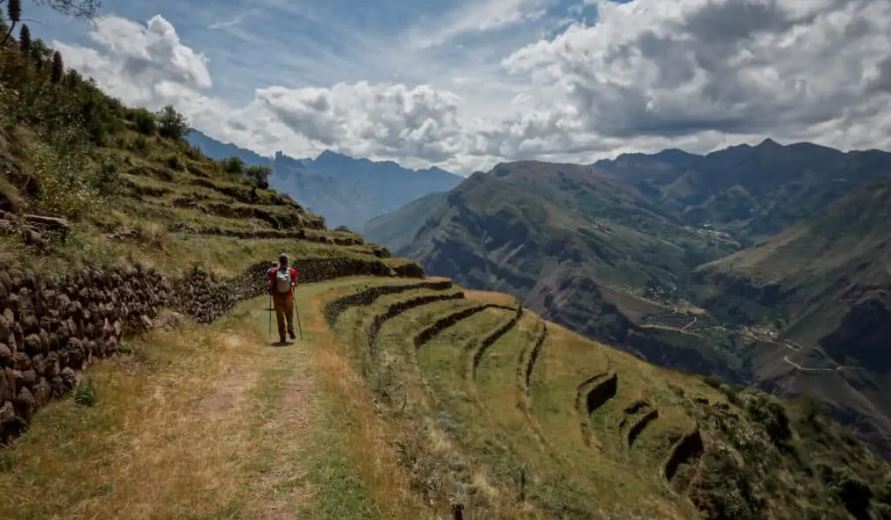 The Huchuy Qosqo trek is short and sweet – by Peru trekking standards anyway!
The Huchuy Qosqo hike is about 32km (19.69 miles) in total. Tour companies often split this up over two days with a visit to Machu Picchu on the third day. It is possible to hike Huchuy Qosqo in one day along a 13km / 8-mile route, which takes about 7 hours. In order to hike the Huchuy Qosqo trek, you should be relatively fit and have some solo-hiking experience to attempt this.
See more in our guide on how to train for Machu Picchu to give you a better idea of what to expect on formidable treks like Huchuy Qosqo.
There are also some steep downhill sections that are tough on the knees. Trekking poles will help for these descents. If you don’t have your own, you can rent trekking poles in Cusco. Something else you need to consider before hiking Huchuy Qosqo is the altitude. A long part of the trek is in high elevations. Make sure you are well acclimatized beforehand
Best Time To hike Huchuy Qosqo
There are two main weather seasons in this part of the Peruvian Andes:
- A dry season that runs from May through to September.
- A wet season that starts in October and runs through to April.
Overall, the best time for a Huchuy Qosqo trek is during the dry season (May-September).
- You can trek to Huchuy Qosqo all year round. I recommend avoiding January and February though, which are the wettest months.
- The dry shoulder months of March / April and October / November are pleasant. Be aware that there is a higher probability of encountering rain during these months.
Temperatures throughout the year are relatively consistent. The days are warm, reaching temperatures of 20°C (68°F) and higher. The nights and early mornings are cold, sometimes reaching below 0°C (32°F). Layered clothing is a must.
Other Route Options
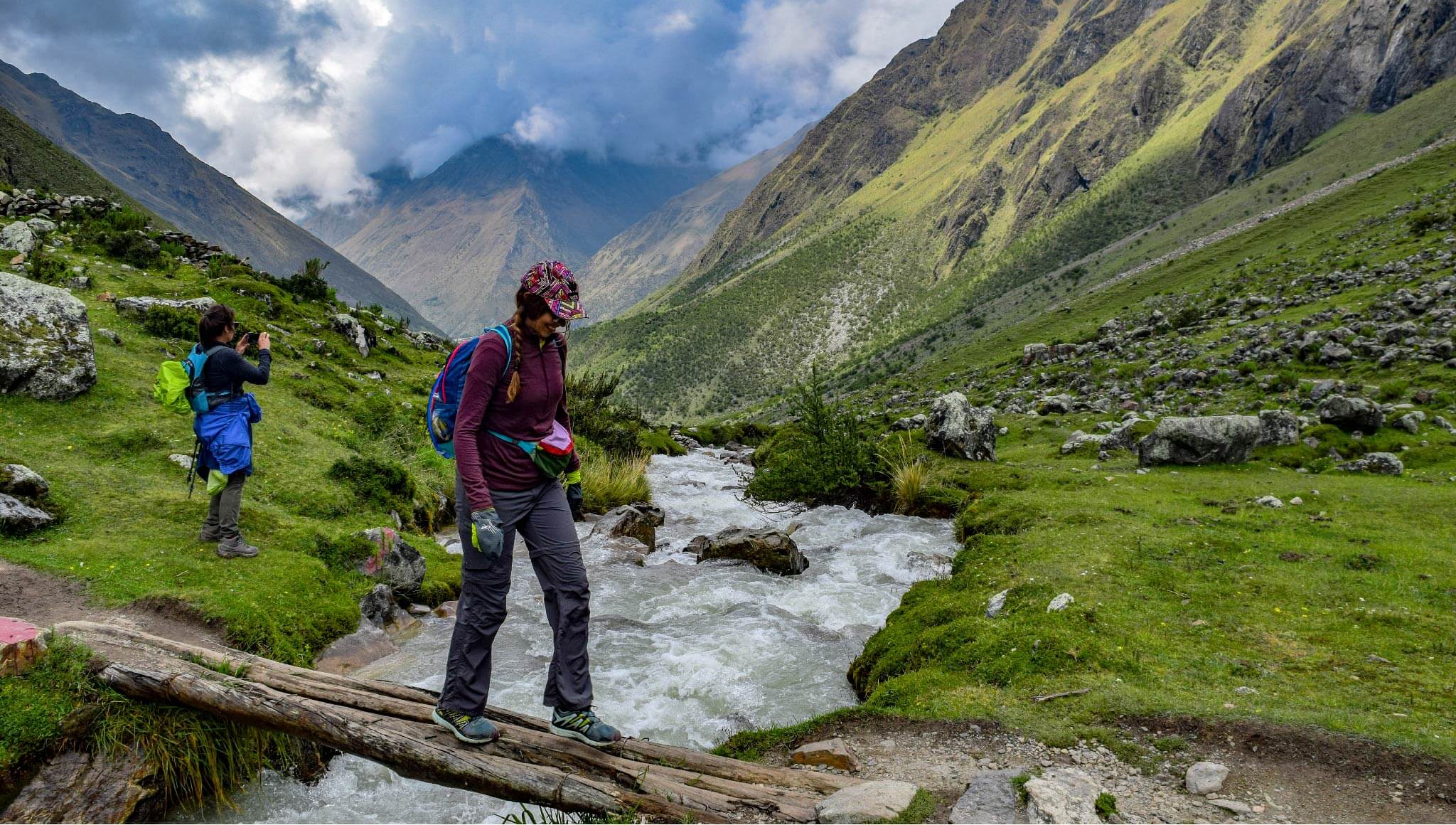
Want to do more exploring through Peru? Here are some of my favourite Machu Picchu trails:
- Inca Trail
- Salkantay Trek
- Lares Trek
- Inca Jungle Trek
- Ausangate Trek
- Choquequirao Trek
- Vilcabamba Trek
Trekking Insurance
Insurance for your trek to Machu Picchu is a must. Most operators will require you to carry sufficient travel insurance for your trek.
Most trails to Machu Picchu go over high 4,000m / 13,123 ft passes. You will need to make sure your insurance covers you for high-altitude hiking (up to 6,000m / 19,685 ft). We have reviewed several reputable travel insurance providers and the most affordable and best by far is World Nomads.
