
Pre Incan Civilizations of Peru
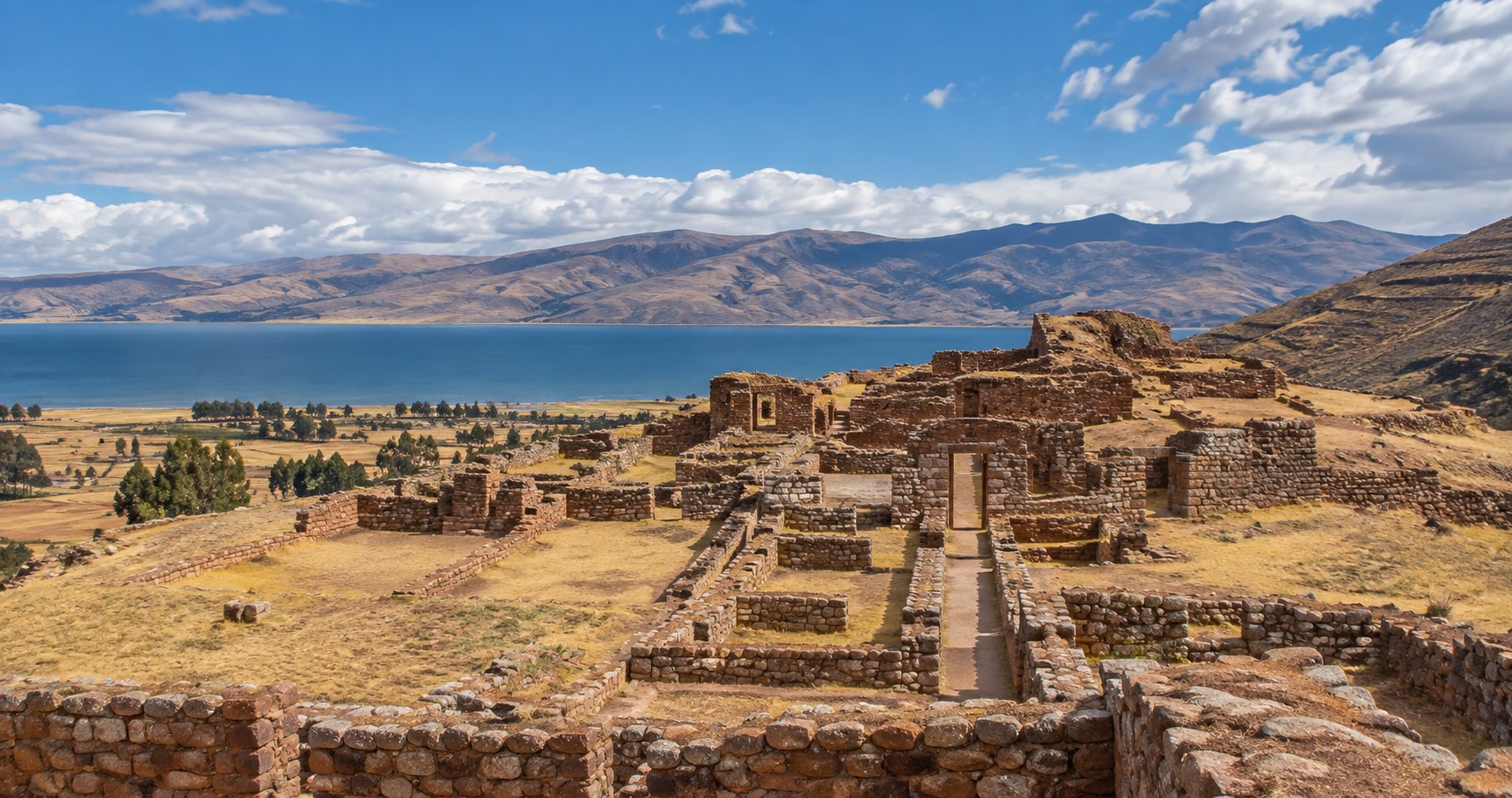 Pre Inca Civilizations of Peru developed across the coast, highlands, and eastern Andes long before the rise of the Inca Empire. Their cities, temples, agricultural systems, ceramics, textiles, and geoglyphs can still be seen at archaeological sites throughout the country.
From the monumental pyramids of Caral and the ceremonial center of Chavín to the Nazca Lines, Moche temples, Wari settlements, and the stone structures of Chachapoyas, these civilizations created different societies adapted to Peru’s varied landscapes.
Discover the vestiges of the ancient cultures of Peru through some of the most important pre-Inca civilizations and archaeological sites.
What Were the Pre-Inca Civilizations?
The term pre-Inca civilizations refers to the societies that developed in the Andes before the expansion of the Inca Empire during the 15th century.
These civilizations did not form a single continuous empire. They developed in different regions and periods, often at the same time. Some were centered on the Pacific coast, while others developed in the Andes or near the eastern slopes of the mountains.
Their achievements included monumental architecture, irrigation systems, long-distance trade, agriculture at high altitude, sophisticated ceramics and textiles, religious centers, and large settlements.
Several later Andean societies, including the Incas, developed in a landscape that had already been shaped by centuries of earlier cultural development.
Pre-Inca Civilizations Timeline
The following timeline gives an overview of some of the best-known pre-Inca civilizations of Peru.
Civilization |
Approximate Period |
Main Region |
Known For |
|---|---|---|---|
| Caral | 3000–1800 BC | Central coast | Pyramids, urban planning, ceremonial architecture |
| Chavín | 1500–300 BC | Northern highlands | Religious center, stone sculpture, Lanzón |
| Paracas | 700 BC–200 AD | Southern coast | Textiles, burials, ceramics |
| Nazca | 100 BC–650 AD | Southern coast | Nazca Lines, ceramics, puquios |
| Moche | 100–800 AD | Northern coast | Ceramics, irrigation, Huaca del Sol and Huaca de la Luna |
| Wari | 600–1000 AD | Central and southern Andes | Urban planning, expansion, agricultural systems |
| Tiwanaku | c. 500–1000 AD in its main Andean period | Lake Titicaca region | Stone architecture and high-altitude agriculture |
| Chimú | c. 900–1470 AD | Northern coast | Chan Chan, adobe architecture |
| Chachapoyas | c. 6th–16th centuries AD | Northern Andes | Kuelap, cliff settlements, funerary structures |
These dates overlap because several pre-Inca civilizations developed at the same time in different regions of the Andes.
Caral – Supe
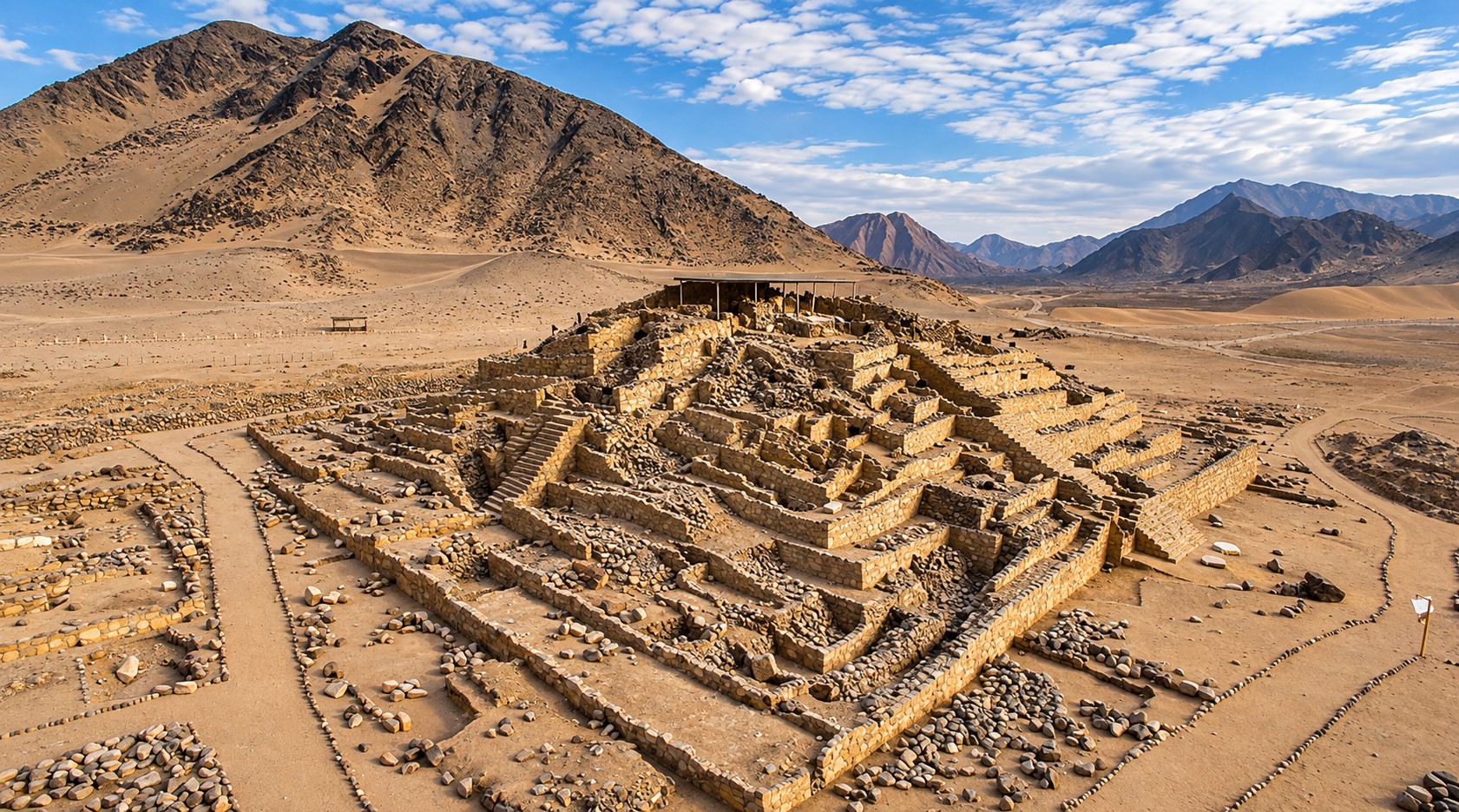 Caral is located in the Supe Valley on the central coast of Peru, approximately 200 km (124 miles) north of Lima. Its development dates to around 3000–1800 BC, making it one of the earliest known centers of civilization in the Americas. UNESCO describes Caral as the most highly developed and complex example of settlement from this formative period in the Americas.
The site contains monumental platform structures, pyramids, sunken circular courts, residential areas, and other evidence of organized urban life. Archaeological research has also identified evidence associated with early forms of quipu, showing the complexity of Caral society.
The Sacred City of Caral-Supe was inscribed on the UNESCO World Heritage List in 2009 and remains one of the most important archaeological sites for understanding the early development of civilization in the Americas.
Chavín de Huántar
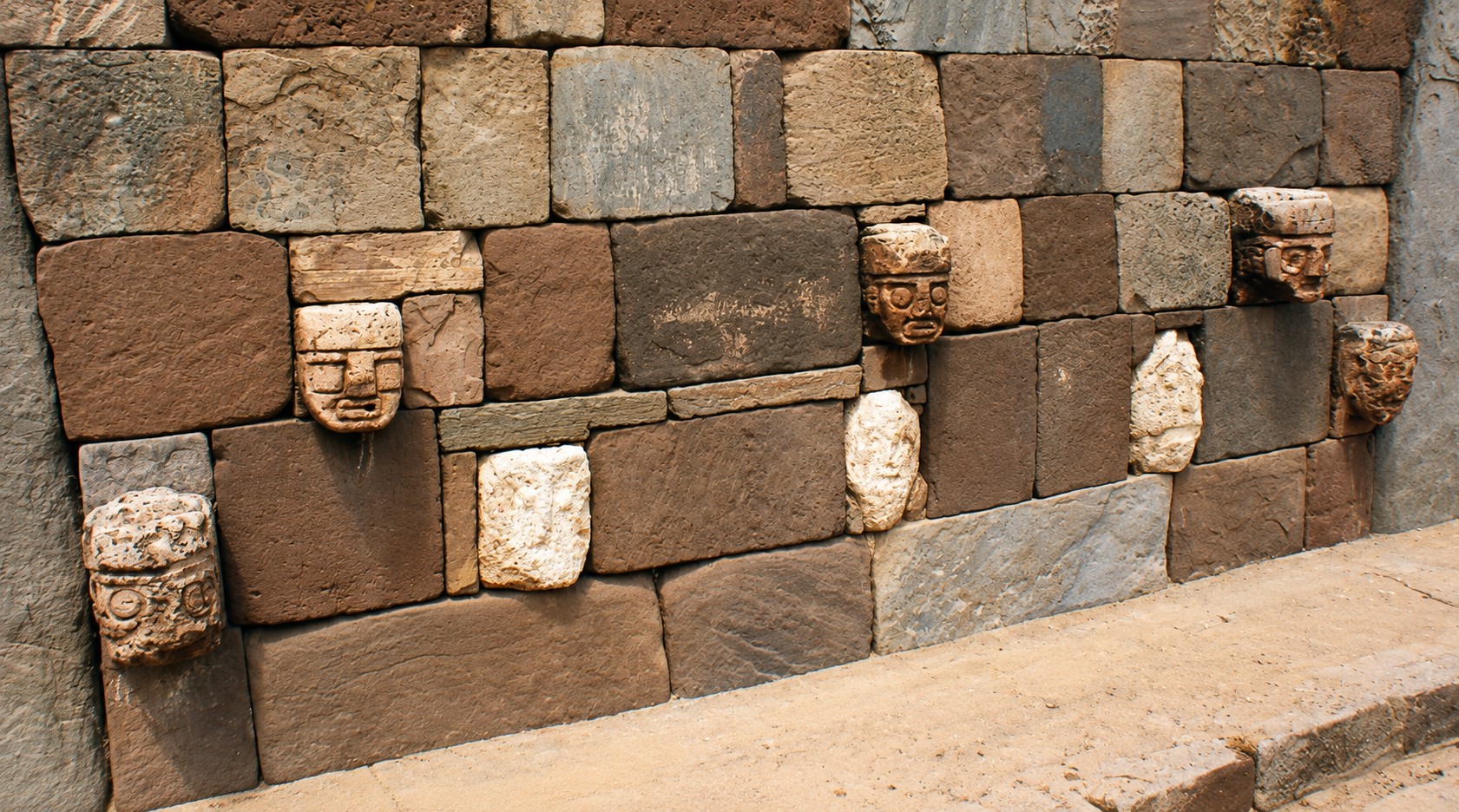 The archaeological site of Chavín de Huántar is located in the Ancash region of northern Peru. The Chavín culture developed approximately between 1500 and 300 BC and became an important ceremonial and religious center in the Andes.
The site is known for its stone architecture, plazas, underground galleries, carved sculptures and complex drainage and ventilation systems. Important monuments include the Lanzón, the Raimondi Stela, the Tello Obelisk, and the famous tenon heads.
The Chavín culture was one of the most important early cultures of Peru, influencing a large part of the ancient Andes. The archaeological site provides important evidence of early religious, architectural and artistic development in Peru.
Paracas Culture
The Paracas culture developed on the southern coast of Peru, particularly around the Paracas Peninsula and the Ica region, before the rise of the Nazca culture.
Paracas is particularly known for its highly developed textiles, ceramics, and funerary practices. Archaeological discoveries from Paracas burial sites have provided important information about clothing, social organization, and religious traditions in ancient Peru.
The culture is also important for understanding the development of later societies on the southern coast, including the Nazca.
Nazca or Nasca Culture
The Nazca culture developed in the Ica region of southern Peru. The Nazca were skilled artisans who produced highly decorated ceramics and textiles.
Agriculture was particularly important because the region is extremely dry. The Nazca developed irrigation and underground water systems known as puquios, which helped provide water in the desert environment. The Nazca aqueducts are significant examples of ancient water management in southern Peru and are currently included on Peru’s UNESCO Tentative List.
Which Pre-Inca Civilization Was Known for Underground Aqueducts?
The Nazca civilization is particularly associated with underground aqueduct systems known as puquios. These systems helped transport and access water in one of the driest regions of Peru.
The Nazca are also famous for the Nazca Lines, enormous geoglyphs created on the desert surface. The UNESCO World Heritage property covers the Lines and Geoglyphs of Nasca and Palpa, which include representations of animals, plants, geometric forms and other figures.
The Nazca Lines were created over a long period, with many of the geoglyphs dating between approximately 500 BC and AD 500. Their exact purposes continue to be studied by researchers.

Moche or Mochica Culture
The Moche culture developed along the northern coast of Peru between approximately 100 and 800 AD.
The Moche are particularly well known for their realistic ceramics, which depict people, animals, plants, religious figures, and scenes from everyday life. Their pottery provides valuable information about Moche society, religion, and customs.
The Moche also developed sophisticated irrigation systems that allowed agriculture in the dry coastal environment. Two of their most important monumental structures are Huaca del Sol and Huaca de la Luna, located near the modern city of Trujillo.
Wari Culture
The Wari people, also known as the Huari, developed in the central and southern Andes and expanded into parts of the Peruvian coast between approximately 600 and 1000 AD.
The Wari established settlements and administrative centers over a large territory. Their expansion has been associated with political organization, agriculture, religious practices, and military power.
Their capital was located near present-day Ayacucho. Wari influence can also be seen at archaeological sites such as Pikillaqta near Cusco, an important Wari settlement in the Cusco region.
This connection makes Wari history particularly relevant for travelers visiting Cusco and the Sacred Valley. The archaeological remains of Wari and related sites help explain the cultural development of the Andes before the rise of the Inca Empire.
Tiwanaku or Tiahuanaco
 Tiwanaku was one of the most important civilizations of the Titicaca Lake region and developed across areas of present-day Bolivia and southern Peru.
Its main ceremonial and urban center is located in present-day Bolivia, approximately 20 km south of Lake Titicaca. Tiwanaku is known for monumental stone architecture and sophisticated agricultural techniques adapted to the high-altitude environment.
Farmers used raised-field systems known as waru waru, which helped manage water and temperature in the cold Altiplano environment.
The civilization is an important part of the pre-Inca history of the southern Andes and provides context for the cultural development of the Lake Titicaca region.
Chimú Culture
The Chimú civilization developed on the northern coast of Peru after the decline of the Moche culture.
Its political and economic center was Chan Chan, a huge adobe urban complex near present-day Trujillo. Chan Chan became the capital of the Chimú Kingdom and developed into one of the largest pre-Columbian cities in South America.
The Chimú were skilled in agriculture, irrigation, metalworking, textiles, and architecture. Their territory eventually extended along a large part of the northern Peruvian coast before the Chimú Kingdom was incorporated into the Inca Empire in the 15th century.
Chan Chan remains one of the most important archaeological sites for understanding the societies that developed in Peru before the Incas.
Chachapoyas Culture
The Chachapoyas developed in the northern Andes of Peru, particularly around the Utcubamba Valley and the eastern slopes of the Andes.
Their settlements were adapted to a mountainous environment with forests, cliffs, valleys, and steep terrain. Archaeological remains include stone settlements, funerary structures, and fortified or ceremonial sites.
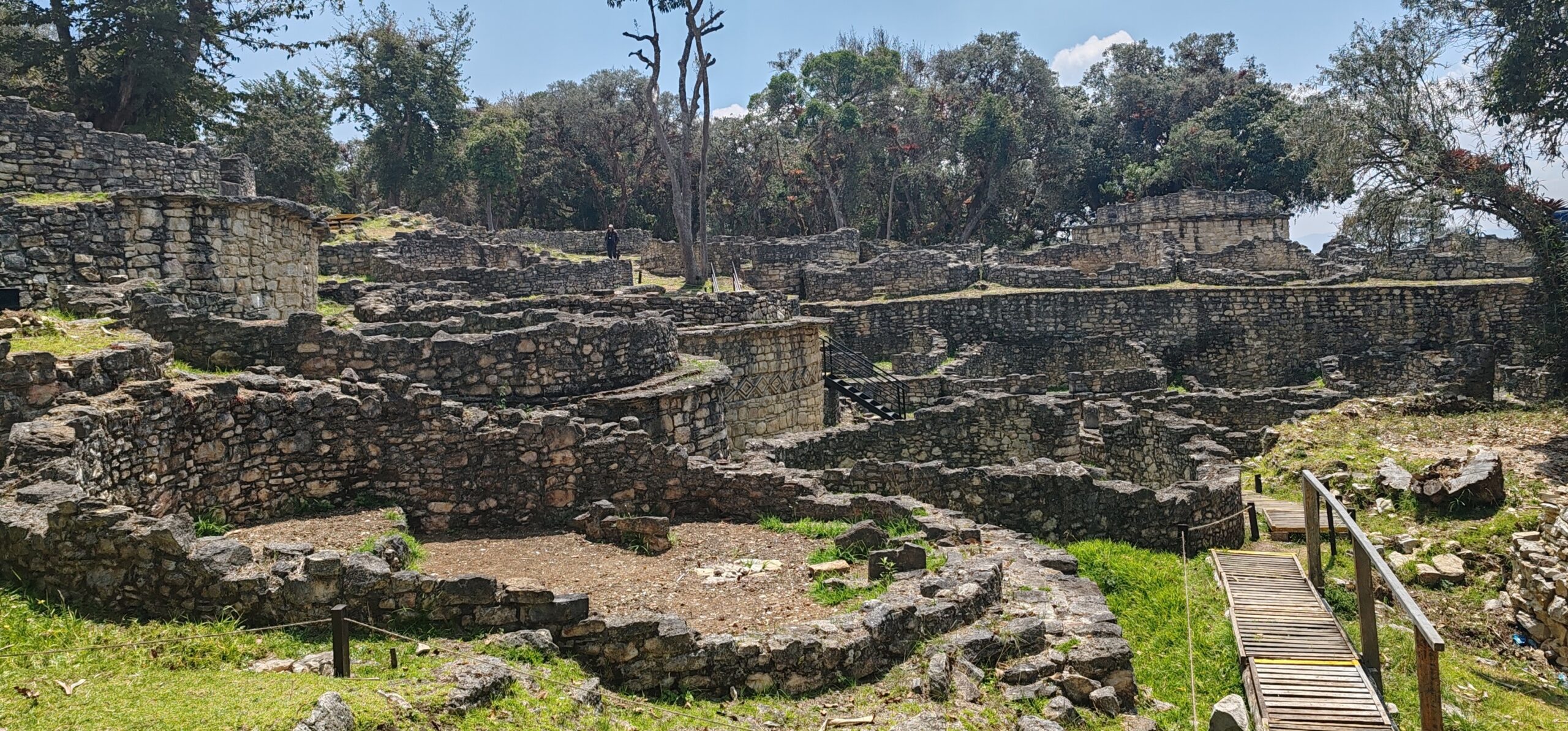
One of the best-known Chachapoyas sites is Kuelap, a large stone complex located high in the northern Andes. The Chachapoyas developed as an autonomous society before being incorporated into the Inca Empire during the 15th century.
What Did the Pre-Inca Civilizations Have in Common?
Although these civilizations developed in different regions and periods, several common characteristics can be identified.
Agriculture and Water Management
Agriculture was essential throughout the Andes. Coastal societies such as the Moche and Nazca developed irrigation and water-management systems, while highland societies developed techniques adapted to cold temperatures, steep terrain, and limited arable land.
Monumental Architecture
Pre-Inca societies constructed pyramids, temples, plazas, settlements, ceremonial centers, and administrative complexes using different materials and construction techniques.
Caral used monumental earthen and stone structures, Chavín developed large ceremonial architecture, Moche societies built adobe huacas, and Wari constructed large planned settlements.
Trade and Regional Connections
These civilizations were not isolated. Goods, ideas, technologies, and religious traditions moved between different regions of the Andes.
Coastal societies exchanged products with communities in the highlands, while highland centers maintained connections with areas far from their political centers.
Religion and Ceremonial Centers
Religion played an important role in many pre-Inca societies. Sites such as Caral and Chavín contain evidence of ceremonial activities, while later cultures developed temples, plazas, tombs, and other spaces connected with religious practices.
How Did Pre-Inca Civilizations Influence the Incas?
The Inca Empire did not develop independently from earlier Andean societies.
When the Incas expanded across the Andes, they encountered established agricultural systems, roads, settlements, political traditions, religious practices, and technologies developed by earlier civilizations.
The Incas adapted and expanded many existing Andean practices, incorporating different regions and populations into the Tawantinsuyo.
For this reason, understanding the pre-Inca civilizations helps explain how the Andean world developed before the expansion of the Inca Empire.
Best Pre-Inca Archaeological Sites to Visit in Peru
Travelers interested in Peru’s ancient civilizations can visit archaeological sites associated with different periods and regions.
Some of the most important include:
- Caral-Supe – Central coast
- Chavín de Huántar – Ancash
- Nazca Lines and Palpa – Ica
- Huaca del Sol and Huaca de la Luna – Trujillo
- Chan Chan – Trujillo
- Wari – Ayacucho
- Pikillaqta – Cusco
- Kuelap – Amazonas
- Paracas archaeological sites – Ica
These sites show how different societies adapted to Peru’s deserts, mountains, valleys, and high-altitude environments long before the Incas.
Why Are the Pre-Inca Civilizations Important?
The history of Peru did not begin with the Incas. Thousands of years of cultural development preceded the expansion of the Inca Empire.
Caral demonstrates the early development of urban society in the Americas. Chavín shows the importance of ceremonial centers and stone architecture. Paracas and Nazca demonstrate advanced textile, ceramic, and water-management traditions. Moche and Chimú developed large coastal societies supported by irrigation, while Wari and Chachapoyas developed important highland settlements.
Together, these civilizations form the cultural and archaeological background to the later development of the Inca Empire.