
Learning the Quechua Language for Peru Travel
 Learning the Quechua language for Peru travel is one of the best ways to connect with the country’s living cultural heritage.
As the language of the Inca civilization, Quechua continues to be spoken by millions of people across the Peruvian Andes, especially in Cusco, the Sacred Valley, Apurímac, Ayacucho, and Puno. Even learning a few basic words can make your journey more authentic while showing respect for local traditions and communities.
Although the official language of Peru is Spanish, Quechua remains the country’s most widely spoken Indigenous language. You’ll hear it in traditional markets, local festivals, rural villages, and even in the names of famous places such as Machu Picchu, Ollantaytambo, Tambomachay, and Sacsayhuamán.
This guide will teach you practical Quechua phrases, common place names, and useful expressions to help you communicate with local people and better understand Peru’s fascinating culture.
Why Learn the Quechua Language Before Traveling to Peru?
Learning a few Quechua expressions before traveling to Peru can enrich your experience far beyond sightseeing.
Many local people appreciate visitors who make the effort to speak their ancestral language, even if it’s only a simple greeting or a word of thanks. These small gestures often create genuine connections and memorable cultural experiences.
Quechua is still an important part of everyday life in many Andean communities.Whether you’re visiting local markets, hiking ancient trails, or joining cultural experiences, understanding a few common words helps you appreciate the traditions, history, and identity that continue to shape modern Peru.
It is not only a language of the past but also a living expression of Andean culture.
Where Is Quechua Spoken in Peru?
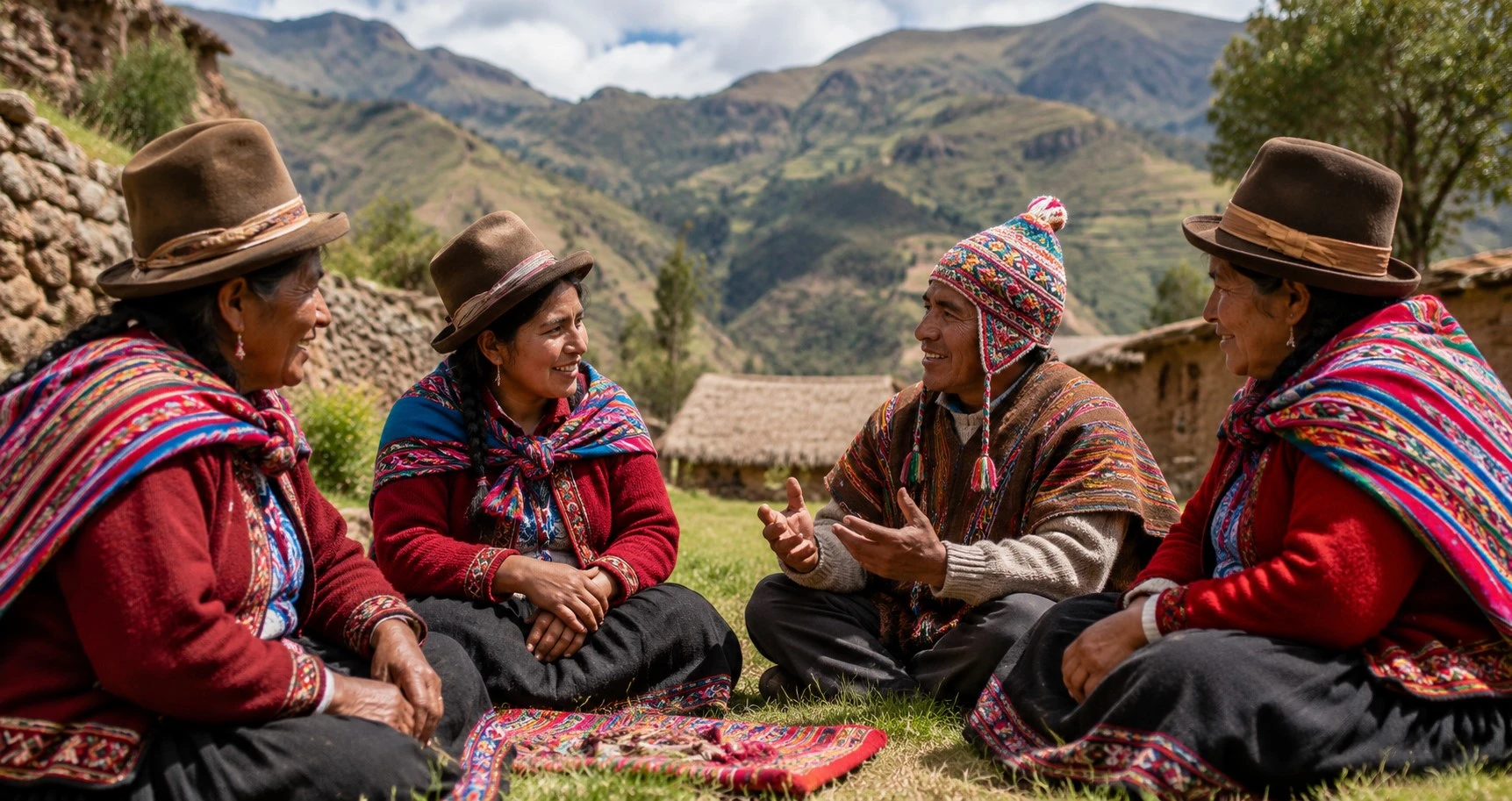 Quechua is spoken throughout much of the Peruvian Andes, with the largest communities found in Cusco, Apurímac, Ayacucho, Puno, Huancavelica, and Ancash. In many rural villages, it remains the first language used at home, in schools, local markets, and traditional celebrations.
Travelers are likely to hear Quechua while exploring archaeological sites, visiting Andean communities, or joining cultural tours across southern Peru. Many of the country’s most famous destinations preserve their original Quechua names, reflecting the enduring influence of the Inca civilization on Peru’s geography, culture, and daily life.
Greetings and Farewells
Learning a few basic Quechua greetings is one of the easiest ways to connect with local people during your trip to Peru. Whether you’re visiting traditional markets, exploring Andean villages, or joining cultural tours, these everyday expressions will help you communicate respectfully and enjoy a more authentic travel experience.
Imaynallan = A general greeting used with everyone at any time of the day.
¿Imaynallan kashanki? = How are you?
Answer: Allillanmi = I’m fine.
¿Sutiykita willayway? = Tell me your name.
¿Iman Sutiyki? = What is your name?
Answer: Sutiymi… = My name is…
Tupananchiskama = Until next time.
Where Is Quechua Spoken in Peru?
Quechua is spoken throughout much of the Peruvian Andes, especially in Cusco, Apurímac, Ayacucho, Puno, Huancavelica, and Ancash. In many rural communities, it remains the primary language used in daily life, local markets, traditional celebrations, and family gatherings.
Visitors will often hear Quechua while exploring archaeological sites, Andean villages, and cultural attractions across southern Peru. Learning a few basic expressions will help you communicate more naturally and gain a deeper appreciation of Peru’s living cultural heritage.
Quechua Language Guide for Place Names
Understanding common Quechua words will help you recognize the meaning of many place names found throughout Peru. Mountains, valleys, archaeological sites, rivers, and villages often preserve their original Quechua names, reflecting the country’s rich cultural heritage and the lasting influence of the Inca civilization.
- Pata: A hill or elevated place, but not a mountain, which is known as “Picchu.”
- Waka: A sacred place or shrine.
- Wasi (or Huasi): A house. This word appears in many hotel and lodge names, such as Inkawasi.
- Llaqta (or Llacta): A village or settlement. It is commonly used to describe the main archaeological site of Machu Picchu.
- Bamba (or Pampa): A plain or open field, found in names such as Urubamba and Oxapampa.
- Tambo (or Tampu): An Inca resting place or administrative center, as seen in Ollantaytambo and Tambomachay.
- Inti: The sun, one of the most important deities in the Inca civilization. It appears in names such as Intipunku (Sun Gate).
- Killa (or Quilla): The moon, frequently used in hotel and local business names throughout Cusco.
Cost
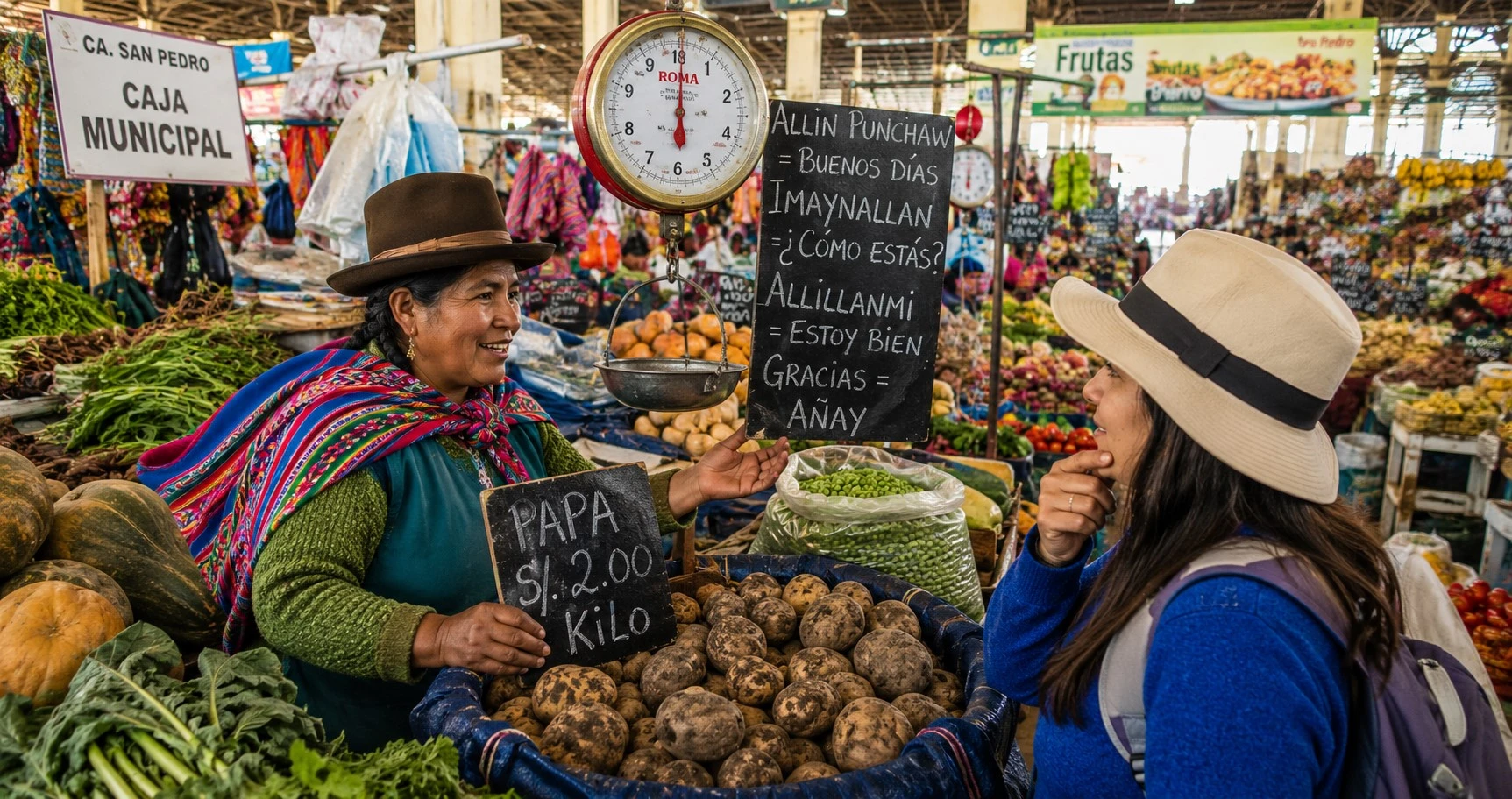 Shopping at traditional markets and artisan fairs is one of the highlights of traveling in Peru. These simple Quechua phrases will help you ask for prices and communicate more naturally with local vendors.
Useful Phrases
- ¿Hayq’an? = How much does it cost?
- Añay = Thank you.
Numbers
| Quechua | English | Quechua | English |
|---|---|---|---|
| Huk | One | Soqta | Six |
| Iskay | Two | Qanchis | Seven |
| Kinsa | Three | Pusaq | Eight |
| Tawa | Four | Esqon | Nine |
| Pisqa | Five | Chunka | Ten |
Location
Knowing a few Quechua expressions for directions can make it easier to communicate while exploring Peru. Although Spanish is widely spoken, many streets, mountains, rivers, and archaeological sites still preserve their original Quechua names, especially in the Andean regions.
These useful phrases will help you ask for directions, understand place names, and feel more confident while visiting Cusco and other destinations throughout Peru.
¿Maypin kashani? = Where am I?
¿Imainatan chayayman Plaza de Armasman? = How do I get to the Plaza de Armas?
The name “Plaza de Armas” is not translated into Quechua. Instead, the suffix “man” is added to indicate direction.

¿Maymantan kanki? = Where are you from?
Noqa kani Estados Unidos suyumanta = I am from the United States.
Haku = Let’s go.
Hamuy = Come.
Eating
Peru is internationally recognized for its world-class cuisine, and learning a few Quechua phrases can make your dining experience even more enjoyable. Whether you’re eating at a traditional restaurant or visiting a local market, these simple expressions will help you ask about food and drinks with confidence.
¿Ima mihunacha kashan? = What is there to eat?
¿Ch’akipaq imachan kashan? = What do you have to quench my thirst?
¿Iman kashan uhanapaq? = What do you have to drink?
Friend or Brother
Family and friendship play an important role in Andean culture. In Quechua, the words used for brothers and sisters change depending on who is speaking, reflecting the close relationships and respect that characterize traditional communities.
Brother to Brother = Wayqey
Sister to Sister = Ñanay
Brother to Sister = Panay
Sister to Brother = Turay
Flirting
Quechua has long been used in traditional songs and poetry to express affection and admiration. If you’d like to learn a few romantic expressions, these phrases offer a fun way to discover another beautiful aspect of this ancestral language.
¿Sapallaykiraqchu kanki? = Are you single?
Noq’a sapallayraqmi kani = I am single.
Munaycha kanki = You are beautiful / cute.
Munakuyki = I love you.
Kuyakuyki = I love you.
Data / Tip
Quechua is the third most widely spoken language in South America after Spanish and Portuguese. Today, it is spoken by millions of people across Peru, Bolivia, Ecuador, Argentina, Chile, Colombia, and parts of Brazil. As one of the oldest living languages in the Americas, it continues to preserve centuries of history, traditions, music, and cultural identity.
Why Quechua Is Still Important Today
 Quechua is much more than the language of the Inca civilization. It remains a living language that continues to unite communities across the Andes through traditions, festivals, music, and everyday life. Millions of people still speak Quechua as their first language, making it one of South America’s most important Indigenous languages.
For travelers, learning even a few Quechua words is a meaningful way to connect with local communities and gain a deeper appreciation of Peru’s rich cultural heritage.
Every greeting and expression helps preserve a language that has been passed down from generation to generation.
Now You Need to Practice
Now that you’ve learned the basics of the Quechua language for Peru travel, it’s time to put your new skills into practice. Whether you’re visiting local markets, exploring archaeological sites, or meeting people in Andean communities, even a few Quechua words can make your journey more authentic and rewarding.
Learning the Quechua language for Peru travel is more than memorizing words—it’s an opportunity to connect with local traditions, understand Peru’s rich cultural heritage, and enjoy a deeper travel experience. When you’re ready to discover Peru, explore our Peru Travel Packages and visit the country’s most authentic destinations.