
Medicinal Secrets of the Amazon Rainforest
 The Peruvian Amazon Rainforest is full of yet-to-be-discovered medicines and chemicals coveted by scientists worldwide. But indigenous people in the Amazon, of course, have known the power of rainforest plants for thousands of years! During your trip visit to the our lodges. To give you a taste of these traditional healing practices, I’ve included seven of the most important medicinal plants used in Tambopata, Manu and around the Amazon basin.
1. Ayahuasca
 In Quechua, Ayahuasca (Banisteriopsis caapi) means “vine of the soul” or “vine of the dead.” In recent years, the plant has received worldwide attention — both good and bad — as a psychedelic drug that travelers seek out for a bohemian “trip.” But the reality of Ayahuasca is much closer to that original meaning.
For centuries, probably longer, Amazonian indigenous people have macerated and boiled the plant to use in sacred, ritual practice. Shamans use Ayahuasca to connect their patients with the spiritual realm or their ancestors, and for other medicinal purposes.
2. Chacruna
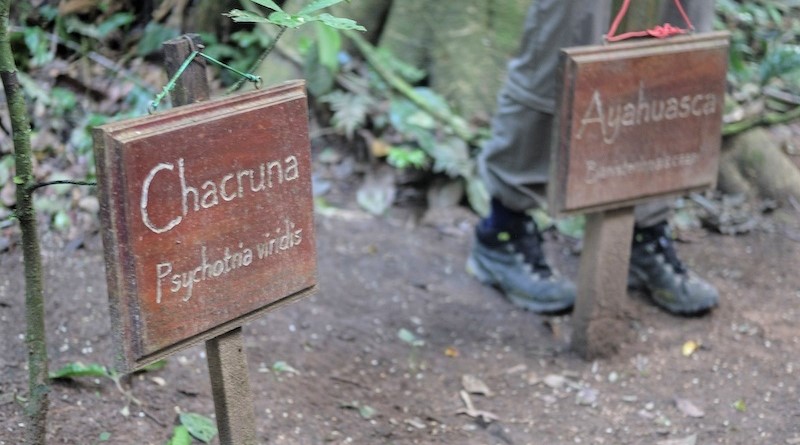 While many people think of Ayahuasca as a single, psychotropic plant, Shamans in the Tambopata area actually mix the vine with Chacruna, a small shrub, for spiritual ceremonies. Chacruna (Psychotria viridis) contains the hallucinogenic chemical DMT, which mixes with the MAOI anti-depressant compound in Ayahuasca to make a potent brew.
Today, this combination of the Ayahuasca and Chacruna plants (or similar plants with DMT) has reached far beyond the Amazon itself. Several churches and spiritual movements, most notably the Brazilian Santo Daime Church, have spread Ayahuasca’s psychedelic practice worldwide.
The use of the plants has incited controversy and challenging legal and cultural questions: What tensions may exist between indigenous people using the Ayahuasca brew traditionally, and North Americans and Europeans using it to have a personal psychedelic journey? Should the plants’ use be legal internationally?
3. Uña de Gato or Cat’s claw
 The tall vines of Uña de Gato curve upwards around tree trunks, with tiny, twisted green thorns under the leaves — giving rise to the plant’s name, “Cat’s Claw” in English. Amazonian peoples use Uña de Gato’s roots as a “cure-all” medicine for everything from rheumatism pain to toothaches, deep injuries to ulcers.
Since European scientists encountered the Amazon plant in 1830, it’s become common around the globe. Several varieties serve different healing purposes in North America and Europe, and a different type is common in Chinese medicine. Today, Uña de Gato is a popular herbal supplement, and scientists have begun to study the root.
So far, they’ve discovered that the plant may help regulate the immune system, have anti-inflammatory properties, and possibly fight viruses or bacteria as well! One of Uña de Gato’s traditional uses is slightly less, well, medical, but perhaps just as useful: in the Peruvian Amazon, some consider it an aphrodisiac.
4. Achiote or Annatto
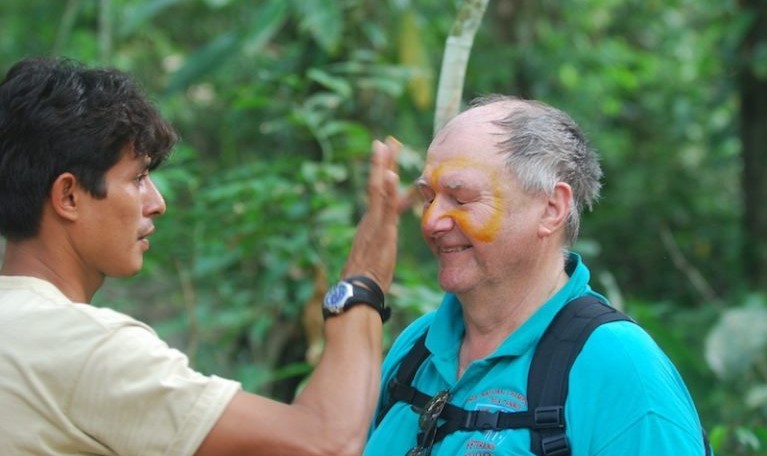 You might not recognize Achiote’s spiky, bright red fruit at first glance, but if you’ve traveled in Latin America, chances are you’ve tasted it! Cooks add the crushed seeds of the Achiote tree (Bixa orellana) to dishes to give them yellow or orange color, along with a slightly peppery, nutty flavor.
But Achiote, also called Annatto, is much more than a tasty ingredient. Amazonian indigenous groups have used it for ritual body painting, sunscreen, insect repellent, and more. Some people use the leaves as well, boiling them to treat fevers or speed up the healing of wounds.
Recently, scientists have studied Achiote more formally, and so far they’ve found that it contains carotenoids, calcium, and folates. The plant may also have antioxidant effects.
5. Sanipanga
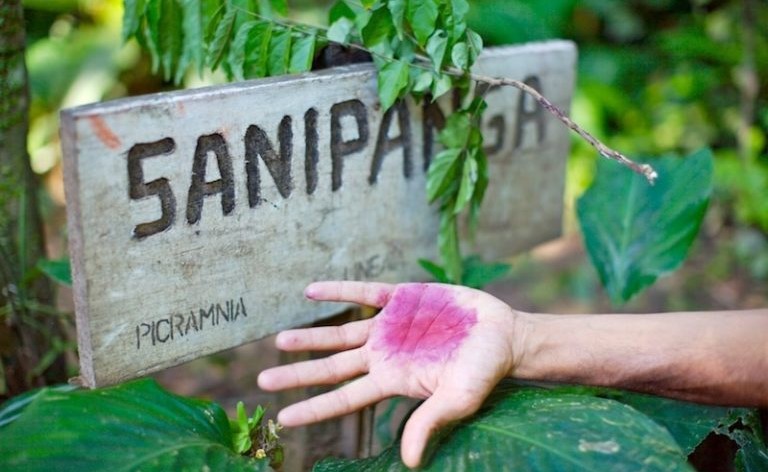 Sanipanga is another natural dye of the Amazon, with leaves that can turn the skin a semi-permanent purple color. Among some indigenous groups, a spiritual belief is attached to the plant as well. If you can extract the purple color from the Sanipanga (Picramnia sp.) leaf by rubbing it into your fingers, you carry good spirits within you.
If you fail to extract the color, on the other hand, you might have bad spirits! Traditionally, the plant also has an antiseptic effect when rubbed into skin or wounds.
6. Matico
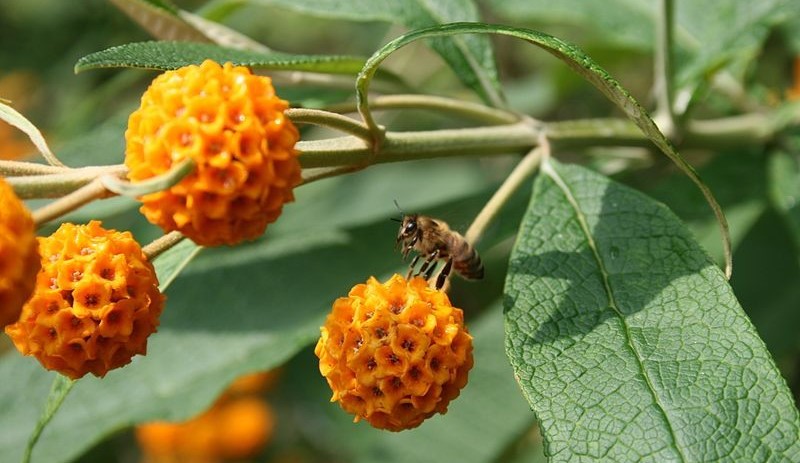 The colorful flowers of the Matico plant are eye-catching, but it is the leaves that hold their true magic. Amazon residents have long used Matico (Buddleja globosa) for muscle pain, sore throats, and other common ailments. Folks often boil the leaves in a tea to help with inflammation, body aches, or coughs.
Now, scientists and companies outside of the region have woken up to the plant’s usefulness too! Researchers have confirmed the ways Amazon peoples use Matico, finding that it has analgesic and anti-inflammatory properties, and can help to quickly heal scars or wounds.
7. Cordoncillo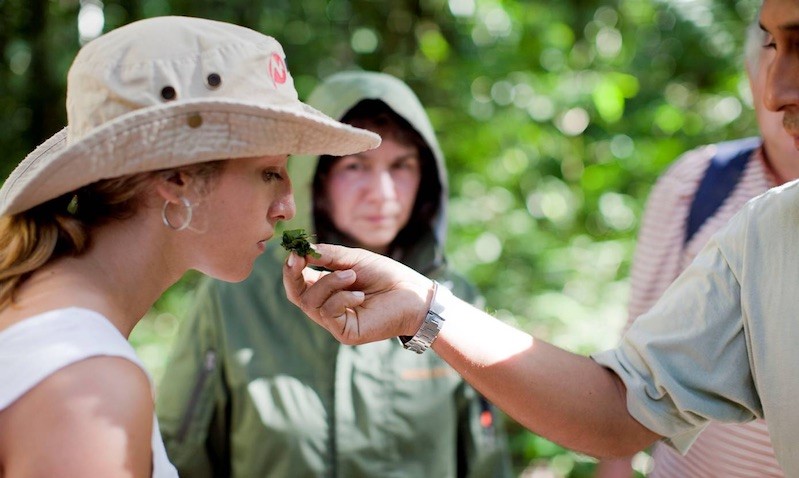 In a traditional Medicinal Plant Garden, our guests may get the chance to chew on the Cordoncillo leaf, producing a slightly numbing effect many compare to Novocain. In fact, the Ese Eja People and other groups use it for exactly this reason! Cordoncillo has a variety of traditional uses, including disinfecting wounds, treating respiratory illnesses, stopping blood hemorrhages, and treating gallstones.
Since the 1800s, the plant has become known globally as a hemostatic (to control/stop bleeding) and as an astringent for cuts. Several details from transportation to hotel reservations go into planning a Peru trip. Contact us, and our Travel Advisors will use their travel expertise to plan a vacation customized just for you.