
The Temple Of Wiracocha
 The Temple Of Wiracocha is the most famous construction of the archaeological site of Raqchi in Cusco. Its name is related to the god Wiracocha, creator of the world according to many ancient cultures of the coast and mountains of Peru.
Description The Wiracocha Temple – Raqchi
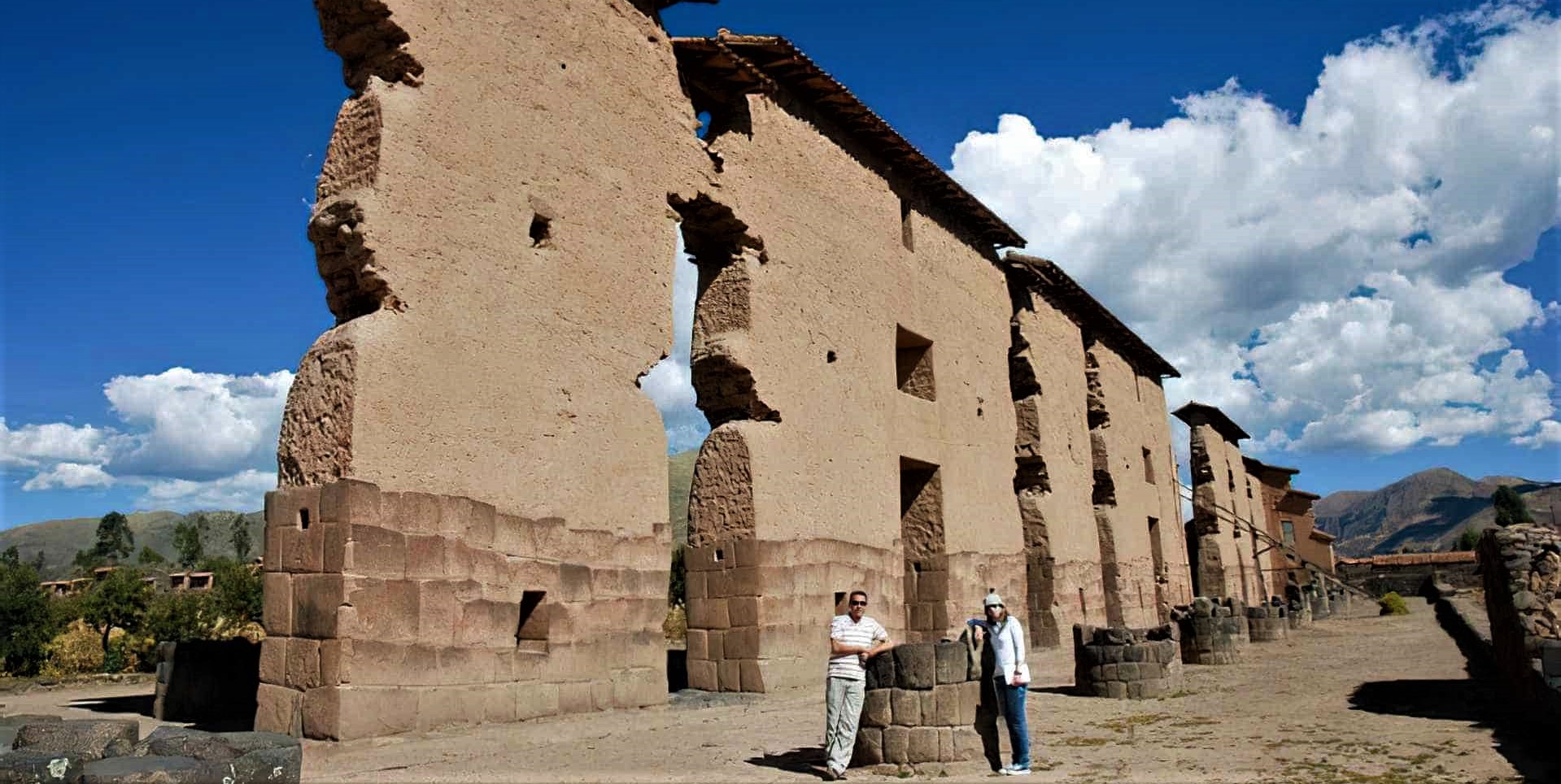 The building so named is the only one of its kind within the “Kallancas” genre. Externally it is 25.25 meters wide by 92 meters long and at least 15 meters high. The central wall is the tallest and currently, its maximum height is 12 meters, but towards the end of the 19th century, the traveler.
Middendorf visited and described the site, noting 15 meters as the maximum height. What is peculiar about this structure is the use of two rows of columns to bridge the wide span existing between the central wall and the outer walls in order to support the “gabled” roof.
The columns are located in separate rows between the central wall and the two longest exterior walls, they have a diameter of 1.60 meters and as many in these as in the other walls, the stone was used up to 3 meters in height and from then on its used adobe. It is noteworthy that the stones used were polished to give them the “cushioned” finish, typical of the Inca constructions of the Tawantinsuyu period, that is, after 1450 AD.
Location
Raqchi is an Inca archaeological site in Peru located in the Cusco Region, Canchis Province, San Pedro District, near the populated place Raqch’i. It is 3480 meters above sea level and 110 kilometers from the city of Cusco. It also known as the Temple of Wiracocha.
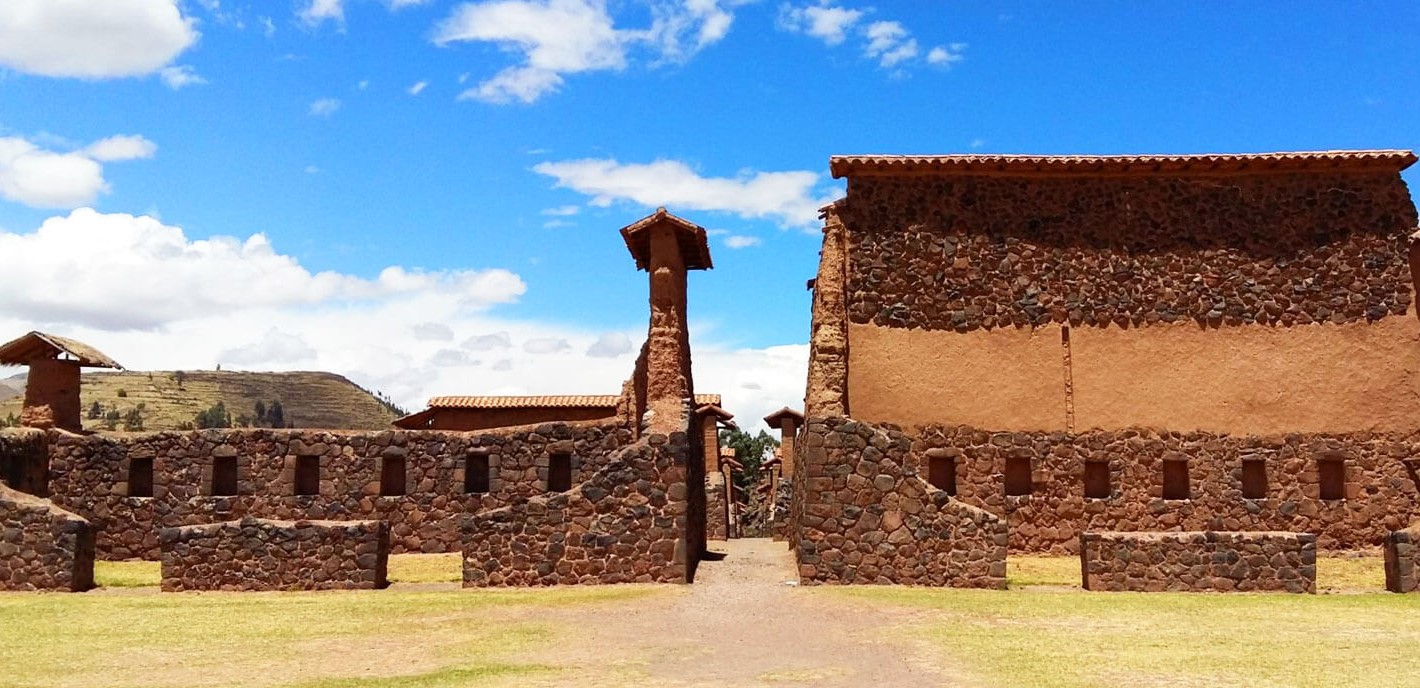
- The Greater Inca Temple: Similar to the Temple of Wiracocha. Its walls have similar proportions to the main temple. The base is made of finely carved stone and finished with adobe. Of the 11 columns that supported the roof, only one survives.
- The Warehouses: These small circular constructions were used to store food. Up to 196 colcas were found. Such amount of products had the purpose of keeping the visitors and messengers of the empire (chaskis). These storehouses stored grains, such as corn and quinoa, that would have been used for ceremonial purposes as well as pottery, woven cloth and military equipment.
- The statue: Several centuries after Cieza’s visit to Racchi, while excavations were being carried out in Cusco, a stone head and the representation of a body of the same material were found. Manuel Ballesteros and other specialists maintain, with enough foundation, that these would be the remains of the statue of Wiracocha, transferred at some point to Cusco and destroyed and buried as part of the policy of extirpation of idolatries. The head is currently preserved in the Museum of America in Madrid and the body in the Inca Museum of Cusco.
- The enclosures: There are 22 constructions, these types of houses or barracks are displayed next to some esplanades or patios proportional to the buildings.
- Water source: Located to the east of the main temple and from whose walls spring water gushes, there is the “Baños del Inca”, which stands out for its finely carved stone.
Qhapaq Ñan
 The archeological inca site of Raqchi was part of the Qhapaq Ñan, the network more bigger of trails that the Incas built throughout their empire. Because Raqchi was a kind of ‘Chaski Wasi’ (House of the messengers), it played an important role during the Incas period.
What else to do?
In addition to Raqchi in the south of Cusco there are several towns and archaeological sites of Inca origin that are worth visiting. Here are some of these:
- The archaeological site of Tipón.- Tipón is an Inca site where water was worshiped. This is demonstrated by its perfect channels that continue to pour water to this day. It also has large gardens, terraces, temples, minor buildings and more. The chronicles mention that it was the palace of the rulers Yahuar Huacac and Huiracocha. Today is part of the tour to the ‘South Valley of Cusco’.
- The archaeological site of Piquillacta.- Piquillacta was a city of the Wari culture (pre-Inca) located south of Cusco. Its constructions covered approximately 50 hectares between 600 AD and 1,000 AD. It is believed that this citadel housed about 10,000 people. It featured passages, plazas, multi-story enclosures, temples, and more. Today it is one of the tourist attractions included in the tour to the ‘South Valley of Cusco’.
- The church of San Pedro de Andahuaylillas.- This Christian temple is one of the most famous in Cusco due to its beautiful murals and baroque decoration that earned it the name of ‘The Sistine Chapel of America’. It was built between 1570 and 1606. A good part of its canvases and murals were created by the artist Luis de Riaño in the 17th century. It is located in the town of Andahuaylillas. The visit to this place is also part of the ‘South Valley of Cusco’ tour.
Cusco Journeys offers this tour by request. Depends on your customize travel we can do scheduled it with the best options that we have to offer you.
Just contact us by email or whatsaap number and we glad to help you anytime!.
