
Manu National Park vs Tambopata Jungle
 The Peruvian Amazon is a fascinating destination. If you’re wondering, “Which is Better Manu National Park vs Tambopata Jungle” both offer unique experiences, but with distinct differences.
Manu National Park, located between 3,600 meters in the Andes and 400 meters above sea level, is famous for its extreme biodiversity. Here you can spot macaws, tapirs, and jaguars while exploring cloud forests and lagoons.
The Tambopata Rainforest, on the other hand, is located at an altitude of 200-300 meters and is known for its accessibility, offering activities such as birdwatching, boat rides, and visits to clay licks, where you can see parrots and otters in their natural habitat.
Both destinations offer the opportunity to experience the stunning Amazonian flora and fauna with a high level of safety during boat tours, giving you the chance to immerse yourself in the magic of the Peruvian rainforest, whether in the remote and diverse Manu or the convenient and rich Tambopata.
Manu National Park
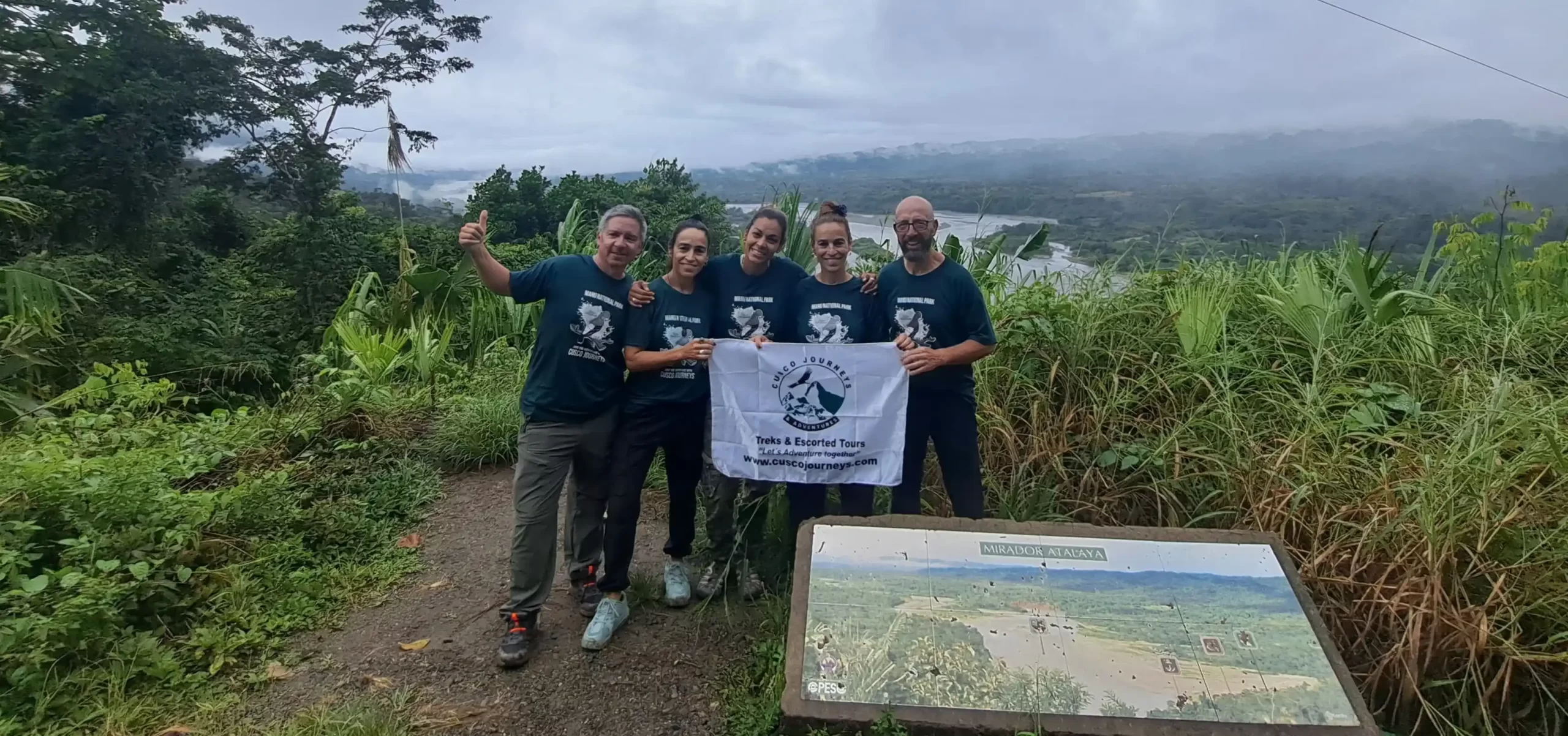 Located north of the Tambopata National Reserve, Manu National Park is a remote and protected area home to one of the richest biodiversity on the planet. Covering 17,164 km².
This park is characterized by its varied geography, which includes cloud forests in the Andes Mountains and the lower Amazon basin. This contrasting landscape makes Manu one of the most diverse ecosystems in terms of flora and fauna.
Flora and Fauna
In Manu, you can observe more than 1,000 species of vertebrates and between 2,000 and 5,000 species of plants. Among its most iconic animals are the scarlet macaw, tapir, jaguar, and puma, although these species are difficult to see.
Additionally, more than 1,300 species of butterflies and an impressive variety of birds will make your experience even more unforgettable.
Climate & Weather
Geography and weather conditions will affect how you get around the park and what wildlife you see. Lower elevations of Manu National Park have a similar climate to Puerto Maldonado and Tambopata, whereas higher elevation areas are cooler.
Dry Season: From May to October:
- Average daytime temperature: 69 to 72°F (21 to 22°C)
- Average nighttime temperature: 37 to 46°F (3 to 8°C)
Rainy Season: From November to April:
- Average daytime temperature: 67 to 71°F (19 to 22°C)
- Average nighttime temperature: 43 to 48 °F (6 to 9°C)
Best Time to Visit the Amazon Rainforest: Dry vs. Rainy Season
The best time to visit the Amazon Rainforest depends on your preferences and the type of wildlife experience you’re seeking. Each season offers distinct advantages for different types of travelers.
- Dry Season (May to October): If your goal is to observe iconic macaws, parrots, and other vibrant bird species at the clay licks, the dry season is ideal. The trails are easier to navigate, and the lower humidity makes outdoor activities more comfortable.
- Rainy Season (November to April): For wildlife enthusiasts keen on spotting reptiles, amphibians, and unique flora, the rainy season is perfect. The jungle comes to life with lush greenery and more active wildlife. Plus, with fewer tourists around, you’ll enjoy a more tranquil experience. However, be prepared for occasional rain showers and more mosquitoes.
Since the Amazon Rainforest is a year-round destination, you can choose your travel dates based on other parts of your Peru itinerary, like Machu Picchu, where the best weather is from May to September.
 How to Get to Manu National Park
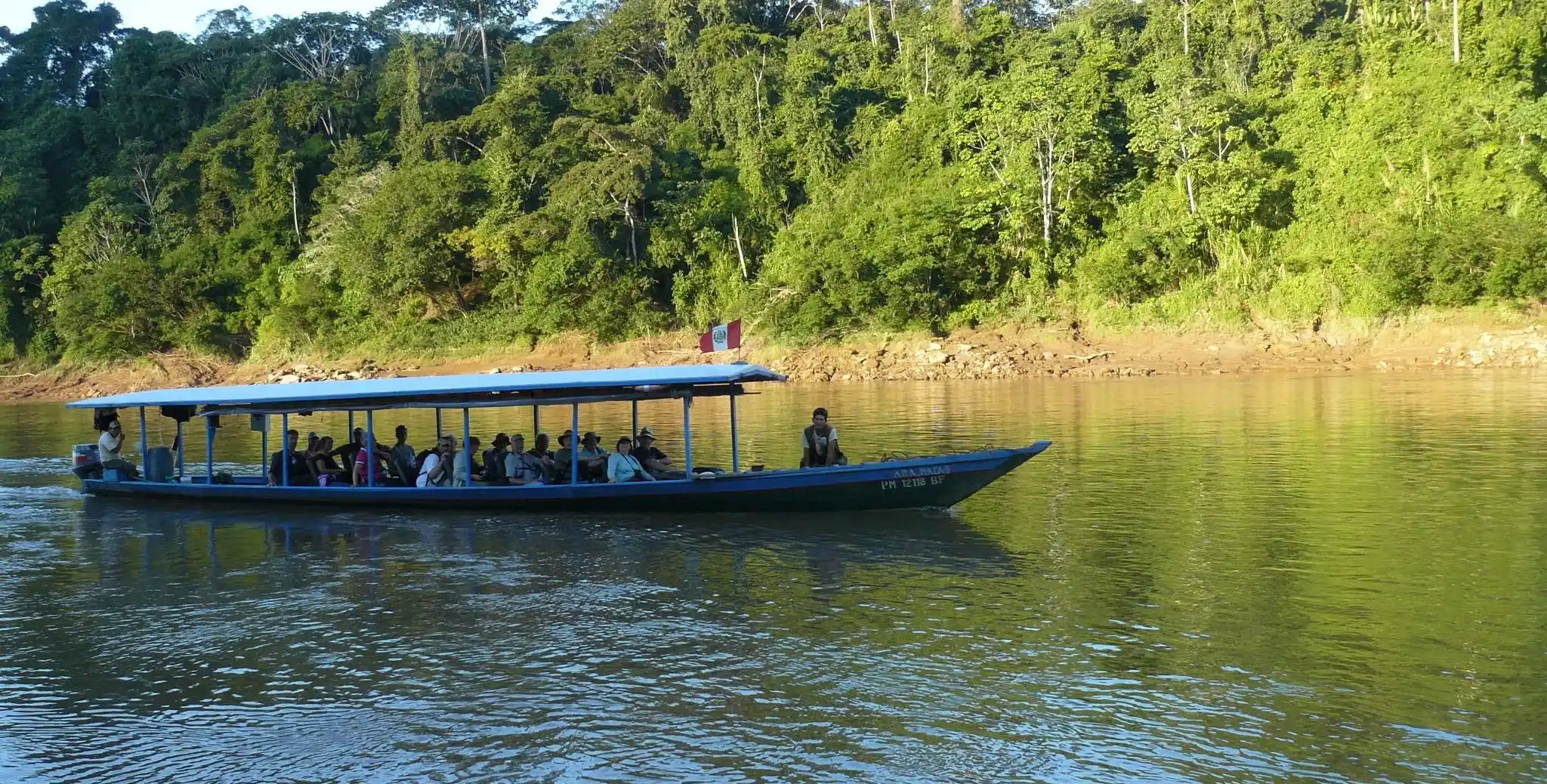
Due to its remote location, Manu National Park is easily accessible. It can be reached by car, boat, or by sailing along the Manu and Madre de Dios Rivers. There are three main options:
- From Cusco: Travel by car to Atalaya, through the Kosnipata Valley to the Manu River.
- From Puerto Maldonado: Fly or travel by bus to Puerto Maldonado and then continue 2.5 hours by car to Santa Rosa Village. Cross the Inambari River to Puerto Carlos then to Boca Colorado 45 minutes, and up Madre de Dios river.
- To Boca Manu: Charter flights land at a small airstrip and then take river transport to the lodge.
Travel Tip: The journey itself, whether by boat or car, offers stunning views of the Amazon and is a unique experience in itself before reaching the park.
Top Things to Do in Manu National Park
Manu National Park offers a unique and immersive experience in the heart of the Peruvian Amazon. Here are the top things to do in this extraordinary wildlife haven.
- Bird-watching.- Over 1,000 species of birds have been recorded in Manu National Park. Explore the rainforest with your expert guide and add new bird species to your life list.
- Meet a Local Community.- The Matsigenga near Manu are just a few of the hundreds of indigenous communities that live in the Amazon. Visiting these communities is an invaluable opportunity for cultural exchange.
- Canoe on Oxbow Lakes.- An impressive variety of species live in and near oxbow lakes. Visit Cocha Salvador and Cocha Otorongo to see terns, skimmers, and even giant river otters.
- Scale a Canopy Tour.- Ascend 65 ft (20 m) above the rainforest floor, past the canopy, for far-reaching views of the rainforest. Bring your binoculars for bird and monkey-watching!
- Nighttime Tapir Lick.- Venture out during the night in search of tapirs, the largest South American land mammal. Tapirs, along with other nocturnal animals, can be viewed from behind a blind.
- Giant Trees.- Marvel at Brazil nut, Ceiba (Kapok), and Ficus trees that grow up to 160 ft (48 m) tall and host their own complex habitats from roots to canopy top.
From wildlife watching to cultural exchanges, Manu National Park offers unforgettable experiences for every traveler.
 Top Animals to See in Manu National Park
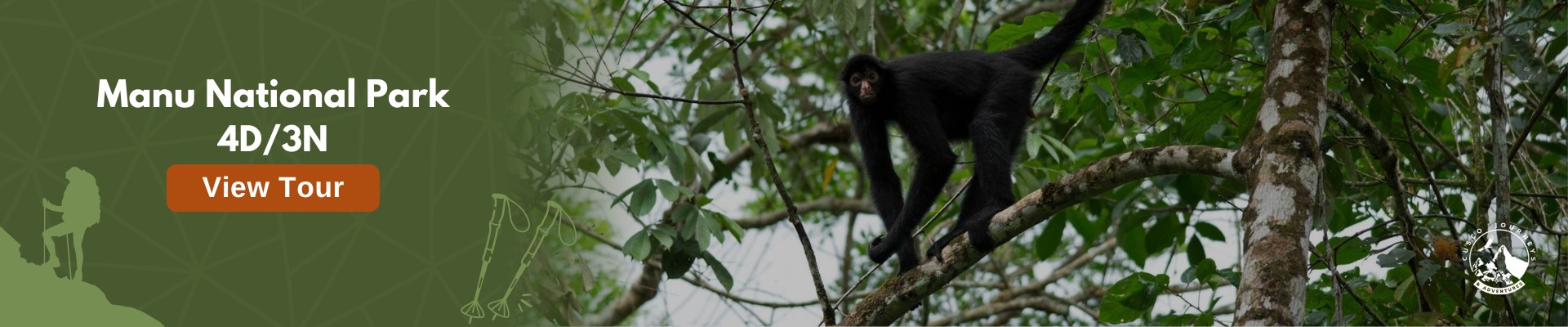
Manu National Park is a wildlife paradise, offering visitors the chance to see some of the Amazon’s most incredible species. Here are the top animals to look out for.
- Butterflies.- Manu National Park’s immense biodiversity is not limited to vertebrates. In fact, over 1,300 species of butterflies have been spotted here. Keep your eyes peeled and your camera in focus for colorful butterfly sightings. These bejeweled insects are a wonder to behold. Some of the park’s most bewitching species include Brazilian Painted Ladies, Glasswings, and Clouded Yellows.
- Macaws.- Like Tambopata National Reserve, macaws are also found in Manu National Park. Red, green and scarlet macaws soar around the Blanquillo Clay Lick to feast on its mineral-rich clay. Here you will also find colorful parrots as well as mammal species. Visitors observe the wildlife from behind a blind that is only 164 ft (50 m) from the claylick.
- Puma (Puma concolor).- In Quechua, one of Peru’s indigenous languages, puma means “powerful”. The puma is the second-largest feline found in the Americas. In Manu National Park, pumas live in the park’s lowland rainforest zone. Like the jaguar, they are very elusive and sightings are rare.
From colorful butterflies to elusive pumas, Manu is a haven for wildlife enthusiasts seeking an authentic Amazon experience.
Puerto Maldonado & Tambopata Reserve
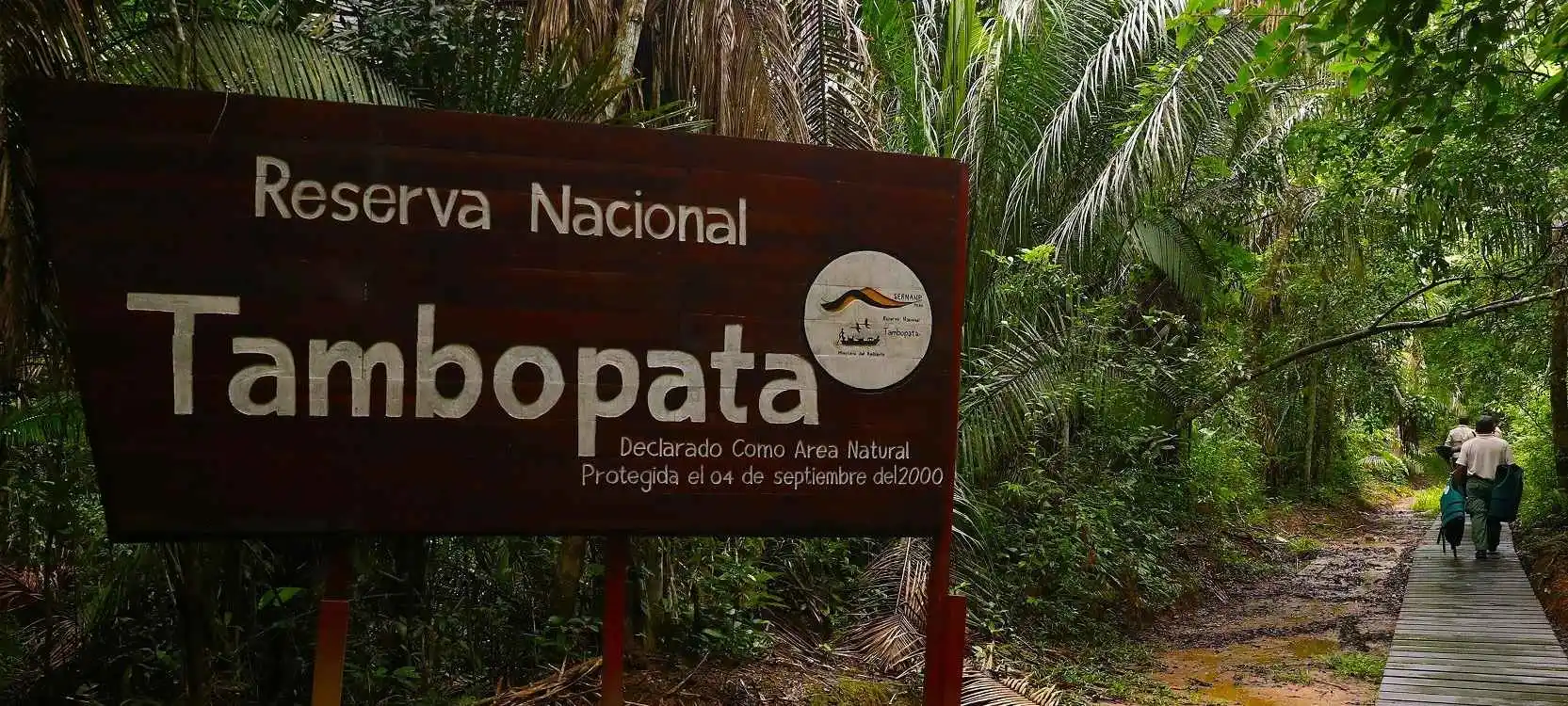 The Tambopata National Reserve is the gateway to Peru’s southern jungle. Easier to access from Puerto Maldonado, it’s ideal for those seeking an authentic experience without straying too far from civilization.
Here, you’ll find a wide variety of Amazonian wildlife, including giant otters, jaguars, and vibrant macaws.
Flora and Fauna
Tambopata is a prime spot to see iconic species such as the giant otter, red howler monkeys, caimans, and, rarely, the jaguar. Additionally, the Oxbow Lagoons are perfect for wildlife viewing, and you’ll be able to see birds such as the hoatzin and the toucan duck.
You can also visit the famous clay licks, where large flocks of macaws and parrots gather.
Climate & Weather
Dry Season: From May to October
- Average daytime temperature: 61 to 94°F (16 to 35°C)
- Average nighttime temperature: 50 to 73°F (10 to 23°C)
- *From May to September, occasional cold fronts from Argentina can drop temperatures to 50°F (9°C) during the day and 43°F (5°C) at night.
Rainy Season: From November to April
- Average daytime temperature: 63 to 73°F (17 to 23°C)
- Average nighttime temperature: 49 to 60°F (9 to 16°C)
Best Time to Visit Puerto Maldonado
Puerto Maldonado offers amazing wildlife year-round, with each season bringing unique experiences. Whether you prefer sunny skies or the refreshing rains, both the dry and rainy seasons have their perks.
- Dry Season (May to October): The dry season is great for easy access to trails, with less mud and more reliable flights. It’s the best time for birdwatching, especially to see macaws and parrots at the clay licks.
- Rainy Season (November to April): During the rainy season, cooler temperatures and afternoon showers create a vibrant landscape. Wetlands form, attracting reptiles and amphibians, while fruiting trees draw monkeys and other animals. Plus, there are fewer tourists around.
Choose the season that fits your adventure style—whether it’s birdwatching or exploring the lush Amazon after a rainfall.
How to Get to Puerto Maldonado
Puerto Maldonado is a key gateway to the Amazon, offering multiple travel options depending on your time and preferences. Whether you’re flying, driving, or boating, getting here is part of the adventure.
- By air: The Puerto Maldonado airport is small, and lies only a short drive from the town plaza and the ports where riverboats dock. Compared to overland travel, a flight to Puerto Maldonado is more expensive but saves a lot of time. LATAM Airlines offers daily service to Puerto Maldonado. Non-stop flights usually take 1 hour 30 minutes from Lima and 55 minutes from Cusco.
- By road: The Transoceanic Highway now connects Cusco to Puerto Maldonado. What was once an arduous 15-hour drive has been shaved down to about 10 hours. Taking the bus from Cusco to Puerto Maldonado is a good option for travelers with a more flexible travel itinerary.
- By boat: Once in Puerto Maldonado, lodge staff meets guests at the airport or bus station and transports them to the dock, where motorized boats wait to go to the lodge. Riverboats are typically open-air with a covering, much like a pontoon boat. Most lodges are located between 45 minutes to 3 hours away.
Getting to Puerto Maldonado is just the beginning of your Amazon adventure. Whether you choose to fly for convenience or take a boat for a more scenic approach, the journey will leave you ready to explore the wonders of the Amazon rainforest.
Top Things to Do in Puerto Maldonado & Tambopata National Reserve
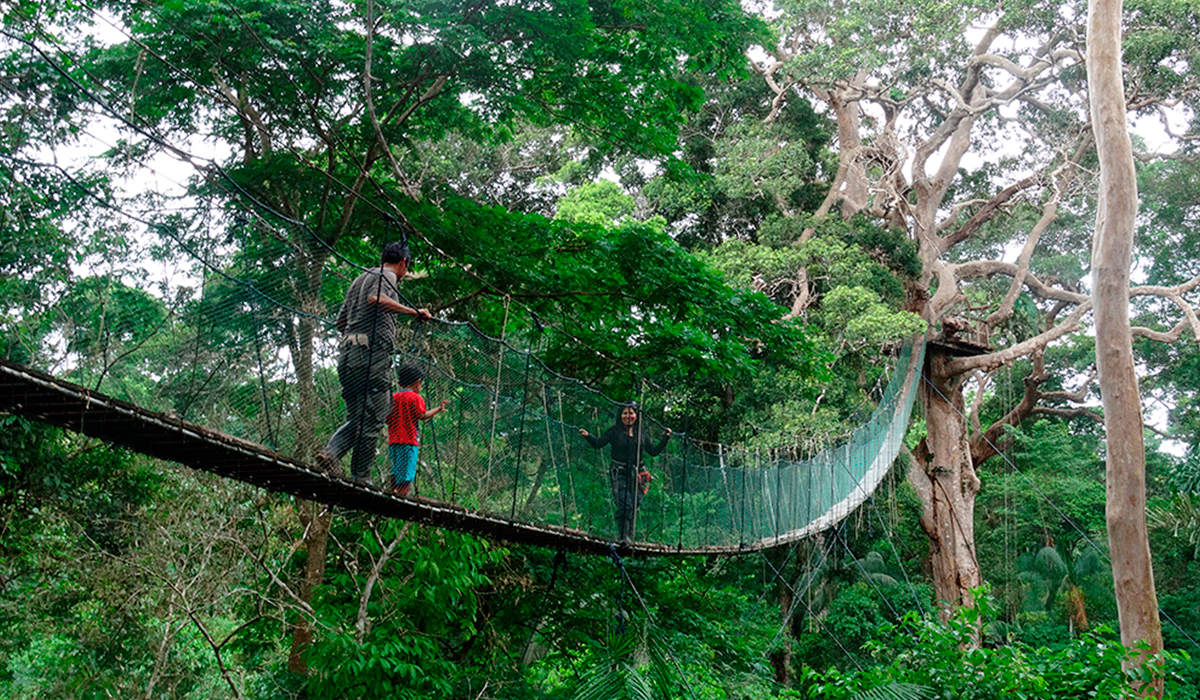 Puerto Maldonado and Tambopata National Reserve offer unique experiences in the Amazon rainforest. Here are some of the top activities to enjoy during your visit.
- Stay at an Ecolodge.- The best lodges in the Amazon allow you to experience the rainforest’s wonders while also working to preserve the unique environment and benefit local indigenous communities.
- Canopy Tour.- Canopy towers, hanging bridges, and ziplines allow you to glimpse the extreme biodiversity of the canopy and the many habitats that can be found on and around one single colossal tree.
- Lake Sandoval.- Wildlife flock to this sanctuary close to the Madre de Dios River. Glide across the mirror-like surface of the lake in a wooden canoe, to spot hoatzins, herons, ospreys, and giant river otters.
- Visit a Clay Lick.- Dotted throughout the Tambopata National Reserve, clay licks are exposed sections of riverbeds that attract large flocks of macaws and parrots. The Tambopata Research Center is the premier lodge for travelers seeking to witness the early morning congregation of macaws and parrots, and learn more about them at the lodge’s on-site Tambopata Macaw Project.
- Oxbow Lakes.- These lakes form as bends in the river are slowly cut off from the main water flow. Explore the lake waters aboard a paddle-driven boat and keep your eyes open for river otters, caimans, and birds.
Visiting Puerto Maldonado and Tambopata offers an unforgettable adventure into one of the world’s most biodiverse regions. Whether you’re hiking, boating, or birdwatching, you’re sure to experience the magic of the Amazon.
Top Animal to See in Puerto Maldonado & Tambopata National Reserve
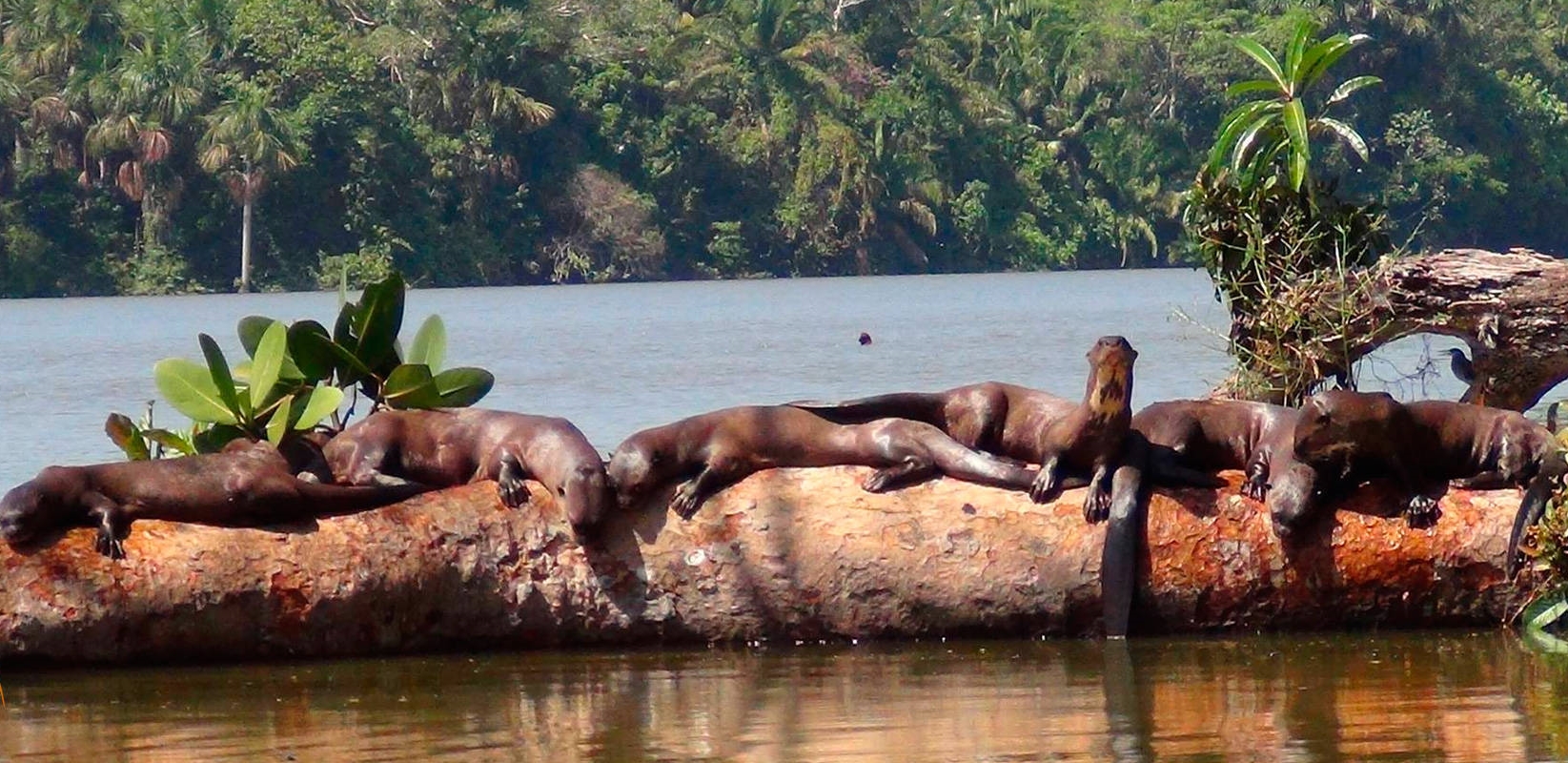 Tambopata National Reserve is home to an extraordinary array of wildlife, and spotting these remarkable animals is one of the highlights of any visit. Here are some of the most iconic species you may encounter during your adventure in the reserve:
- Giant River Otter (Pteronura brasiliensis).- An endangered species largely due to poaching, it is estimated that less than 5,000 giant river otters exist in the wild. One of the best places to spot giant river otters in and near Tambopata National Reserve is at an oxbow lake. Posada Amazonas ecolodge offers an excursion to Tres Chimbadas Lake, where travelers have a 34% chance of spotting giant river otter individuals.
- Jaguar (Panthera onca).- The jaguar is an elusive species whose range extends from the southwestern United States to northern Argentina. It is the largest feline species in the Americas. While it is difficult to spot jaguars in the wild, 35% of guests who stay at Tambopata Research Center report sightings due to the lodge’s remote rainforest location.
- Red Howler Monkey (Alouatta seniculus).- Red howler monkeys are commonly observed throughout the Tambopata National Reserve and neighboring rainforest. Like its name suggests, this new world monkey species has a burnt orange coat and distinct vocalizations. In fact, their calls can be heard up to 3 miles (4.8 km) away. Keep your eyes peeled for howlers on inland forest hikes and in river-lined trees while traveling by boat.
Exploring the animal kingdom of Tambopata National Reserve offers a once-in-a-lifetime opportunity to observe rare and extraordinary wildlife in one of the world’s most biodiverse ecosystems.
Travel Information: Essential Health & Safety Tips
Health Precautions for Visiting the Amazon:
Before embarking on your journey to Peru, it’s important to consult with your doctor or a travel medicine specialist to address any health-related concerns.
- Yellow Fever: While Peru does not require proof of yellow fever vaccination for entry, the CDC strongly recommends it for travelers visiting areas below 7,546 ft (2,300 m), including the Madre de Dios region and Puerto Maldonado.
- Malaria: The risk of malaria in Peru is generally low. However, areas below 6,561 ft (2,000 m) such as Iquitos and Puerto Maldonado have a slightly higher risk. It is advisable to take anti-malarial medication (chemoprophylaxis) when traveling to these areas.
- Mosquito Protection: Mosquitoes are prevalent in the Amazon, so wear long-sleeved shirts and pants, especially during the wet season. Apply an insect repellent containing DEET and use the mosquito net provided by your lodge to prevent bites during the night.
- Drinking Water: All lodges we recommend supply safe, bottled, and filtered water. Bring a reusable water bottle for refills throughout your stay, ensuring you stay hydrated without using plastic bottles.
Safety Tips for Exploring the Amazon:
- On Rainforest Walks: Stay on the center of designated trails to avoid stings and bites. Don’t touch trees, branches, or stand in the path of marching ants. Follow your guide closely to avoid getting lost in the dense forest.
- Wildlife Observation: Most rainforest lodges offer guided tours for safe wildlife viewing. Naturalist guides are experts in pointing out fascinating species while ensuring you observe them responsibly. Always keep your distance from wildlife and refrain from using flash photography to avoid disturbing animals.
Packing Tips for Your Amazon Adventure
When preparing for your trip to the Peruvian Amazon, packing the right gear is essential for comfort and safety. Here’s a general packing list for your Amazon journey:
- Clothing: Long pants and long-sleeved shirts made of lightweight, quick-dry material to protect against insects.
- Rain Gear: A breathable, lightweight jacket or poncho for the frequent rain showers in the Amazon.
- Footwear: Water-resistant shoes or closed-toe shoes, especially during the wet season.
- Protection for Documents: Use a dry bag or ziplock bags to keep your important documents safe from humidity.
- Swimsuit for water-based activities
- Headlamp or flashlight with extra batteries for nighttime excursions
- High-quality insect repellent with DEET
- Sun protection: hat, sunscreen, and sunglasses
- Camera and binoculars for wildlife photography and viewing
- Reusable water bottle to stay hydrated
- Local currency for small purchases and tips
By taking the proper precautions and packing wisely, you’ll be fully prepared for an unforgettable experience in the Amazon rainforest.
Frequently Asked Questions?
📩 Get in Touch Now | 🌐 Visit Our Website