
Salkantay Trek and Inca Trail 6 Days / 5 Nights
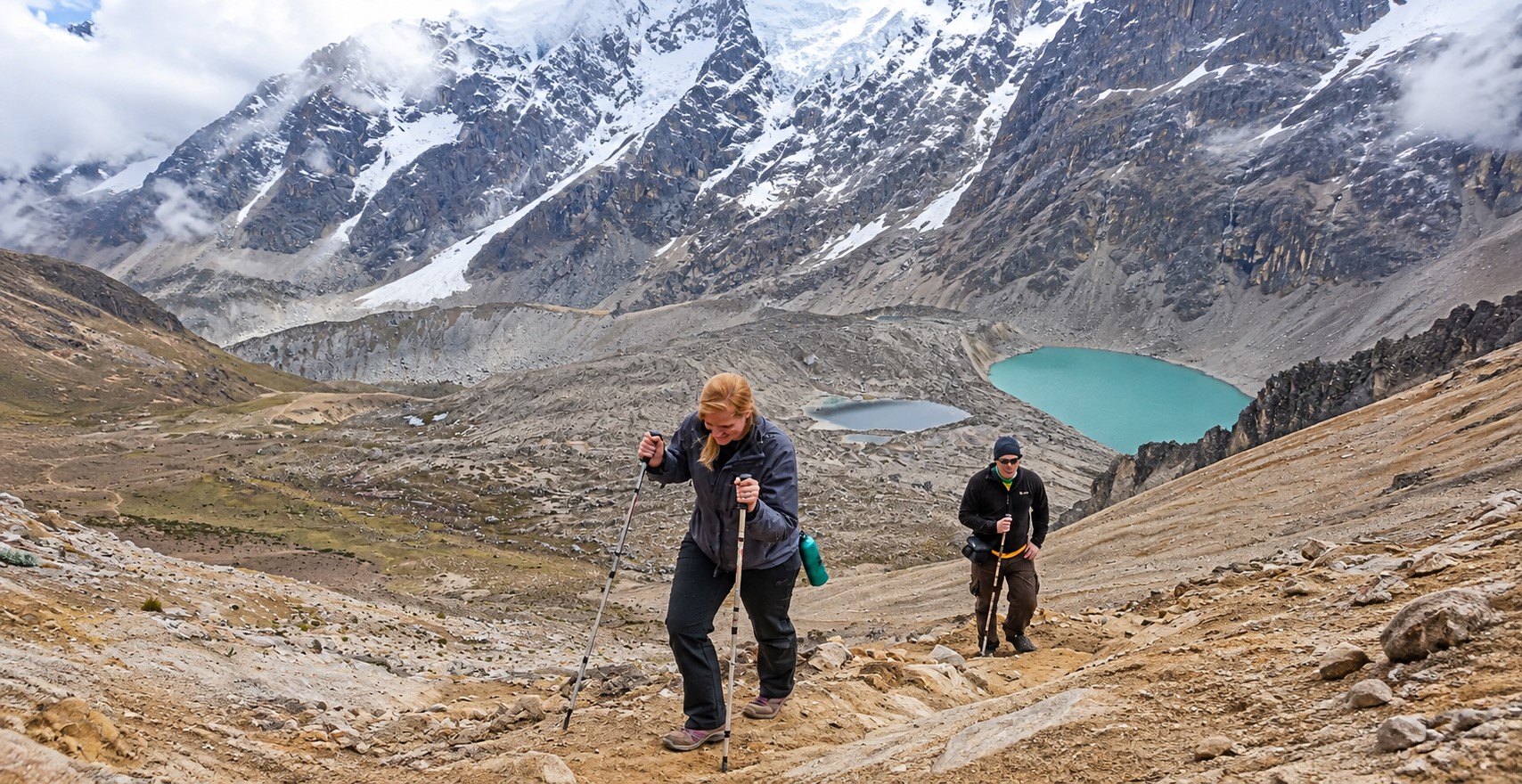 The Salkantay Trek and Inca Trail 6 Days 5 Nights combines high-altitude landscapes, remote Andean scenery, ancient Inca paths, and Machu Picchu in one challenging trekking adventure. The route begins in the Peruvian Andes near the impressive Salkantay Mountain before joining the Classic Inca Trail to Machu Picchu.
This unique journey brings together the dramatic landscapes of the Salkantay region with the archaeological richness of the Inca Trail, eventually reaching Machu Picchu through the Sun Gate.
It is an excellent option for travelers who want to experience two of Peru’s most famous trekking routes as part of one continuous adventure.
Why Combine the Salkantay Trek and Inca Trail?
The Salkantay Trek and Inca Trail offer very different experiences, which is what makes combining them so rewarding.
The Salkantay section takes you through remote high-mountain landscapes, close to the impressive Salkantay and Humantay mountains. You will experience changing elevations, dramatic valleys, glacial landscapes, and a quieter side of the Andes.
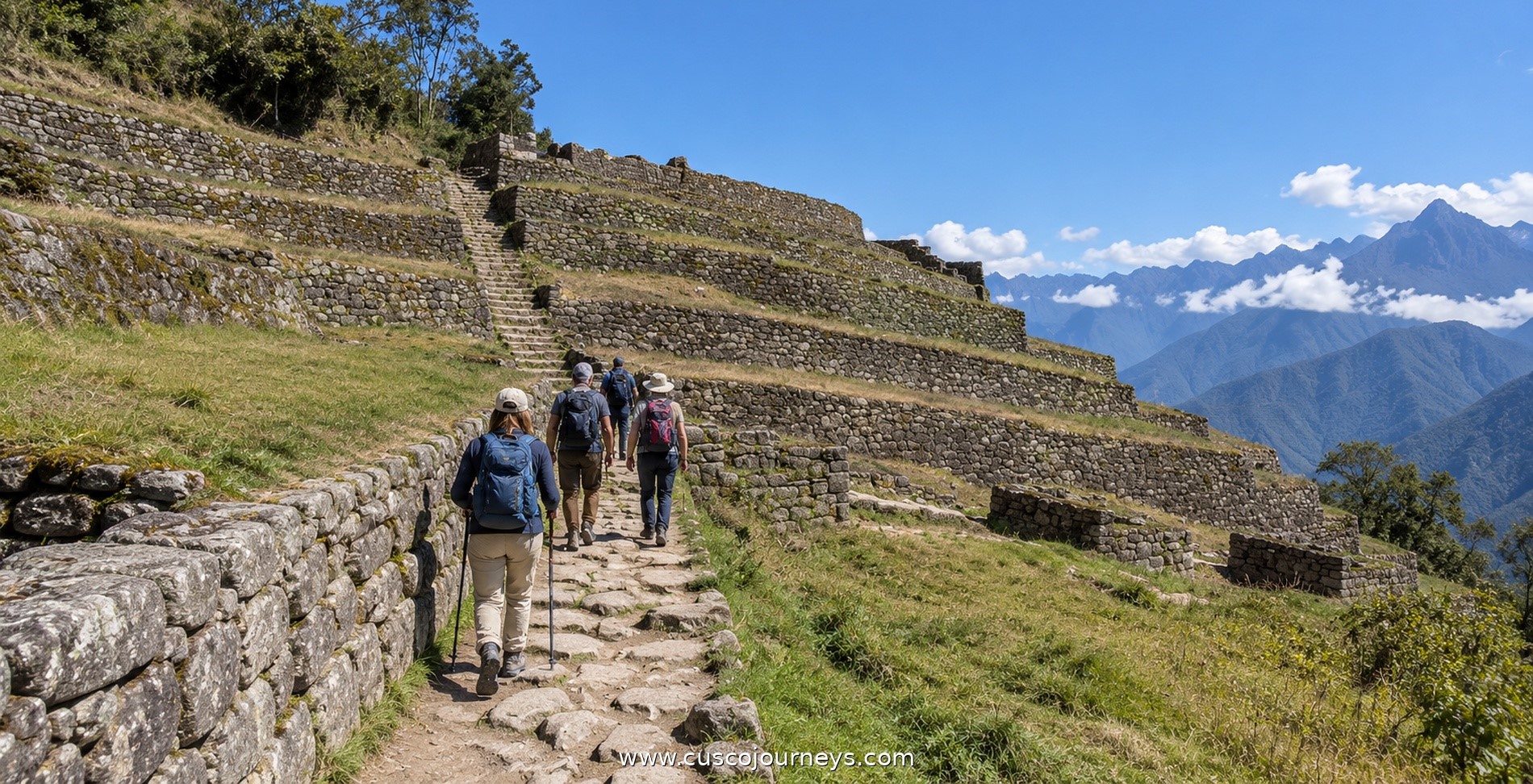
Later in the journey, the route joins the Classic Inca Trail. From this point, the experience becomes increasingly focused on ancient paths, archaeological sites, cloud forest, stone stairways, and Inca engineering.
Instead of choosing between the Salkantay Trek and the Inca Trail, this six-day journey allows you to experience both before arriving at Machu Picchu through the Sun Gate.

Salkantay Trek and Inca Trail 6 Days at a Glance
Trek Information |
Details |
|---|---|
| Duration | 6 Days / 5 Nights |
| Route | Salkantay Trek + Classic Inca Trail |
| Destination | Machu Picchu |
| Accommodation | Camping |
| Highest Elevation | 4,850 m / 15,908 ft |
| Difficulty | Challenging |
| Main Highlights | Humantay Lake, Salkantay Mountain, Incachiriasca Pass, Classic Inca Trail and Machu Picchu |
Salkantay Trek and Inca Trail 6-Day Itinerary
Day 1: Cusco – Soraypampa – Humantay Lake – Ichupata.
Your adventure begins early in the morning with pickup from your hotel in Cusco and a scenic drive toward Mollepata. Along the way, you can enjoy your first views of Salkantay and Humantay mountains and the agricultural landscapes of local Andean communities.
From Soraypampa, at approximately 3,800 m / 12,467 ft, you begin the hike toward the spectacular Humantay Lake. After enjoying the lake and its surrounding mountain scenery, return to Soraypampa and continue toward Ichupata.
The trail climbs through Salkantaypampa before reaching the campsite at Ichupata, where you can rest after your first day in the high Andes.
Distance: 12 km | Hiking Time: 5–6 hours | Highest Elevation: 4,300 m / 14,104 ft
Day 2: Ichupata – Incachiriasca Pass – Pampacahuana.
Today is one of the most demanding days of the trek. After breakfast, begin the steep ascent toward Incachiriasca Pass at approximately 4,850 m / 15,908 ft, the highest point of the entire route.
At the top, enjoy impressive views of Apu Salkantay and the surrounding glacial landscapes before descending toward Sisaypampa, where you stop for lunch.
The route then continues toward Pampacahuana at approximately 3,700 m / 12,136 ft. The campsite is located beside an original Inca canal, providing a fascinating connection with the history of the region.
Distance: 14 km | Hiking Time: 8 hours | Highest Elevation: 4,850 m / 15,908 ft
Day 3: Pampacahuana – Paucarcancha – Huayllabamba – Llulluchapampa.
Today you change pace as you join the Classic Inca Trail.
The morning begins with a descent from Pampacahuana toward Paucarcancha, an impressive Inca archaeological site at approximately 3,133 m / 10,276 ft. After visiting the site, continue toward Huayllabamba, the last village on this section of the Classic Inca Trail.
From Huayllabamba, the trail climbs toward Llulluchapampa. Along the way, the landscape changes gradually as you enter the cloud forest. Your campsite is located close to Dead Woman’s Pass, preparing you for one of the most demanding sections of the Inca Trail.
Distance: 15 km / 9.5 miles | Hiking Time: 8 hours | Highest Elevation: 3,700 m / 12,136 ft
Day 4: Llulluchapampa – Dead Woman’s Pass – Pacaymayo – Chaquicocha
This is the longest and one of the most challenging days of the trek.
From Llulluchapampa, you climb toward Dead Woman’s Pass, or Warmiwañusca, at approximately 4,215 m / 13,825 ft, the highest point of the Classic Inca Trail.
After crossing the pass, descend toward Pacaymayo before climbing again toward Runcuraccay Pass. Along the route, you will visit important archaeological sites including Runcuraccay and Sayacmarca.
The combination of snow-capped mountains, cloud forest, ancient stone paths, and archaeological sites makes this one of the most memorable sections of the journey.
You spend the night at Chaquicocha.
Distance: 13 km / 7.5 miles | Hiking Time: 7 hours | Highest Elevation: 4,215 m / 13,825 ft
Day 5: Chaquicocha – Phuyupatamarca – Wiñay Wayna.
After an early breakfast, continue along the Classic Inca Trail toward the third pass at Phuyupatamarca, approximately 3,700 m / 12,136 ft.
This section reveals some of the remarkable engineering of the Incas. The trail follows ancient stone paths built into the mountainside and passes through an Inca tunnel before reaching the archaeological complex of Phuyupatamarca, whose name means “town above the clouds.”
From Phuyupatamarca, descend through a series of impressive stone steps toward Wiñay Wayna.
Wiñay Wayna is one of the most spectacular archaeological sites on the Inca Trail, with agricultural terraces, ceremonial areas, water channels, and stone structures built into the mountainside.
Distance: 10 km / 6.5 miles | Hiking Time: 5 hours | Highest Elevation: 3,700 m / 12,136 ft
Day 6: Wiñay Wayna – Machu Picchu – Aguas Calientes – Cusco.
Your final day begins early. From Wiñay Wayna, hike toward Intipunku, the Sun Gate, following an ancient stone trail through the cloud forest.
From the Sun Gate, you get your first view of Machu Picchu before descending toward the citadel.
Once inside Machu Picchu, your guide will lead you through the ancient Inca city, explaining its temples, terraces, ceremonial areas, and remarkable architecture.
After the guided visit, you will have some free time before continuing to Aguas Calientes. From here, take the train back toward Cusco, bringing your six-day adventure to an end.
Highest Elevation: 2,740 m / 8,552 ft
What Makes This Trek Different?
The main advantage of this six-day route is the progression between two completely different trekking environments.
The first part takes you through remote high-altitude landscapes dominated by the Salkantay region. The second part follows the historic Classic Inca Trail through archaeological sites, cloud forest, stone paths, and ancient Inca infrastructure.
By the time you reach Machu Picchu, you have experienced both the dramatic natural landscapes of the Salkantay region and the cultural heritage of the Inca Trail.
How Difficult Is the Salkantay Trek and Inca Trail?
The Salkantay Trek and Inca Trail 6 Days 5 Nights is a challenging route that combines high-altitude hiking, steep climbs, long walking days, and changing mountain conditions. Knowing what to expect can help you prepare properly for the journey.
| Difficulty Factor | What to Expect |
|---|---|
| Overall Difficulty | Challenging |
| Highest Elevation | 4,850 m / 15,908 ft at Incachiriasca Pass |
| Longest Hiking Day | Approximately 8 hours |
| Terrain | Mountain trails, steep ascents and descents, stone paths and uneven terrain |
| Altitude | High altitude with significant elevation changes |
| Physical Preparation | Good fitness and previous hiking experience are recommended |
| Acclimatization | Spending time in Cusco before the trek is important |
The main challenge comes from the combination of long hiking days, significant elevation changes, high-altitude passes, and consecutive days on the trail.
The highest point of the complete route is Incachiriasca Pass at approximately 4,850 m / 15,908 ft. On the Classic Inca Trail section, Dead Woman’s Pass reaches approximately 4,215 m / 13,825 ft.
For this reason, acclimatization in Cusco before beginning the trek is particularly important.
What Is the Highest Point of the Trek?
The highest point of the Salkantay Trek and Inca Trail 6 Days 5 Nights is Incachiriasca Pass, at approximately 4,850 m / 15,908 ft.
This is considerably higher than the highest point of the Classic Inca Trail, Dead Woman’s Pass, which reaches approximately 4,215 m / 13,825 ft.
Reaching Incachiriasca Pass is one of the most demanding parts of the journey, but it is also one of the most spectacular, with views toward Salkantay and the surrounding high mountain landscapes.
What Is the Best Time to Do the Salkantay Trek and Inca Trail?
The best time depends on your preferences and tolerance for changing mountain conditions.
The dry season generally offers more stable weather, clearer skies, and better conditions for enjoying the mountain landscapes. The rainy season can bring wetter trails, clouds, and occasional rain, particularly at higher elevations.
However, weather in the Andes can change quickly regardless of the season. Rain protection, warm layers, and suitable trekking equipment should therefore be part of your preparation.
Who Is This Trek Best For?
The Salkantay Trek and Inca Trail 6 Days 5 Nights is best suited to active travelers who enjoy long days outdoors and want to experience Peru beyond a conventional visit to Machu Picchu.
It is particularly suitable for travelers who want a combination of high-mountain scenery, challenging hiking, archaeological sites, and the historic Classic Inca Trail.
Because the route reaches 4,850 m / 15,908 ft and includes several demanding hiking days, it is important to arrive prepared and properly acclimatized.
Travelers looking for a shorter or less demanding experience may prefer one of the shorter trekking options to Machu Picchu.
Salkantay Trek and Inca Trail vs. Classic Inca Trail
Both routes lead to Machu Picchu, but the experience is quite different. The main difference is the combination of high-mountain landscapes and the Classic Inca Trail offered by the six-day route.
Feature |
Salkantay Trek and Inca Trail 6 Days |
Classic Inca Trail |
|---|---|---|
| Duration | 6 Days / 5 Nights | Shorter trekking option |
| Main Experience | Salkantay landscapes + Classic Inca Trail | Historic Inca Trail |
| Mountain Scenery | High-altitude landscapes, Salkantay and Humantay mountains | Mountain and cloud forest landscapes |
| Archaeological Sites | Inca archaeological sites along both routes | Numerous archaeological sites along the Inca Trail |
| Highest Elevation | 4,850 m / 15,908 ft | Approximately 4,215 m / 13,825 ft |
| Difficulty | Challenging | Challenging |
| Best For | Travelers wanting a longer and more varied trekking experience | Travelers focused on the historic Inca route to Machu Picchu |
This makes the six-day combination particularly attractive for travelers who do not want to choose between the spectacular landscapes of the Salkantay region and the historic experience of the Classic Inca Trail.

Experience the Salkantay Trek and Inca Trail to Machu Picchu
The Salkantay Trek and Inca Trail 6 Days 5 Nights is more than a trek to Machu Picchu.
It is a journey through different environments and landscapes, beginning among the high mountains of the Salkantay region and continuing through ancient Inca paths, archaeological sites, cloud forest, and stone stairways.
The final approach through Intipunku provides a memorable way to reach Machu Picchu after several days of trekking.
For travelers who want an active adventure that combines mountains, Inca history, archaeology, and Machu Picchu, this six-day route offers an unforgettable experience in the Peruvian Andes.