
The Story Behind Maras Pink Salt: From Ancient Springs to Your Table
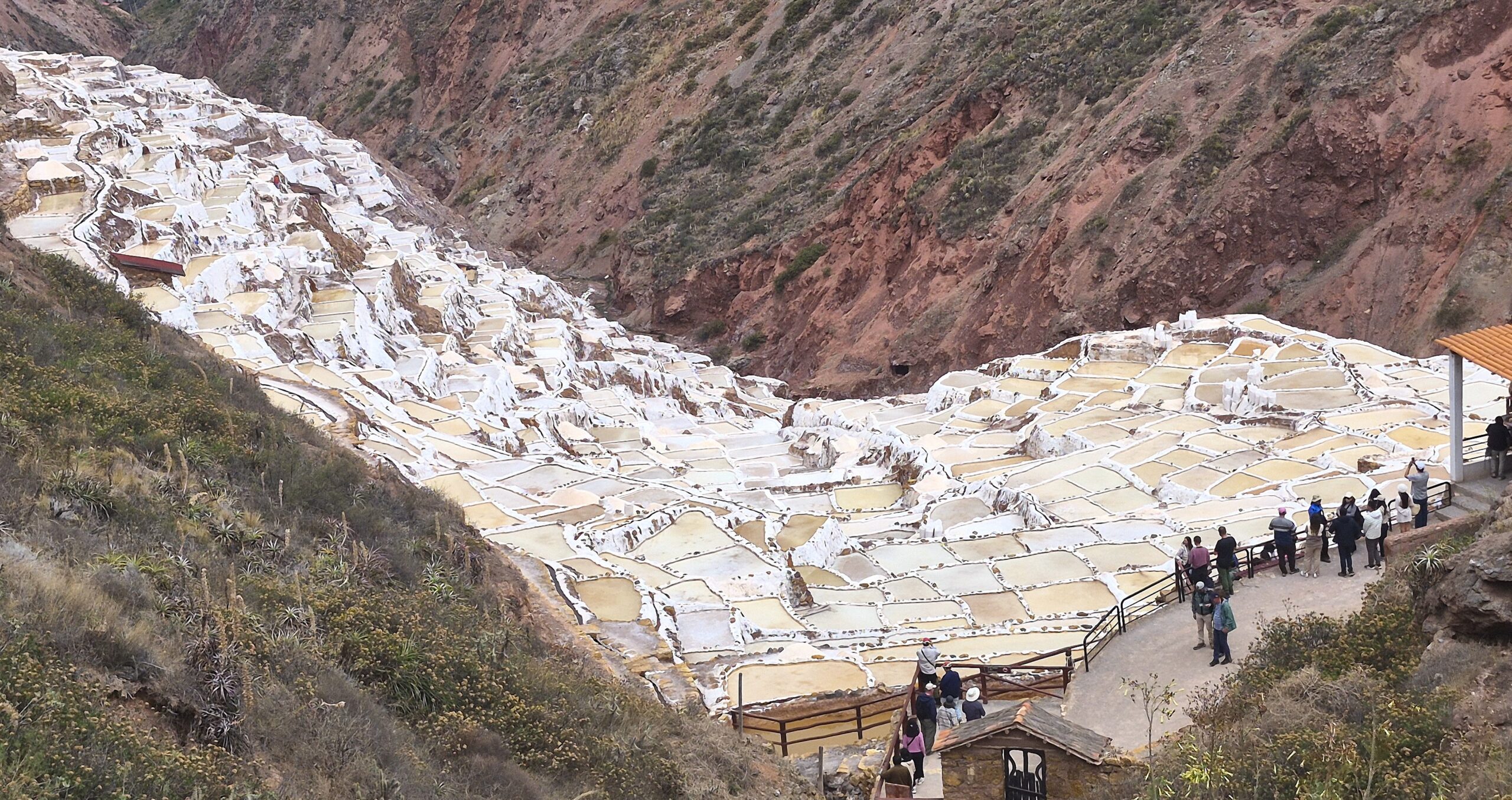 Maras pink salt is one of the most distinctive products from the Cusco region of Peru. Extracted from natural saltwater springs in the Andes, it comes from thousands of shallow ponds covering the slopes of Qaqawiñay mountain. Local families from Maras and Pichingoto have preserved the traditional harvesting methods for generations.
What makes Maras salt special is the connection between its natural origin and the people who produce it. The salty water, Andean climate, and traditional knowledge of local families come together to create a product that remains an important part of life in the Sacred Valley.
The Natural Origin of Maras Pink Salt
Maras salt comes from natural saltwater springs located in the Q’oripucyu ravine, near the town of Maras in the Urubamba province of Cusco. Unlike sea salt, it originates from underground water containing dissolved salts and minerals.
The water flows through small channels into thousands of shallow ponds arranged along Qaqawiñay mountain. Sunlight and the dry Andean climate gradually evaporate the water, allowing salt crystals to form. This natural system reflects generations of local knowledge and the use of the mountain’s landscape.
A Tradition That Goes Back to Pre-Inca Times
Salt extraction in Maras dates back to pre-Hispanic times, long before the Spanish arrival in Peru. Different Andean communities used the natural saltwater source and the production system continued during the Inca period.
Salt was an important resource for seasoning and preserving food, as well as for exchange between communities. Throughout the colonial and republican periods, local families continued maintaining the ponds and preserving their harvesting knowledge.
Today, this tradition remains an important part of the cultural heritage of Maras and Pichingoto, where families continue producing salt using traditional methods.
Why Is Maras Salt Pink?
Maras salt is known for its distinctive colors, which can range from white and cream to pink and brown. These variations are influenced by the natural composition of the saltwater, the conditions inside the ponds and the drying process.
During the dry season, generally from May to October, sunlight and lower rainfall favor evaporation and salt crystal formation. The appearance of the harvested salt can therefore change throughout the year.
Not every batch has the same color or texture. These natural variations are part of the traditional production process and contribute to the identity of Maras salt.
How Local Families Harvest Maras Salt
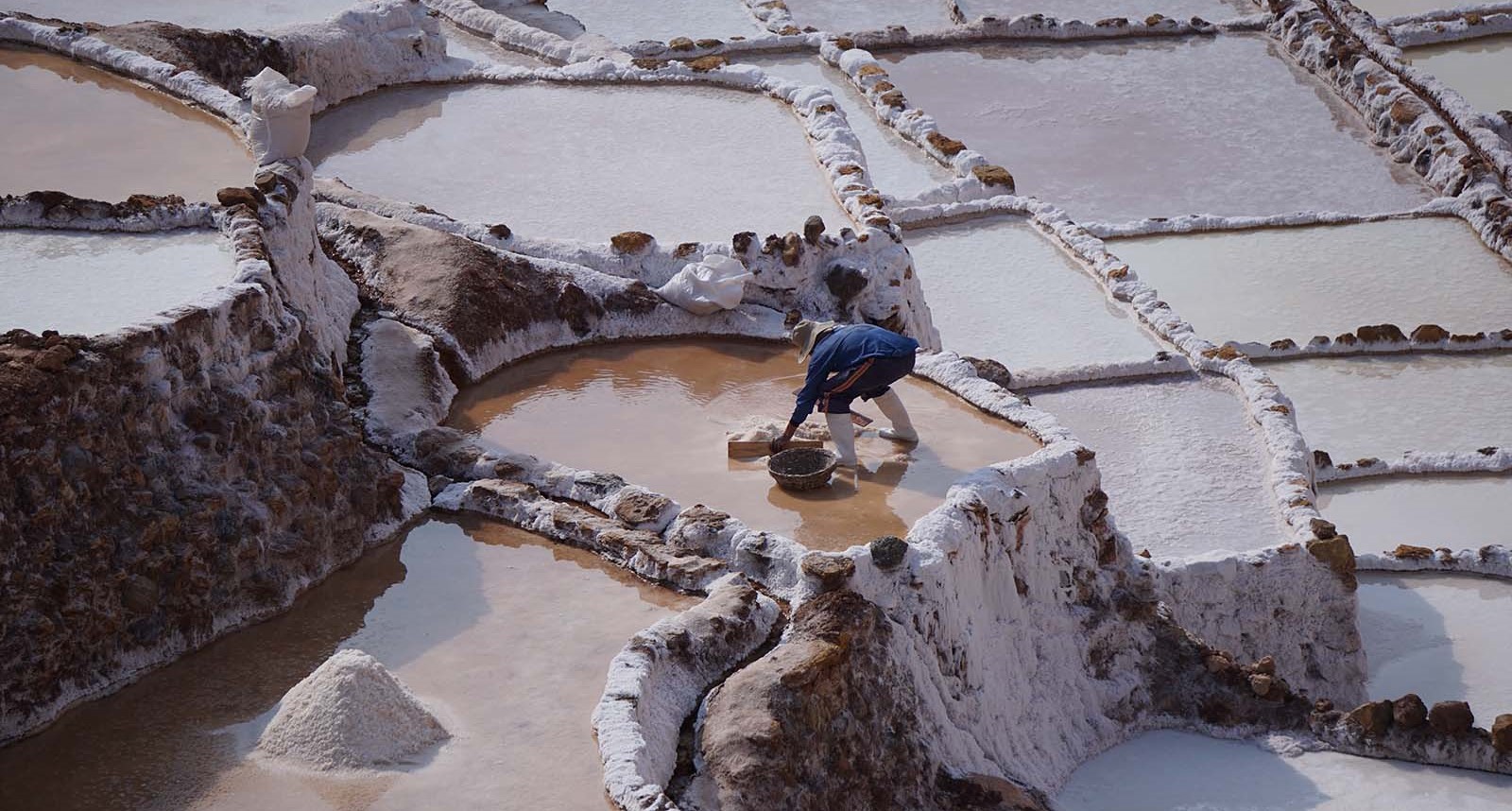 The production of Maras salt depends on the work of local families who maintain individual ponds and participate in the wider community production system.
Although the basic method is traditional, harvesting requires experience and attention to the condition of each pond. Producers must prepare the surfaces, control the flow of water, observe evaporation, and collect the crystals at the appropriate stage.
The main stages of production include:
1.- Preparing the Ponds
Before a new production cycle begins, the pond is cleaned and prepared. Producers maintain the surface and small walls that retain the water, making sure the pond is ready to receive the brine.
2.- Distributing the Saltwater
Water from the natural spring is directed through the main channels and smaller distribution channels. Each producer controls the amount of water entering their pond according to the production process.
3.- Filling and Evaporation
A shallow layer of brine is spread across the pond. Sunlight and the dry Andean air gradually remove the water, leaving salt crystals behind. Producers repeat the filling process to allow the salt to accumulate.
4.- Formation of Salt Crystals
As evaporation continues, crystals develop on the surface and bottom of the pond. The thickness and appearance of the salt depend on weather conditions and the number of production cycles.
5.- Collecting the Salt
When the salt has reached the appropriate stage, producers loosen and collect the crystallized material using traditional tools. The harvested salt is then placed aside for drying and further handling.
6.- Sorting and Processing
The collected salt is separated according to its intended use and quality. Products destined for human consumption may undergo additional processing and treatment to comply with applicable food regulations.
The work is closely connected to the seasons. Production is generally more favorable during dry months, while rainfall can interrupt or slow the process.
The Role of Maras and Pichingoto Families
The salt ponds are closely connected to the communities of Maras and Pichingoto. Local families participate in maintaining the ponds, managing the water channels and harvesting the salt.
This work is more than a source of income. It represents a tradition passed from one generation to another, with each family contributing to the preservation of the production system.
Their continued involvement helps keep the traditional methods alive while connecting the local economy with the cultural identity of the Sacred Valley.

From Salt Ponds to the Market
After harvesting, the salt is collected, dried and prepared for distribution. Some of it is sold locally, while other products reach markets in different parts of Peru and are purchased by visitors exploring the Cusco region.
Maras salt is available in different presentations, including coarse grains, fine salt and packaged products. Its distinctive origin and traditional production make it a popular regional souvenir.
When buying Maras salt for cooking, it is important to check the packaging and product label to understand its processing and whether it is suitable for direct consumption.
Different Types and Uses of Maras Salt
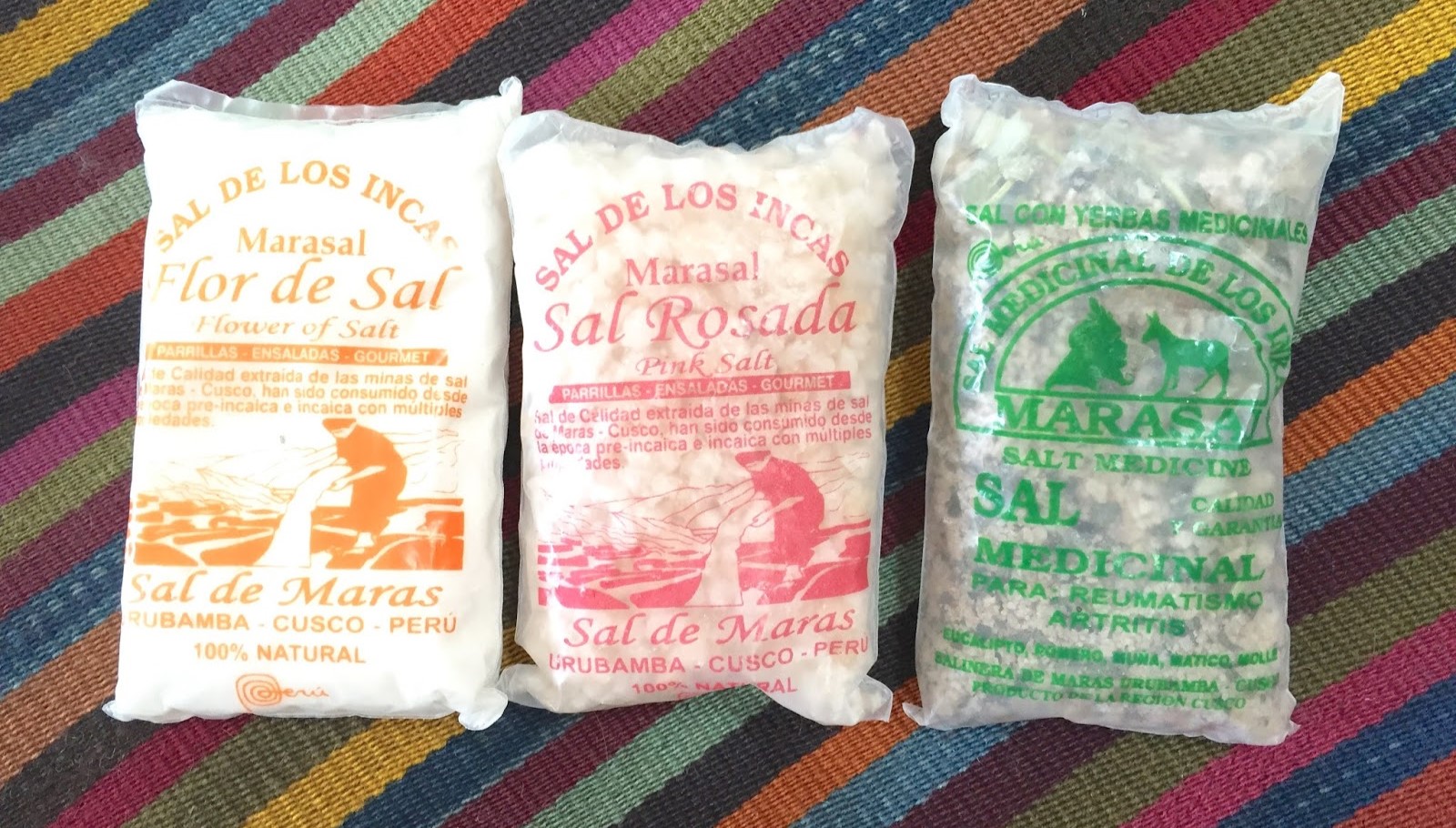 Maras salt is produced and classified according to its characteristics and intended use. The traditional extraction process can produce different qualities of salt, which are separated during harvesting and subsequent processing.
Historically, the production system has distinguished between salt for domestic cooking, bulk salt, and salt intended for agricultural, livestock or industrial applications.
For consumers, Maras salt is available in different presentations and grain sizes. Some products are prepared for direct use in cooking, while others are supplied for food processing.
Common presentations include:
Coarse Maras Salt
Coarse salt has larger crystals and is suitable for different cooking preparations. It can be used for seasoning, cooking and recipes where a larger grain is preferred.
Fine Maras Salt
Fine salt has smaller crystals and is convenient for everyday seasoning. Its texture makes it easy to distribute across different dishes.
Packaged Maras Salt
Commercial products are selected, processed and packaged for distribution. The label and product information should indicate whether the salt is intended for direct consumption or another purpose.
The different presentations allow consumers to choose according to their needs while supporting a product connected to the traditional production of the Cusco region.
Maras Pink Salt in Peruvian Cuisine
Salt is essential in Peruvian cooking and Maras salt forms part of the region’s culinary identity. In Cusco, it is used in everyday preparations and traditional dishes featuring potatoes, corn, vegetables, meats and other Andean ingredients.
Coarse salt is useful for seasoning ingredients before cooking, while finer varieties are more convenient for everyday meals. The choice depends on the recipe and the desired texture.
Maras salt is also popular among visitors looking for a regional product connected with Cusco. When purchasing it for cooking, check the label for information about processing, ingredients and suitability for human consumption.
Why Maras Salt Is Special
Maras salt stands out because of its natural source, traditional production and the communities that maintain it. Unlike large-scale industrial systems, its ponds are still managed through methods adapted to the mountain landscape.
Water flows through small channels, evaporation takes place in shallow ponds and harvesting depends on the experience and work of local producers.
The traditional knowledge and techniques associated with salt extraction in Maras were declared part of Peru’s National Cultural Heritage in 2008. The salt mines were also included in Peru’s UNESCO World Heritage Tentative List in 2019.
For this reason, Maras salt represents more than a regional food product. It reflects a long relationship between people, natural resources and the Andean environment.