
Ausangate Trek vs Salkantay Trek: Which Trek Should You Choose?
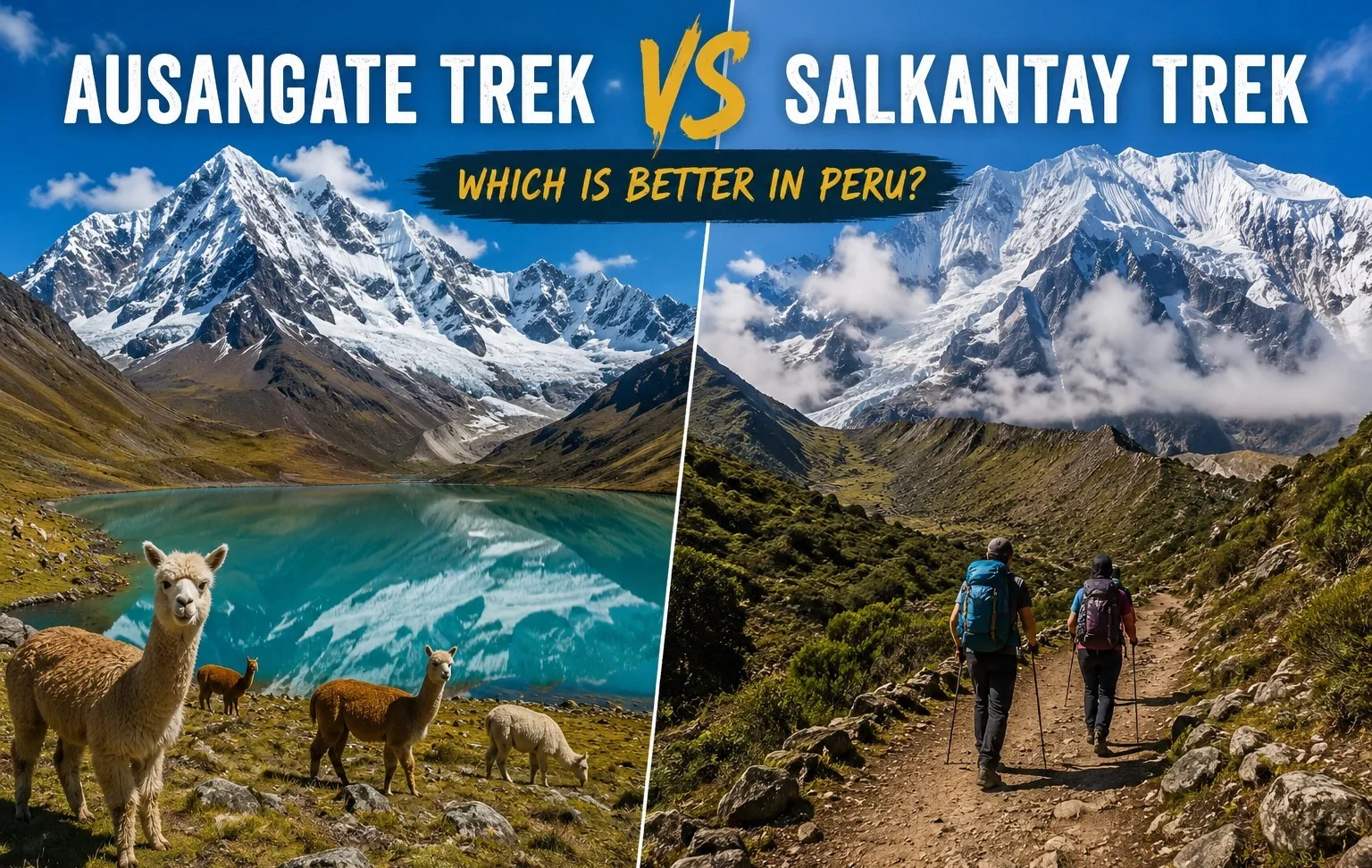 Ausangate Trek vs Salkantay Trek is one of the most common comparisons travelers make when planning a trekking adventure in Peru. Both routes offer spectacular landscapes, unforgettable experiences, and an incredible opportunity to explore the Andes beyond the traditional tourist circuit.
However, while the Salkantay Trek is known for leading hikers to Machu Picchu through diverse ecosystems, the Ausangate Trek is famous for its remote mountain scenery, turquoise glacial lakes, authentic Andean culture, and fewer crowds.
Choosing between the Ausangate Trek vs Salkantay Trek depends on what type of adventure you are looking for. Some travelers dream of reaching Machu Picchu through an alternative route, while others prefer untouched wilderness, dramatic mountain landscapes, and a deeper connection with local communities.
In this guide, we compare both treks to help you decide which one is the perfect fit for your next journey in Peru.
Ausangate Trek vs Salkantay Trek: Key Differences at a Glance
Feature |
Ausangate Trek |
Salkantay Trek |
|---|---|---|
| Difficulty | Challenging | Moderate to Challenging |
| Maximum Altitude | 5,200 m+ | 4,650 m |
| Crowds | Very Low | Moderate to High |
| Cultural Experience | Excellent | Moderate |
| Wildlife | Alpacas, Llamas & Vicuñas | Limited |
| Glacial Lakes | Numerous | Few |
| Rainbow Mountain Access | Yes | No |
| Route to Machu Picchu | Optional | Included |
| Trail Traffic | Very Quiet | Popular |
| Adventure Level | High | Moderate |
If your priority is reaching Machu Picchu through a famous trekking route, Salkantay is an excellent option. If your goal is experiencing some of the most spectacular mountain scenery in South America while avoiding crowds, Ausangate is often considered the better choice.
What Is the Ausangate Trek?
The Ausangate Trek is a high-altitude hiking route that circles Ausangate Mountain, the highest peak in the Cusco region.
Standing at 6,384 meters (20,945 feet), Ausangate is considered a sacred mountain by local communities and remains one of Peru’s most impressive natural landmarks.
Unlike many trekking routes focused on archaeological attractions, the Ausangate Trek is all about nature, adventure, and culture.
Hikers spend several days surrounded by glaciers, turquoise lakes, colorful valleys, and traditional villages where local families continue to preserve ancient Andean traditions.
Highlights of the Ausangate Trek
✓ Snow-capped mountains and glaciers
✓ Turquoise glacial lakes
✓ Rainbow Mountain and Red Valley
✓ Traditional Quechua communities
✓ Thousands of alpacas and llamas
✓ Remote wilderness scenery
✓ Authentic Andean culture
✓ Routes from 2 to 6 days
For travelers looking for authenticity and dramatic mountain landscapes, the Ausangate Trek is one of the most rewarding adventures in Peru.
What Is the Salkantay Trek?
The Salkantay Trek is one of the most popular alternatives to the Classic Inca Trail. Named after the impressive Salkantay Mountain, the route eventually leads hikers to Machu Picchu while passing through a variety of ecosystems.
One of the biggest attractions of the Salkantay Trek is the constant change in scenery. Travelers begin in high mountain terrain before descending into cloud forests, subtropical valleys, and warmer regions closer to Machu Picchu.
Highlights of the Salkantay Trek
✓ Direct route to Machu Picchu
✓ Humantay Lake and Salkantay Mountain
✓ Cloud forests and tropical landscapes
✓ Coffee plantations and local farms
✓ Diverse ecosystems throughout the trek
✓ Well-developed trekking infrastructure
✓ Comfortable accommodation options
For travelers whose main goal is combining adventure with a visit to Machu Picchu, Salkantay remains a top choice.
Scenery Comparison: Which Trek Has Better Views?
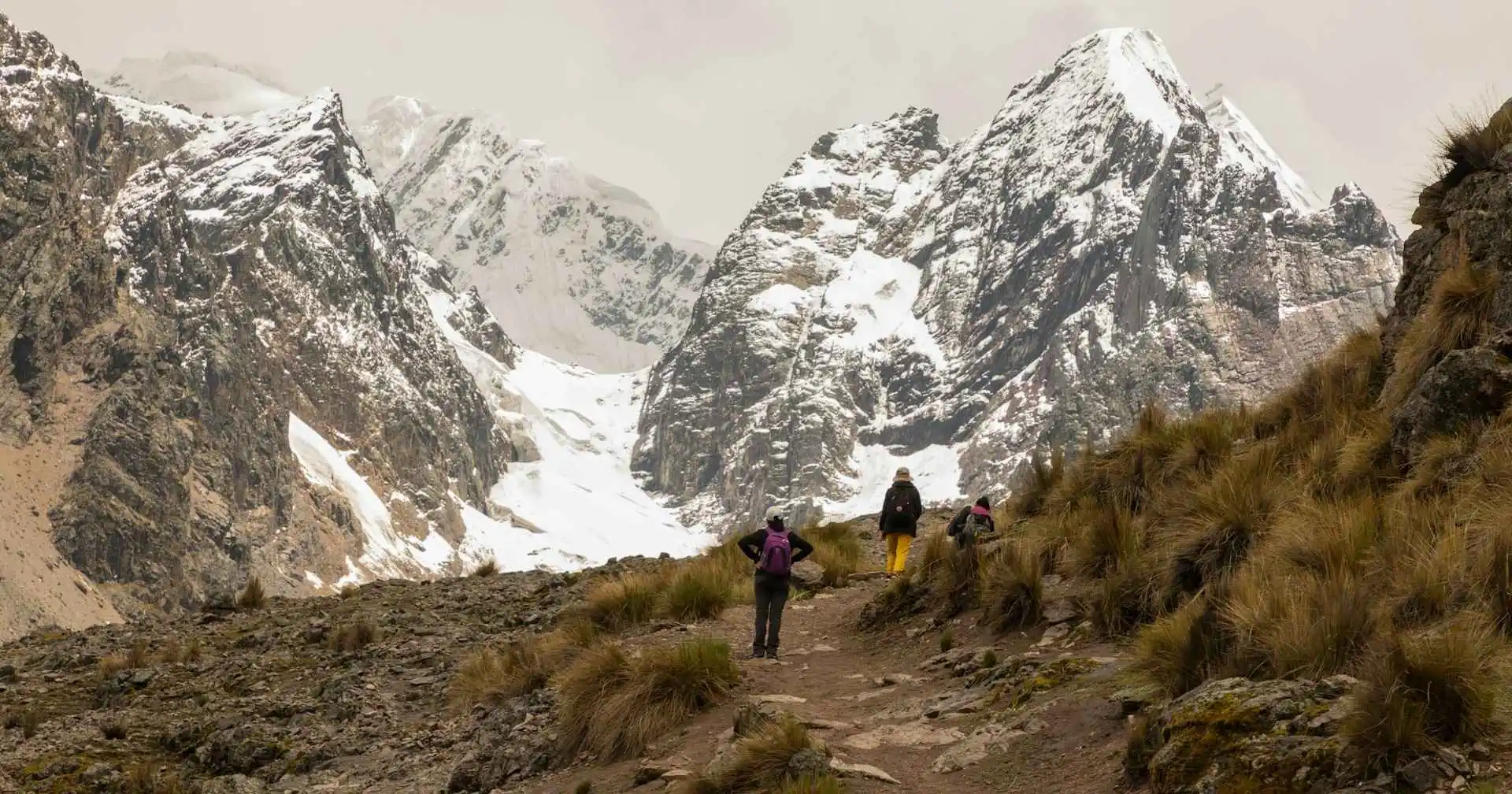 Both routes are famous for their scenery, but they offer completely different landscapes.
| Ausangate Trek Scenery | Salkantay Trek Scenery |
|---|---|
| Turquoise glacial lakes | Humantay Lake |
| Snow-capped peaks | Salkantay Mountain |
| Rainbow Mountain | Cloud forests |
| Red Valley | Tropical vegetation |
| Vast alpine landscapes | Coffee plantations |
| Traditional Andean villages | Machu Picchu |
The Ausangate Trek is ideal for travelers who love dramatic mountain scenery and remote wilderness. The Salkantay Trek is better suited to those who enjoy a mix of mountain landscapes and tropical environments.
Winner: Ausangate Trek
For pure mountain scenery, glacial lakes, and spectacular panoramic views, Ausangate stands out as one of the most beautiful treks in Peru.
Difficulty Comparison
One of the most important factors when comparing the Ausangate Trek vs Salkantay Trek is the level of difficulty.
| Ausangate Trek | Salkantay Trek |
|---|---|
| Higher altitude | Lower average altitude |
| Mountain passes above 5,000 m | Highest pass around 4,650 m |
| More remote terrain | Better infrastructure |
| Greater physical challenge | More beginner-friendly |
| Ideal for experienced hikers | Suitable for a wider range of travelers |
Both treks require good physical condition, but Ausangate is generally considered the more demanding adventure due to its higher elevation and more rugged terrain.
Altitude Comparison
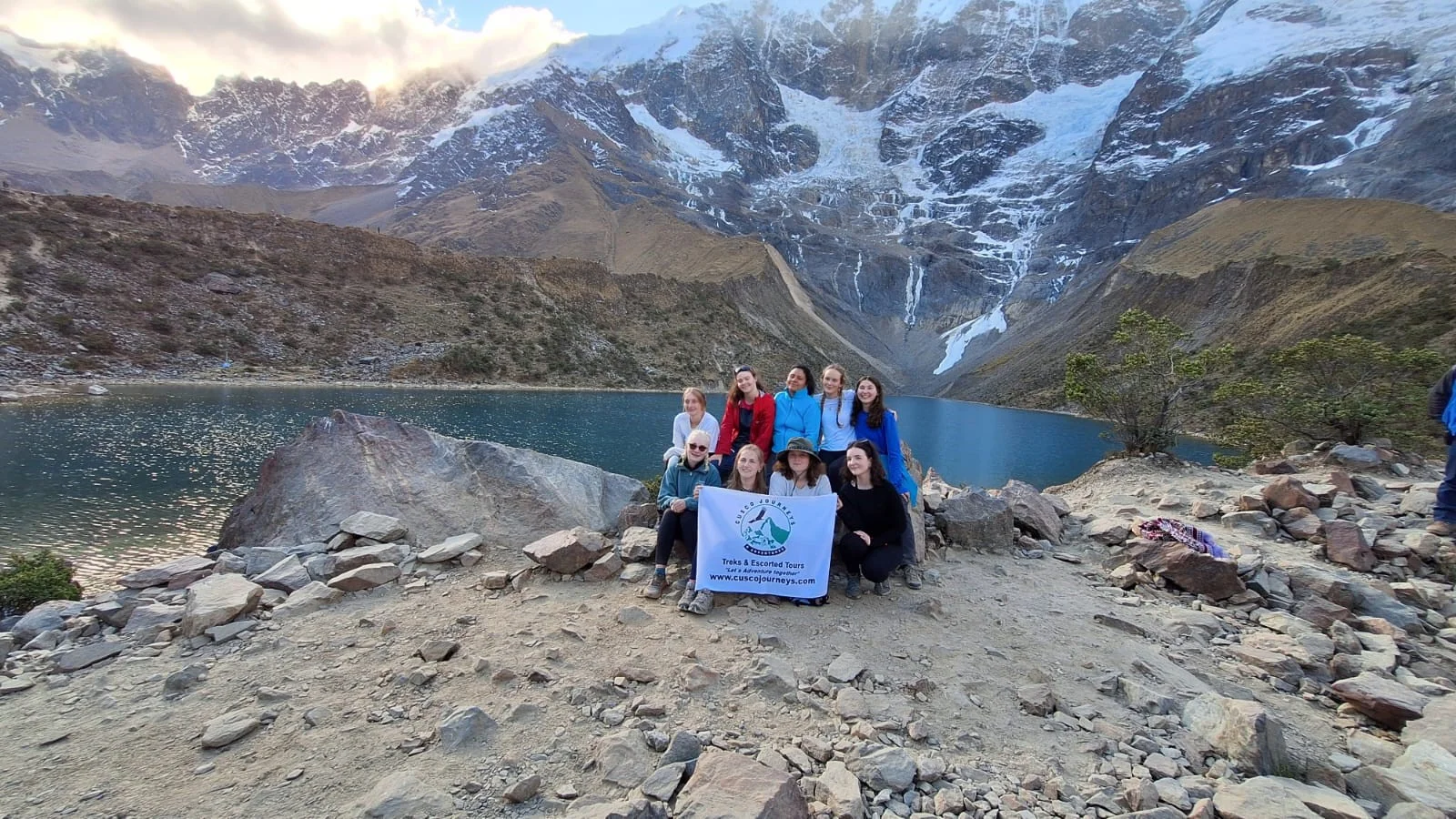 Altitude plays a major role in the overall trekking experience.
| Ausangate Trek | Salkantay Trek |
|---|---|
| Average altitude: 4,500 m | Average altitude: 3,500–4,000 m |
| Highest pass: 5,200 m+ | Highest pass: 4,650 m |
| Several days above 4,000 m | Gradual descent after the pass |
| Greater acclimatization required | Easier altitude adjustment |
Travelers should spend at least two or three days in Cusco before starting either trek, especially if they are arriving from lower elevations.
Culture and Local Experience
Cultural immersion is another area where the Ausangate Trek shines.
| Ausangate Trek | Salkantay Trek |
|---|---|
| Traditional Quechua communities | Limited cultural interaction |
| Alpaca herding culture | Focus on Machu Picchu |
| Authentic local traditions | More tourism-oriented |
| Remote villages | Established trekking route |
| Strong Andean identity | Mixed cultural experiences |
Many hikers describe the cultural encounters on the Ausangate Trek as one of the most memorable aspects of the journey.
Why Choose the Ausangate Trek?
The Ausangate Trek offers a unique combination of adventure, culture, and natural beauty that few destinations can match.
Reasons to Choose the Ausangate Trek
✓ Fewer tourists and peaceful trails
✓ Extraordinary mountain scenery
✓ Rainbow Mountain
✓ Authentic Andean communities
✓ Turquoise glacial lakes
✓ Thousands of alpacas and llamas
✓ High-adventure experience
✓ Flexible routes from 2 to 6 days
Whether you choose a short trek or a complete circuit, Ausangate delivers an unforgettable journey through the heart of the Andes.