
Birds of Lake Titicaca (2026 Guide): Species, Where to See Them & Tips
 Lake Titicaca, located at over 3,800 meters above sea level on the border of Peru and Bolivia, is one of the best places in South America for birdwatching and wildlife observation.
Known as the highest navigable lake in the world, it is home to more than 60 bird species, including endemic and endangered species such as the Titicaca grebe.
In this guide, you will discover the most important birds of Lake Titicaca, where to see them, the best time to visit, and practical tips to enjoy a responsible wildlife experience in Peru.
You can explore this ecosystem through a guided Lake Titicaca tour from Puno, where you visit the Uros floating islands and observe native bird species in their natural habitat.
Why is the fauna of Lake Titicaca special?
 Lake Titicaca is considered an “ecological sanctuary at high altitude.” Its geographical isolation, extreme environmental conditions, and geological antiquity have given rise to an ecosystem where many species are endemic, meaning they exist nowhere else in the world.
In addition to its natural value, the lake’s fauna plays an essential role in the lives of local communities such as the Uros, Taquile, and the inhabitants of Amantaní, who have lived alongside these species for centuries, fishing, sailing, farming on the shores, and even building artificial islands within the lake.
Aquatic life in Lake Titicaca
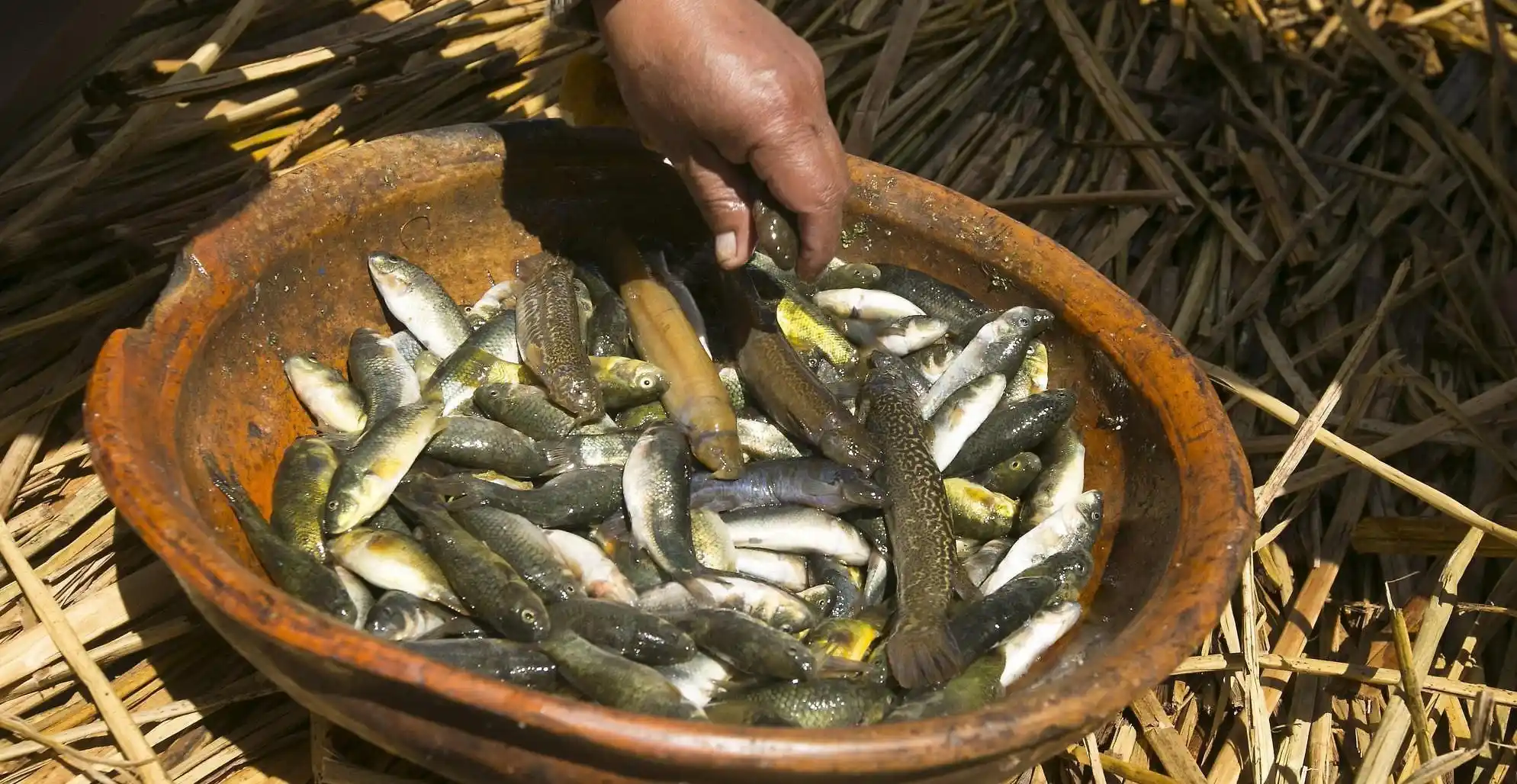 The cold, low-oxygen yet crystal-clear waters of Titicaca are home to a surprising number of species adapted to their environment. Some are currently endangered due to pollution, illegal fishing, and the introduction of invasive species.
1.- Orestias (Karachi)
These are small, colorful fish belonging to the genus Orestias. Locally known as karachi, they feed on insects, algae, and microinvertebrates. Many of their species exist only in this lake and its surroundings.
2.- Titicaca Catfish (Trichomycterus spp.)
Bottom-dwelling fish adapted to cold and murky waters, known for their ecological function: cleaning the lakebed by feeding on organic matter.
3.- Andean Killifish
These small native fish can withstand variations in oxygen and salinity, making them key ecological indicators of the lake.
4.- Giant Titicaca Frog (Telmatobius culeus)
Perhaps the most emblematic animal of Lake Titicaca. This aquatic frog can reach up to 50 cm in length and breathes through its folded skin. It lives exclusively underwater and is critically endangered due to pollution and hunting. Conservation programs now exist in both Peru and Bolivia to protect it.
Birds of Lake Titicaca: A Birdwatching Paradise
 More than 60 species of birds live in or migrate temporarily to the lake. The totora reed beds are their main habitat and offer an ideal refuge for nesting and feeding.
1.- Titicaca Grebe (Rollandia microptera)
An endemic and flightless bird that depends entirely on the lake to live and reproduce. It builds floating nests among the reeds and feeds on small fish. Its conservation is a top priority.
2.- Andean Gull (Chroicocephalus serranus)
Easily recognized by its white and gray plumage and red legs. It adapts well to both urban and natural environments. Feeds on insects, fish, and organic waste.
3.- Puna Ibis (Plegadis ridgwayi)
With metallic plumage and a curved beak, this ibis forages in wetlands, feeding on insects, mollusks, and small crustaceans.
4.- Andean Flamingo (Phoenicoparrus andinus)
This majestic pink-plumaged bird lives in high-altitude lakes and feeds on algae and invertebrates. Its presence adds spectacular color to the lake’s landscape.
5.- Giant Coot (Fulica gigantea)
One of the largest coot species in the world. They build enormous nests out of totora and can be seen in shallow waters, guarding their chicks or defending their territory.
6.- Andean Condor (Vultur gryphus)
Although it does not live in the lake, it is common to see this bird soaring over nearby cliffs. It is a symbol of the Andes and an essential part of Andean worldview.
Where to See Birds in Lake Titicaca
The best places for birdwatching include:
- Uros Floating Islands – ideal for observing birds among totora reeds
- Taquile Island – good for spotting Andean gulls and ibis
- Amantaní Island – quieter and perfect for nature experiences
- Puno Bay – one of the best places to see the Titicaca grebe
- Early morning and late afternoon offer the best opportunities for birdwatching.
Best Time to See Birds in Lake Titicaca
The best time for birdwatching is between November and April, when migratory birds arrive and biodiversity increases.
However, many endemic species can be observed throughout the year. The dry season (May to October) offers clearer skies and better visibility.
Mammals in the Lake Titicaca
 Although the environment is not very favorable for large mammals, some species adapted to the cold and altitude can still be seen.
1.- Andean Fox (Lycalopex culpaeus)
An agile and opportunistic predator that feeds on rodents, birds, and even fish. Its presence is key to maintaining ecological balance in the region.
2.- Andean Vizcacha (Lagidium peruanum)
A rodent similar to a rabbit, which lives among rocks and can be seen during the day basking in the sun. It is agile, sociable, and very charismatic.
3.- Andean Deer or Taruca (Hippocamelus antisensis)
A shy species that can be seen in the high grasslands near the lake. Its conservation is vital to preserve the balance of the high Andean ecosystem.
Migration Seasons
Between November and April, Lake Titicaca receives many migratory birds from northern South America. During this time, you can observe species such as:
- Baird’s Sandpiper (Calidris bairdii)
- Varieties of herons and waders
- Andean reed warblers and blackbirds among the totora reeds
These species further enrich the lake’s biodiversity and are of particular interest to ornithologists and birdwatchers.

How to responsibly explore the fauna of Lake Titicaca
Getting to know the fauna of Titicaca is a unique experience—but also a responsibility. Choosing a responsible local operator allows you to better understand the ecosystem while supporting conservation efforts in the region.
Explore Lake Titicaca with a Local Guide
Discover the wildlife and cultural richness of Lake Titicaca through a guided experience. Visit the Uros Floating Islands, Taquile, and Amantaní while learning about the region’s biodiversity and traditions.
Many travelers combine Lake Titicaca with a visit to Machu Picchu as part of a complete Peru itinerary.