
Uros Islands: The Floating Villages of Lake Titicaca

Lake Titicaca shares borders with Peru and Bolivia, and is the largest lake in South America and the highest navigable lake in the world. Despite its undeniable beauty and serenity, the floating islands of Uros are by far the most remarkable attribute to the lake.
The islands are not natural-wonders, it is the people who live there that have been building and maintaining these islands for thousands of years. This pre-Inca community is called “Uros” and they are indigenous people from Peru and Bolivia.
Visiting the Floating Islands of Uros is an incredible experience that can only be fully embodied first hand. The pride of the people and how they have been able to protect their local customs is absolutely beautiful to witness. And by visiting the floating islands of Uros, you will be supporting them too.
History of the Uros Islands

The Uru or Uros people are believed to be descended from the earliest inhabitants of Lake Titicaca. They’ve preserved a floating lifestyle for hundreds of years. To protect themselves from invading groups, the Uros built mobile islands from the endemic totora plant. If a threat emerged, they could simply move their islands elsewhere in the lake. While this worked for a while, both the Incas and Spanish eventually discovered their islands.
The Uru are descendants of one of the most ancient cultural groups in the Americas and little is known about their mysterious history. Legend has it that the Uru people are descended from the speakers of the now extinct Pukina language. Their native Uru language was abandoned around five hundred years ago as they continued to trade and intermarry with the mainland Aymara tribe, and the Uru people now communicate primarily in the native Aymara language. Although they lost their native language, they have maintained many other unique aspects of their original culture.
The Uros Islands are floating on the Peruvian side of Lake Titicaca, a few miles from Puno, the main city on the lakeshore. The islands used to be closer to the middle of the lake, but they moved or rebuilt closer to the shore following a devastating storm in 1986.
Culture of the Uros Islands

Peru is home to approximately 2,000 Uros people. Around 1,200 still live on the floating islands of Lake Titicaca. Harvested from vast beds that grow in abundance on the lake, the humble totora plant forms the backbone of Uros life. Homes, boats, and the islands themselves are all made of totora reeds.
These days, the Uros earn income through tourism. This has brought a few modern conveniences to the archipelago, including improved sanitary facilities and solar panels which reduce the risk of fires from open flames. They have embraced modern technology, with most islanders using cell phones and televisions powered by the solar panels.
How the Floating Islands of Lake Titicaca are Built?
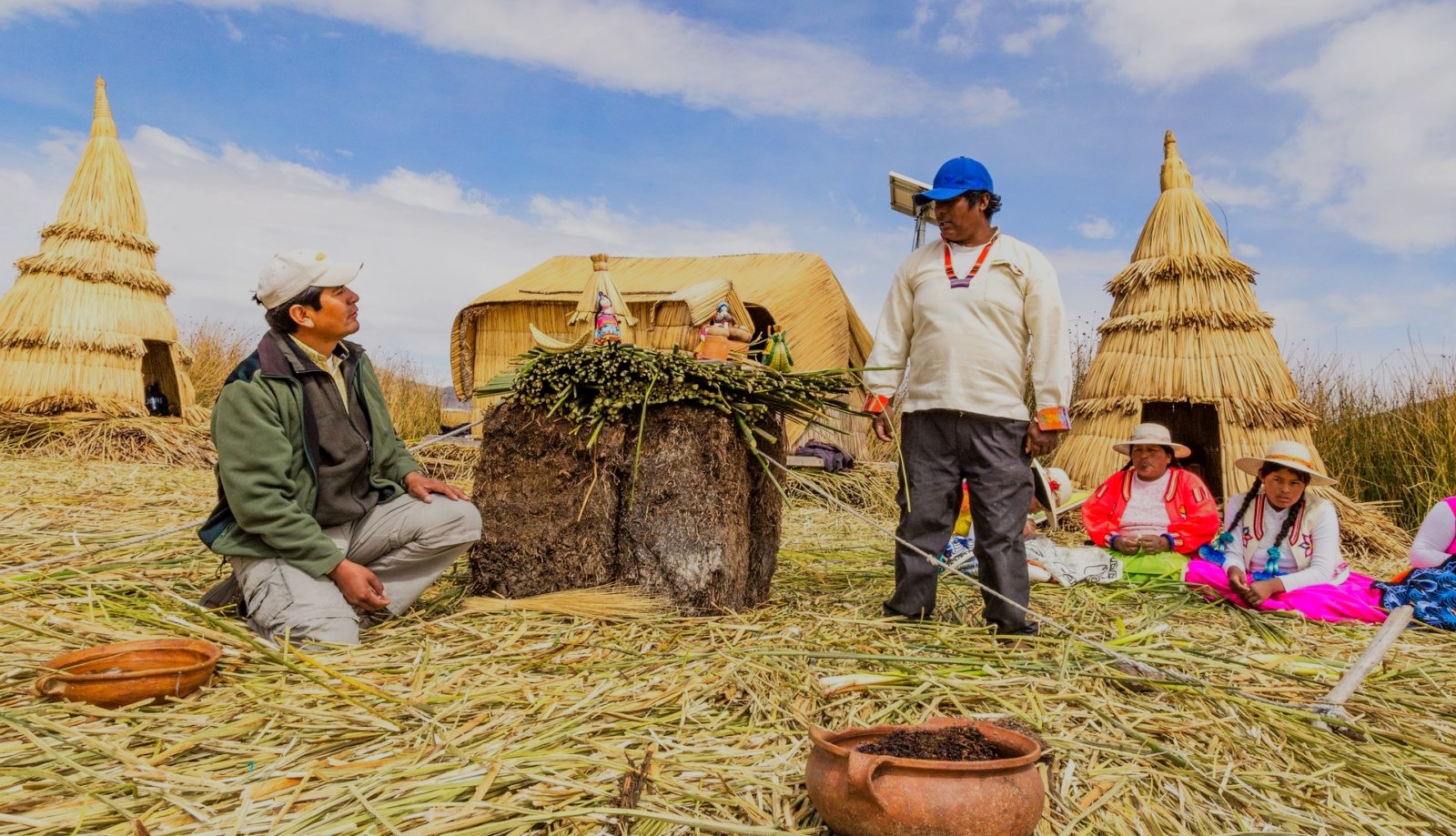
To make an island, the Uros people create a sturdy but light base tying together layers of totora roots. Totora roots are naturally buoyant at the time of harvest. The roots float to the surface of the lake during the rainy season between November and March. Uros men are in charge of collecting the best roots for their islands. If the roots have too much soil, they will sink.
Above the totora root base, many layers of totora reeds are bundled and stacked. They anchor the islands in one place with rope and Eucalyptus stakes driven into the bottom of the lake. The islanders can maintain each island for up to 30 years, adding new layers of reeds once a week during the rainy season and once a month during the dry season.
Between 60 and 100 of these man made floating islands are still in existence, but the number is not constant. For instance, the islands can combine or separate, deteriorate over time, or the islanders can build new ones.
How To Get There
Lake Titicaca can be reached via airplane from Lima. The main city on Lake Titicaca is Puno, which is also the pitstop for all travelers planning on embarking this water wonderland.
The flight from Lima to Puno takes around 2 hours and after that you have to complete the journey on land. In order to reach the Uros Islands, it is necessary to embark in the port of Puno. It takes approximately 30 minutes to arrive on the islands from the port.
Uros Floating Islands Tours
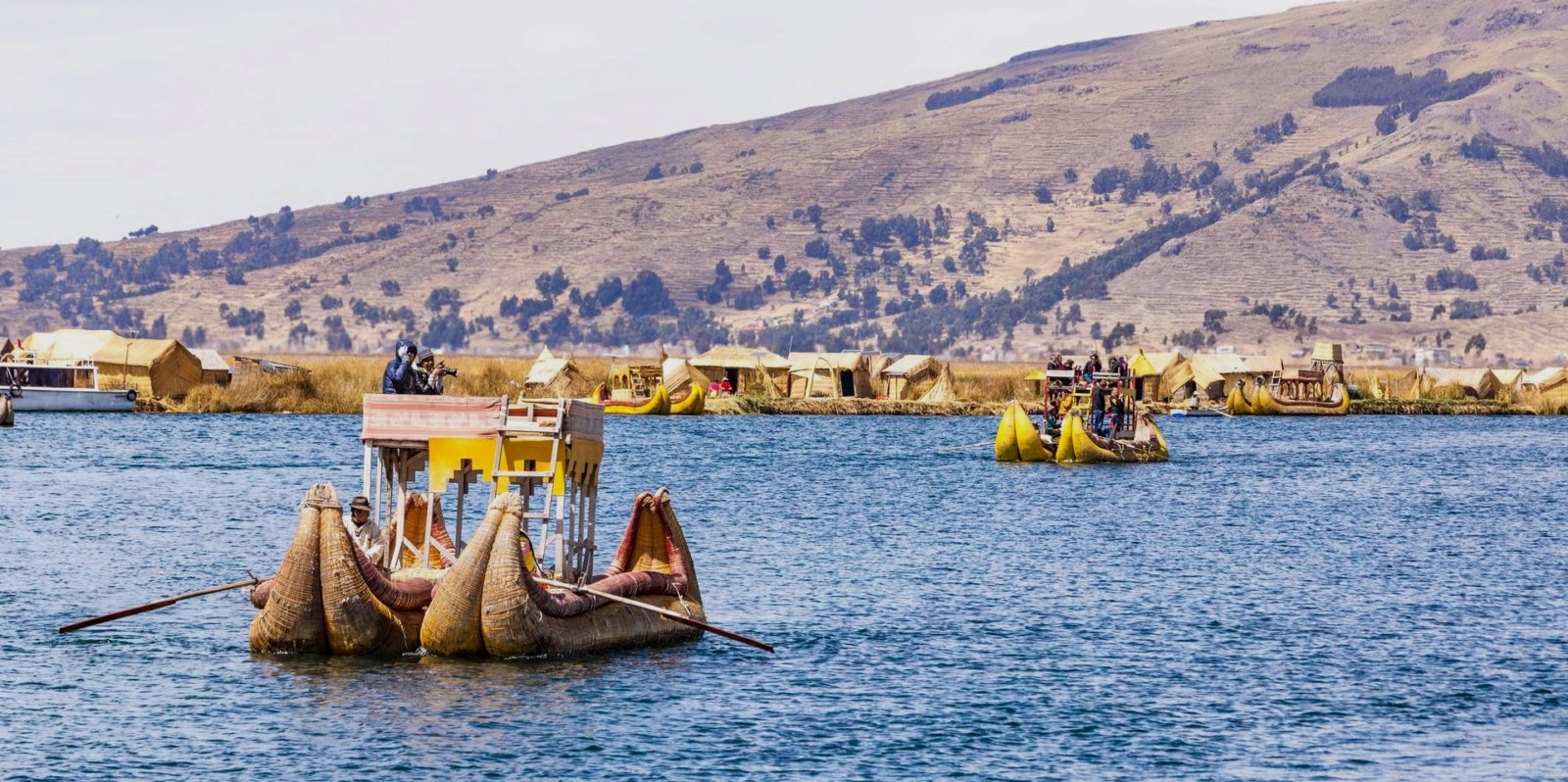
Each tour of Uros begins with a demonstration on how the islands are made. After that, the islanders invite their guests to visit a home built from the same Totora reeds. The islanders always present their handicrafts to tourists towards the end of each tour. While some visitors find this pushy, it is important to keep in mind that a large percentage of their income comes from selling souvenirs to tourists.
Option 1: Uros Half-Day Tour:
- Duration: 3-4 hours. Morning, midday, or afternoon departures available.
What to Expect: Departing from the Puno city dock, travel about 20-30 minutes by boat to the main Uros archipelago. You’ll sail through thick reed beds to one of the islands where you can meet the resident families, explore your surroundings, and take tons of photos! You’ll also have the option to ride a reed boat to visit a neighboring island (for an additional cost of 10 soles per person; payment goes directly to the family that owns the boat).
Option 2: The Uros & Taquile Tour With Amantani Island
- Duration: 2 days / 1 night on Amantani.
What to Expect: Because of its remote location, Amantani is the most popular choice for a Titicaca homestay. As bookends to this tour, you will visit Uros on Day 1 and Taquile on Day 2.
Tourism on Amantani has been in the hands of indigenous islanders since the beginning. As a result, homestay families are well-prepared to provide fun activities for their guests. You’ll meet your host family on arrival, settle into your comfortable room, and enjoy a day of cultural exchange, perhaps some high-altitude football, free time to hike trails to Inca ruins, and a dance party at night.
Taquile and Amantati, the island hopping tours
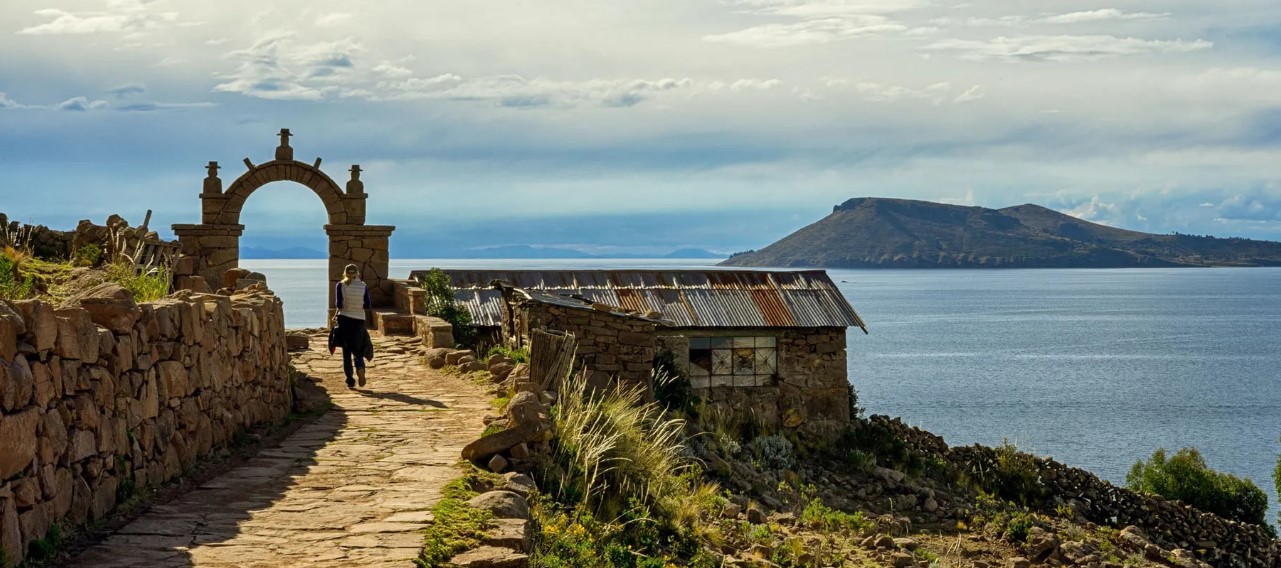
Another option is the Island Hopping Tour that takes 2 days/1 night. It is one of the most common options. First, you visit Uros then head to Taquile where you spend the night at a local house before going back to Puno the next morning.
You can also visit the island of Taquile or Amantani on your own. For this, you’ll need to take the morning ferry to the island you wish to visit. The ferry to Taquile leaves at 7:30 am and to Amantani at 8 am. Once on those islands, you can hop on another ferry to reach the other island as desired and ask the local for a room.
Taquile and Amantati are not floating islands made of reed but large islets, such as the Isla del Sol in Bolivia, where you can expect a more traditional but yet very touristy experience with locals.
Important To Know Before
The weather at Lake Titicaca is usually very cold most of the year, in the day and at night. It is important to bring a warm jacket, and a raincoat. Since Lake Titicaca is located at an altitude of approximately 4,000 meters above the sea level, it is essential to prepare yourself physically during the days prior to your trip so that you do not suffer from altitude sickness.
There are no food stores on the islands, so you should bring some water and snacks with you. For the same reason, it is good to bring personal hygiene items as well. Also, remember to bring extra batteries for your photo and video camera.
Travel Tips
- The best time to visit the Uros Islands is during the dry season from April to November. April to May and September to November are nice options to take advantage of the good weather with lower numbers of tourists.
- Bring your passport for a souvenir stamp on one of the main islands (additional cost of 1 sol per stamp).
- Each tour of Uros visits two islands. You will have the option to take a handmade reed boat from first island to the second island on a 15-20 minute ride. This boat ride costs an additional 10 soles per person. This payment goes directly to the family that owns the boat.
- The Uros Islands and Lake Titicaca sit at 12,500 feet (3,810 meters) above sea level. It is best to acclimatize by first visiting lower altitudes in Arequipa or Cusco before heading to Lake Titicaca.
- Bring sun protection, warm layers, comfy shoes, and your camera on any tour of Uros Islands.
- The best time to depart on any Lake Titicaca tour is in the morning.
- Check out our full Lake Titicaca guide for more travel tips.
How To Visit With Cusco Journeys

A visit to the Uros and their homes on the floating islands on Lake Titicaca is an experience that can only be truly felt by doing it yourself. Lake Titicaca provides that tranquility that cannot be expressed into words, and the hospitality and warming welcome from the people is something not to miss when travelling to Peru.
It can be quite overwhelming to organize a trip like this, especially with so much contradicting information on the internet nowadays. We at Kuoda specialize in custom-made trips in South America, and we take into consideration the specific needs and requirement of every client. Get in contact with us today, and talk to one of our trip designers to start planning your trip as soon as possible.
Si te gustó este artículo y la información que encontraste, ¡regálanos 5 estrellas!
 (Ninguna valoración todavía)
 Loading...